
Introduction
This Deel Review is written for UK founders, startups, SMEs, freelancers and growing businesses that want a clearer way to hire, pay and manage people internationally. If your business is starting to work with overseas contractors, building a remote team, or considering hiring employees in another country, Deel is one of the best-known platforms in the global payroll and HR space.
Hiring internationally can unlock better talent, more flexible growth and access to specialist skills. But it can also create admin headaches. You may need to think about local employment laws, contracts, worker classification, payroll, benefits, tax documents, onboarding, compliance and cross-border payments. For small teams, this can quickly become too much to manage manually.
That is where Deel comes in. Deel is designed to help businesses hire, manage and pay workers across more than 150 countries from one platform. It supports contractor management, employer of record services, global payroll, HR tools, compliance workflows and international payments.
This article explains the main Deel benefits, where the platform works well, where it may not be the right fit, and how it compares with alternative HR and payroll solutions. It also includes a practical deel payroll review, a deel hr review, and a broader Deel platform review for business owners who want to understand whether it is worth exploring.
For many UK startups, Deel will be most relevant if you are hiring overseas contractors, exploring remote employees, expanding into new markets, or replacing fragmented payroll and HR tools with something more centralised. For a sole trader or microbusiness with only UK-based staff, it may be more powerful than you currently need. But for a scaling business with international ambitions, it can be a serious time-saver.
You can also book a free demo to see how Deel works before committing. Offers, demos and product availability may be subject to eligibility and may change, so always check the latest terms before signing up: https://startupdeals.co.uk/recommends/deel
Contents:
What Is Deel?
Deel Review: Key Features at a Glance
Who Is Deel Applicable For?
Deel Benefits for UK Businesses
Deel Payroll Review
Deel HR Review
How to Use Deel Step by Step
Deel Pros and Cons
Deel vs Alternatives
Deel Pricing and Value
PROMO Offer: Book a Free Demo
Final Verdict: Is Deel Worth It?
What Is Deel?
Deel is a global workforce platform that helps businesses hire, manage, pay and support international workers from one central system. In simple terms, it brings together several functions that companies often manage separately: payroll, HR, contractor payments, compliance, onboarding, employee records and international hiring support.
For a UK startup or small business, the main appeal is that Deel can reduce the complexity of working with people outside the UK. Instead of manually preparing contracts, setting up separate payment processes, researching local rules, or using multiple tools for HR and payroll, Deel gives businesses a more structured way to manage international teams.
Deel is commonly associated with global payroll and employer of record services. Employer of record, often shortened to EOR, means a provider can legally employ a worker in another country on your behalf, while that person works day to day for your business. This can be useful when you want to hire abroad but do not want to set up a local legal entity.
However, Deel is not only for full-time employees. It also supports contractor hiring and contractor payments. That makes it relevant for businesses that work with freelancers, consultants, developers, designers, marketers or other independent professionals overseas.
A useful Deel platform review should look beyond payroll alone. Deel also includes HR functionality, which helps businesses manage worker information, onboarding, time off, documents and workflows. This is why Deel is often described as a combined payroll, compliance and HR platform rather than just a payment tool.
The most important thing to understand is that Deel is built for businesses with international or remote workforce needs. If your team is entirely UK-based and you only need simple payroll, there may be cheaper and more focused options. But if you are managing workers across different countries, currencies and employment types, Deel may help you save time, reduce admin and improve consistency.
This is where many Deel benefits become clearer. The platform is not just about paying people. It is about reducing the operational friction that comes with global hiring. For founders and lean teams, that can mean fewer manual processes, fewer spreadsheets, and a more professional experience for workers.
Deel Review: Key Features at a Glance
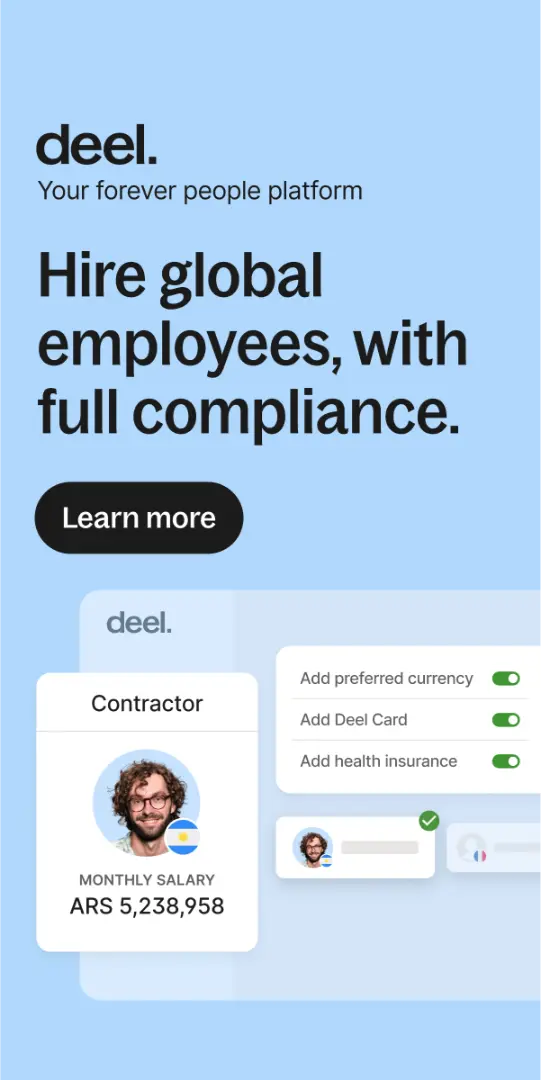
A proper Deel Review needs to look at the platform as a whole, because Deel combines several tools that would otherwise sit across payroll, HR, legal, finance and operations. The platform is designed for companies that want to hire internationally without building a large internal HR or payroll team from day one.
One of Deel’s most important features is global payroll. Deel helps businesses manage payroll across different countries, currencies and local requirements. This is central to any deel payroll review because international payroll is much more complex than simply sending money overseas.
Another major feature is contractor management. Deel allows companies to create contracts, onboard contractors, manage documentation, collect tax information, automate invoices and pay people in multiple currencies. For UK businesses working with overseas freelancers, this can be one of the most practical Deel benefits. It helps create a smoother process for both the business and the contractor.
Deel also offers employer of record services. This is useful if you want to hire full-time employees in countries where your business does not have a legal entity. Rather than setting up a company abroad, you may be able to use Deel’s local infrastructure to employ that person compliantly. This can be especially helpful for startups testing new markets or hiring specialist talent internationally.
The platform also includes HR tools. A deel hr review should consider how Deel helps with onboarding, worker records, time off, document management and people operations. These features can help businesses keep employee and contractor data more organised as the team grows.
Beyond this, Deel has expanded into areas such as IT support, device management and workforce operations. Not every small business will need these features immediately, but they show how Deel is positioning itself as a broader global workforce platform rather than a narrow payroll provider.
For UK founders, the value is convenience. You can potentially manage international hiring, payroll, HR documents and contractor payments through one account rather than stitching together multiple tools. That said, Deel may not be the cheapest option if you only need one small feature. The platform is strongest when you need several parts of the global workforce process managed together.
You can explore the platform and book a free demo here: https://startupdeals.co.uk/recommends/deel
Who Is Deel Applicable For?
Deel is primarily designed for businesses that hire or manage workers internationally. While some UK businesses may only need basic payroll software for local employees, Deel is aimed at companies dealing with remote teams, overseas contractors, international expansion or cross-border hiring challenges.
For startups, Deel can be especially useful during growth stages. Many startups want to hire quickly without being restricted to local talent pools. Instead of only recruiting within the UK, founders can access developers, marketers, designers, operations staff and consultants from around the world. Deel helps simplify the process of onboarding and paying those workers while reducing some of the administrative burden associated with international hiring.
This is one reason why many founders searching for a Deel platform review are typically scaling businesses rather than traditional local companies. Deel is strongest when a business operates across multiple countries or plans to do so in the future.
SMEs may also benefit from Deel if they work with international freelancers or remote employees regularly. For example, an agency with contractors in Eastern Europe, Asia and South America could use Deel to centralise contracts, invoices, tax documentation and payments instead of managing everything manually across separate systems.
A growing ecommerce business could also benefit from Deel if it hires overseas customer support staff, paid media specialists or virtual assistants. Rather than dealing with multiple freelance arrangements and payment methods, Deel creates a more structured process.
For technology businesses, Deel may be particularly valuable because software and digital businesses are naturally remote-friendly. Hiring internationally is common in SaaS, development, marketing and digital operations, making Deel a practical fit for these industries.
However, Deel may not suit every business equally well.
If you are a sole trader with no employees and no intention of hiring internationally, Deel may feel unnecessarily advanced. Similarly, a small local business with only UK-based staff may find cheaper payroll tools more appropriate.
A balanced Deel Review should recognise that the platform is designed around international workforce management rather than standard domestic payroll alone. Businesses looking purely for UK payroll processing may not use many of Deel’s broader capabilities.
One of the most overlooked Deel benefits is scalability. A business might initially use Deel for a handful of overseas contractors, then later expand into employer of record services, global payroll and HR management as the team grows. That flexibility can make Deel attractive for ambitious startups planning long-term expansion.
Businesses interested in exploring the platform further can book a free demo here: https://startupdeals.co.uk/recommends/deel
Deel Benefits for UK Businesses
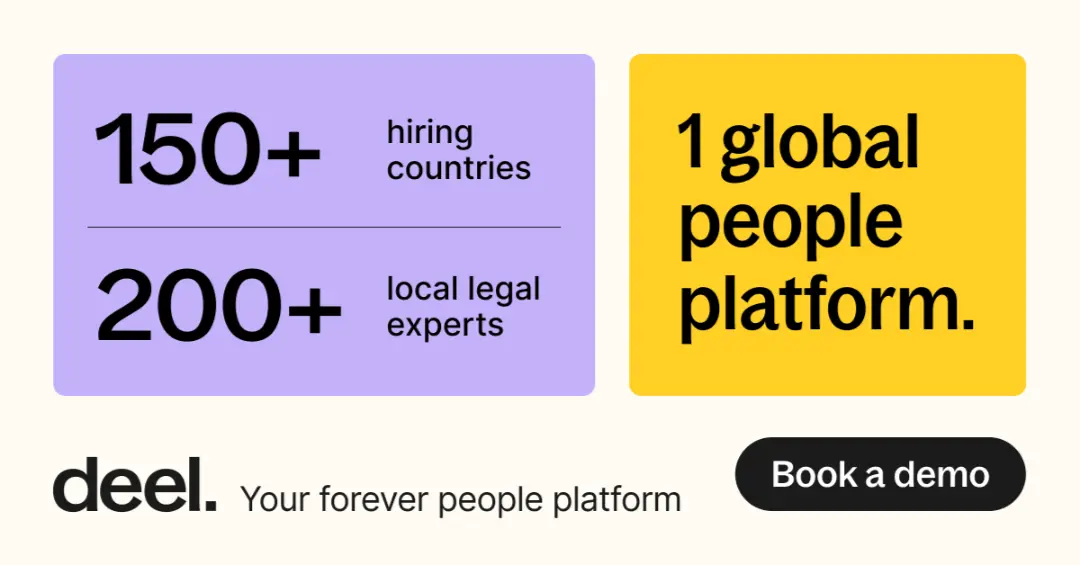
There are several major Deel benefits for UK businesses, particularly those operating remotely or planning to expand internationally. While many payroll and HR systems focus mainly on domestic workforce management, Deel is designed around global operations, which makes it stand out in the international hiring space.
One of the biggest advantages is simplification. Hiring internationally often creates operational complexity very quickly. Businesses may need separate contracts, local compliance checks, international payment processes and onboarding systems for each country they operate in. Deel attempts to bring these tasks together into one centralised platform.
For startups and lean teams, this can save a considerable amount of time. Instead of manually handling multiple systems and spreadsheets, founders can manage contractors, payroll and HR workflows from one dashboard. This is a major reason why many positive opinions in a Deel platform review focus on convenience and operational efficiency.
Another important advantage is speed. Traditional international hiring can take months if businesses need to establish local entities or navigate unfamiliar regulations independently. Deel helps businesses move faster when hiring overseas workers, which can be valuable in competitive industries where securing talent quickly matters.
The platform can also help reduce administrative pressure. Managing contracts, tax forms, invoices and compliance requirements manually can become difficult as businesses scale. Deel centralises much of this information, helping companies stay organised while reducing repetitive admin work.
A strong deel payroll review should also mention currency flexibility. Businesses paying workers internationally often face issues around currency conversion, payment delays and inconsistent processes. Deel helps streamline payments across different regions, making the process easier for both employers and contractors.
Another of the major Deel benefits is support for remote-first businesses. Since many startups now operate with distributed teams, Deel aligns well with modern remote work structures. Businesses no longer need to restrict hiring to one city or country, which can improve access to talent significantly.
From an HR perspective, the platform also helps businesses standardise onboarding and worker management processes. A detailed deel hr review typically highlights features such as document management, onboarding workflows and people operations support. These tools become increasingly valuable as teams grow beyond a handful of workers.
Scalability is another key advantage. A business may initially use Deel only for contractor payments, but later expand into global payroll or employer of record services as it enters new markets. This flexibility allows businesses to grow without needing to completely replace their workforce systems later.
Finally, Deel can help create a more professional experience for workers. Structured contracts, organised onboarding and reliable payment systems may improve trust and reduce friction when working with international contractors or employees.
Deel Payroll Review
A detailed deel payroll review should focus on how effectively the platform handles international payroll complexity rather than simply processing employee payments. Global payroll is far more demanding than domestic payroll because businesses must manage different tax systems, currencies, labour laws and payment requirements across multiple countries.
This is where Deel attempts to differentiate itself from traditional payroll software.
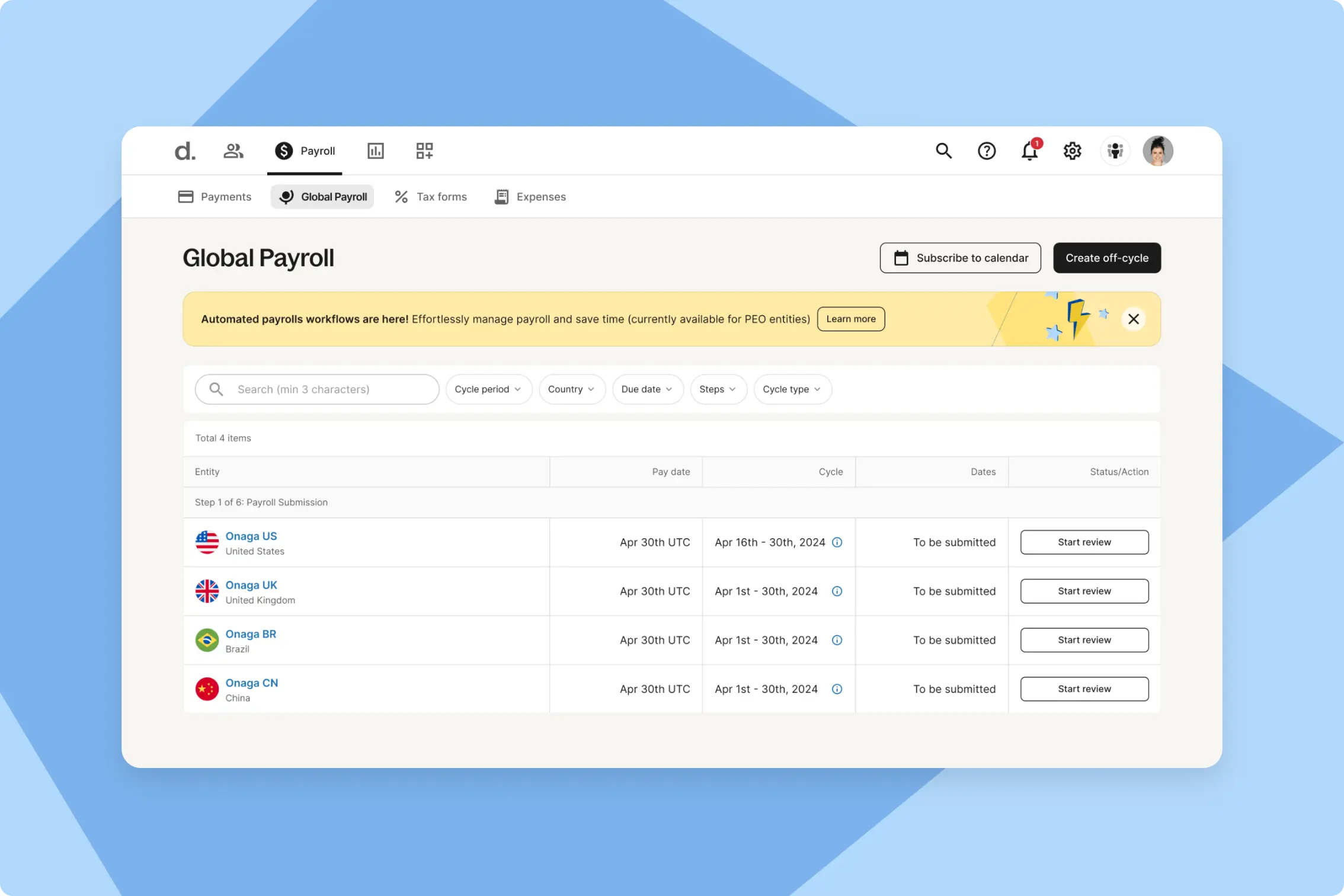
For UK startups and SMEs hiring internationally, Deel provides a centralised way to manage payroll operations across global teams. Instead of juggling local payroll providers, spreadsheets and separate payment systems, businesses can manage much of the process through one platform.
One of the strongest aspects of Deel’s payroll functionality is its support for international payments. Businesses working with overseas employees or contractors often struggle with delayed transfers, inconsistent payment methods and currency conversion issues. Deel helps streamline these processes by supporting multi-country payment workflows in one system.
Another major advantage is payroll visibility. As businesses grow internationally, payroll data can quickly become fragmented. Deel helps consolidate payroll management, which may make reporting, forecasting and operational oversight easier for founders and finance teams.
Compliance is another important factor in any deel payroll review. International payroll introduces legal and tax considerations that many startups are unfamiliar with. Deel is designed to help businesses manage payroll processes in line with local employment requirements, which may reduce the risk of administrative errors or non-compliant arrangements.
This can be especially valuable for startups without dedicated HR or legal departments. Rather than researching employment regulations independently in every market, businesses can use Deel to create a more structured and standardised process.
The platform also supports contractor payments alongside employee payroll, which is particularly useful for remote-first businesses. Many companies operate hybrid workforce structures with a mixture of freelancers, consultants and permanent employees. Deel allows businesses to manage these worker types together more efficiently.
Automation is another key strength. Deel reduces the need for repetitive manual tasks by centralising invoices, payment approvals, onboarding workflows and payroll processes. For lean businesses, this may save considerable time each month.
That said, Deel may not be ideal for every payroll use case.
If your business only employs UK-based staff, you may not need the advanced international payroll infrastructure that Deel offers. Simpler payroll tools could be more cost-effective for domestic-only operations.
Pricing may also become a consideration for smaller teams. Deel’s value tends to increase as international complexity increases. Businesses with only occasional overseas contractors may not fully use all the platform’s capabilities.
Overall, this deel payroll review shows that Deel is strongest for internationally focused businesses that want to simplify global payroll operations, improve compliance processes and reduce admin overhead while scaling remote teams.
Businesses wanting to see the payroll platform in action can book a free demo here: https://startupdeals.co.uk/recommends/deel
Deel HR Review
A thorough deel hr review should look at whether the platform genuinely improves people management for international teams rather than simply offering basic HR features alongside payroll.
Deel has increasingly positioned itself as more than just a payroll provider. The platform now includes several HR-focused tools designed to help businesses manage workers, onboarding, documentation and people operations more efficiently across different countries.
For startups and SMEs, one of the biggest HR challenges is consistency. As teams become more distributed, businesses often end up using disconnected tools for onboarding, contracts, employee records and HR administration. Deel attempts to bring these processes together into one central platform.
One of the most useful HR-related features is onboarding management. Businesses hiring internationally can use Deel to organise contracts, documentation and worker setup processes in a more structured way. This can improve the onboarding experience for both employees and contractors while reducing manual admin work internally.
Document management is another valuable feature highlighted in many positive discussions around Deel benefits. Businesses managing remote teams often deal with contracts, tax forms, identification documents and compliance paperwork across multiple jurisdictions. Deel centralises much of this information, helping businesses stay organised as teams grow.
The platform also supports worker management processes such as time off tracking, employee records and HR workflows. While Deel may not replace every advanced enterprise HR system, it offers enough functionality for many startups and scaling businesses to manage international teams more effectively.
Another advantage is workforce visibility. Remote businesses can sometimes struggle with fragmented worker data spread across spreadsheets, email threads and different HR tools. Deel helps centralise workforce information, which can make management and reporting easier.
This is where the broader Deel platform review becomes important. Deel is not only trying to solve payroll issues. It is building an ecosystem around global workforce management, combining HR, payroll, compliance and contractor operations together.
For many startups, this integrated approach is appealing because it reduces software fragmentation. Rather than paying for separate systems across HR, onboarding and international contractor management, businesses may be able to manage multiple functions through Deel.
However, there are some limitations to consider.
Businesses requiring highly advanced HR functionality may still need additional HR software alongside Deel. Enterprise-level performance management, recruitment workflows and deep HR analytics may require more specialised tools depending on the organisation’s size and complexity.
There is also a learning curve for businesses new to global HR operations. Because Deel handles international workforce processes, the platform naturally includes more complexity than simple local HR software.
Overall, this deel hr review shows that Deel works particularly well for remote-first businesses, startups and international teams that want to centralise onboarding, worker management and global HR administration in one platform.
How to Use Deel Step by Step
For businesses new to international hiring, the idea of managing overseas contractors, payroll and compliance can feel overwhelming at first. One reason many founders search for a Deel platform review is to understand how the system actually works in practice and whether it simplifies global operations enough to justify the cost.
While the exact setup process will vary depending on your business model and hiring needs, most companies will follow a similar workflow when using Deel.
Step 1: Create Your Account
The first step is creating a Deel account and setting up your company profile. Businesses typically provide company details, team information and payment settings during onboarding.
This stage is also where businesses begin deciding how they plan to use the platform. Some companies use Deel mainly for contractor payments, while others use employer of record services or full global payroll support.
Step 2: Add Contractors or Employees
Next, businesses can begin adding workers to the platform. Deel supports both contractors and employees, which is useful for businesses operating with mixed workforce structures.
For contractors, businesses can typically generate agreements, define payment terms and organise onboarding documentation through the platform. This is one reason many positive opinions in a Deel platform review focus on operational convenience.
For employees, businesses may use Deel’s employer of record infrastructure where available, allowing international hiring without creating local entities in each country.
Step 3: Manage Contracts and Documentation
International hiring often creates paperwork challenges. Deel helps businesses centralise contracts, tax documents and onboarding records in one system.
This can reduce manual administration significantly for startups managing workers across several countries.
Many Deel benefits become more obvious at this stage because businesses no longer need to rely on spreadsheets, email attachments and fragmented HR processes.
Step 4: Process Payments and Payroll
Once workers are onboarded, businesses can manage payroll and contractor payments through the platform.
This is a key part of any deel payroll review because international payments can become complicated very quickly without structured systems in place.
Deel helps businesses organise payment schedules, currencies and workforce payment processes more efficiently. This can be especially useful for remote-first businesses paying contractors globally every month.
Step 5: Manage Ongoing HR Operations
Businesses can also use Deel for ongoing HR management tasks such as onboarding workflows, worker records and document management.
This is where the broader deel hr review becomes relevant. Deel is increasingly positioned as a workforce management platform rather than only a payroll solution.
Step 6: Scale Internationally
As businesses grow, Deel can scale alongside them. Companies may begin with only a few contractors and later expand into international payroll, employer of record services and larger distributed teams.
This scalability is one of the platform’s strongest long-term advantages for startups planning international growth.
Businesses wanting to explore the setup process in more detail can book a free demo here: https://startupdeals.co.uk/recommends/deel
Deel Pros and Cons
No Deel Review would be complete without looking objectively at both the strengths and weaknesses of the platform. While Deel offers significant advantages for international hiring and workforce management, it may not suit every business equally well.
Pros of Deel
Strong International Hiring Support
One of the biggest Deel benefits is the ability to hire and manage workers internationally without needing to build complex local infrastructure. For startups and SMEs expanding globally, this can save substantial time and operational effort.
Centralised Workforce Management
Deel combines payroll, contractor payments, onboarding, compliance and HR processes in one system. This makes the platform attractive for businesses trying to reduce operational fragmentation.
Many positive opinions in a Deel platform review focus on the convenience of managing distributed teams through a single dashboard.
Helpful for Remote-First Businesses
Remote work is now common across startups, technology businesses and digital agencies. Deel aligns well with this modern working model by supporting international teams and global workforce structures.
Scalable for Growing Teams
Businesses can begin with basic contractor management and later expand into global payroll and employer of record services. This flexibility makes Deel suitable for businesses planning long-term growth.
Simplifies International Payroll
A strong deel payroll review should recognise that Deel reduces some of the complexity associated with paying international workers across different countries and currencies.
Organised HR Processes
The platform also supports onboarding, document management and workforce administration, which strengthens its position within the global HR software market. This is often highlighted positively in a detailed deel hr review.
Cons of Deel
May Be Too Advanced for Small Local Businesses
Businesses operating only within the UK may not need Deel’s international capabilities. Simpler payroll or HR systems may provide better value for domestic-only teams.
Pricing Can Be Higher Than Basic Payroll Tools
Because Deel offers broader global infrastructure and compliance support, pricing may feel expensive for smaller businesses with limited international hiring needs.
The platform generally delivers stronger value for businesses actively managing international workers.
Learning Curve for New Users
International payroll and compliance are naturally more complex than local payroll. Businesses new to global workforce management may need time to understand the platform fully.
Some Businesses May Still Need Additional HR Tools
Although Deel includes HR functionality, larger organisations with advanced recruitment, performance management or analytics requirements may still rely on additional specialist HR software.
Overall, the strengths of Deel are most obvious for internationally focused businesses. The more global complexity your business faces, the more valuable the platform is likely to become.
Deel vs Alternatives
When researching international payroll and workforce platforms, most businesses do not look at Deel in isolation. They usually compare it against other global hiring, payroll and HR providers to determine which platform best suits their operational needs, budget and hiring strategy.
A balanced Deel Review should acknowledge that while Deel is one of the most recognised names in the global workforce space, it is not the only option available. Some businesses comparing Deel against competitors like Remote or Oyster may focus heavily on international payroll flexibility, onboarding and contractor management features.
One of Deel’s main strengths compared with many alternatives is breadth. The platform combines contractor management, employer of record services, payroll infrastructure and HR tools within one ecosystem. Some competing platforms focus heavily on payroll alone, while others prioritise HR management without offering the same international hiring support.
For startups and SMEs, this integrated approach can be appealing because it reduces the need to connect multiple systems together manually. Businesses searching for a Deel platform review often highlight convenience as a deciding factor.
Another area where Deel performs strongly is contractor management. Many remote-first businesses rely heavily on freelancers and international contractors. Deel’s infrastructure is designed specifically around this type of workforce structure, which gives it an advantage over more traditional payroll providers focused primarily on domestic employees.
Compared with simpler payroll platforms, Deel is generally more suitable for international operations. Businesses managing remote workers across multiple countries are more likely to benefit from Deel’s compliance and onboarding features than businesses operating only within the UK.
However, some alternatives may be more suitable depending on business size and requirements. For example, businesses focused entirely on UK payroll may find domestic payroll software more cost-effective and easier to manage. Companies with no international hiring plans may not fully use Deel’s broader infrastructure.
Larger enterprises may also require deeper HR functionality than Deel currently offers. While the platform includes onboarding and workforce management features, some organisations still prefer specialist enterprise HR systems for recruitment, performance management and advanced people analytics.
Pricing comparisons are also important. Some competitors may appear cheaper initially, especially for smaller teams. However, businesses should evaluate what is included within the platform. Deel’s value comes from combining several workforce functions together rather than operating purely as a payroll processor.
Another important consideration is scalability. Many startups begin using Deel for contractor payments before later expanding into employer of record services or global payroll as the business grows internationally. This flexibility can reduce disruption later because businesses may not need to migrate systems as quickly during expansion phases.
Overall, Deel remains one of the strongest options for startups, remote-first businesses and growing international teams that want a centralised workforce platform rather than separate payroll and HR systems.
Businesses wanting to compare features and explore the platform further can book a free demo here: https://startupdeals.co.uk/recommends/deel
Deel Pricing and Value
Pricing is one of the biggest considerations for businesses evaluating global payroll and HR software. A proper Deel Review should therefore look not only at the platform’s costs, but also at the value businesses may receive in return.
Deel is not positioned as a low-cost payroll solution. Instead, the platform focuses on helping businesses manage international workforce complexity more efficiently. Because of this, its pricing tends to make more sense for businesses actively hiring internationally or managing distributed teams.
For startups and SMEs, the most important thing is understanding what problems Deel is solving. International hiring often involves hidden operational costs such as compliance administration, contract management, payment processing, onboarding and legal complexity. Deel attempts to reduce those challenges through one centralised system.
This means the platform’s value is often tied directly to how internationally active your business is.
For example, a startup working with contractors across several countries may save considerable administrative time by centralising contracts, invoices and payments through Deel. Likewise, a business hiring employees internationally may avoid the costs and complexity associated with establishing local legal entities.
This is why many positive discussions in a Deel platform review focus on efficiency and scalability rather than simple software pricing alone.
Businesses using Deel primarily for contractor management may find the platform easier to justify because it reduces repetitive admin work while creating more professional onboarding and payment processes.
A strong deel payroll review should also recognise the financial value of operational simplification. Payroll mistakes, delayed payments or compliance issues can become expensive quickly when operating internationally. Deel aims to reduce some of that risk through structured systems and automated workflows.
From an HR perspective, the platform may also help businesses consolidate software spending. Rather than paying separately for onboarding systems, contractor management tools and international payroll infrastructure, Deel combines several functions together. However, smaller businesses should still evaluate pricing carefully.
If your company only hires locally within the UK and has no international workforce plans, Deel may feel unnecessarily advanced. Simpler payroll software may provide better value for purely domestic operations.
Businesses with only occasional overseas contractors may also need to consider whether they will use enough of the platform’s features to justify the ongoing costs.
That said, for remote-first startups, international agencies, technology businesses and scaling companies, Deel’s value proposition becomes much stronger. The more countries, contractors and workforce complexity involved, the more useful the platform is likely to become.
Ultimately, Deel should be viewed less as basic payroll software and more as an operational infrastructure platform for international workforce management.
PROMO Offer: Book a Free Demo
Businesses interested in exploring Deel can currently book a free demo to see how the platform works before making a commitment. This can be particularly useful for startups, SMEs and remote-first businesses that want to understand how Deel handles international payroll, contractor management and HR operations in practice.
The demo is designed to give businesses a clearer overview of the platform’s functionality, including global payroll workflows, onboarding systems, compliance tools and workforce management features. For businesses researching a Deel platform review, this can be a practical way to evaluate whether the platform matches your operational needs.
A free demo may also help businesses compare Deel against alternative payroll and HR platforms before deciding which system best supports international growth.
Companies considering global expansion, overseas hiring or remote workforce management may benefit most from booking a walkthrough because Deel’s strongest capabilities are usually tied to international operations rather than domestic payroll alone.
Businesses can use the demo to explore areas such as:
- International contractor management
- Employer of record services
- Global payroll workflows
- HR administration tools
- Compliance and onboarding systems
- Multi-country workforce management
- Remote team operations

For startups, one of the key Deel benefits is scalability. A business may begin with only a few overseas contractors and later expand into international payroll or employer of record services as the company grows. The demo can help founders understand how the platform may scale alongside their business over time.
Businesses can book a free demo here: https://startupdeals.co.uk/recommends/deel
Eligibility, product availability and promotional terms may vary depending on business type, location and operational requirements. Offers and platform features are subject to change—check current T&Cs.
General FAQs About Deel
Is Deel suitable for UK startups?
Yes, Deel is particularly suitable for UK startups hiring international contractors or remote employees. Many positive opinions in a Deel platform review focus on its ability to simplify global hiring and payroll management.
What does Deel do?
Deel helps businesses hire, onboard, manage and pay international contractors and employees through one platform. A typical Deel Review highlights payroll, HR and compliance management as core features.
Is Deel only for large companies?
No, Deel is commonly used by startups, SMEs and remote-first businesses as well as larger organisations. Many smaller businesses use Deel to manage overseas contractors more efficiently.
What are the main Deel benefits?
The main Deel benefits include simplified international hiring, centralised payroll management, contractor payments, onboarding support and global workforce administration.
Does Deel support global payroll?
Yes, Deel supports international payroll workflows across multiple countries. A detailed deel payroll review usually highlights multi-country payroll management as one of the platform’s strongest features.
Can Deel help with remote teams?
Yes, Deel is designed to support distributed and remote-first businesses. Many companies use the platform to manage contractors and employees across different regions.
Is Deel good for freelancers and contractors?
Deel is widely used for international contractor management. Businesses can organise contracts, onboarding and payments through one platform.
Does Deel include HR features?
Yes, the platform includes onboarding, document management and workforce administration tools. A typical deel hr review often highlights its ability to centralise people operations for remote teams.
Is Deel difficult to use?
Most businesses find the platform relatively user-friendly once setup is complete. However, international payroll and compliance naturally involve some learning curve.
Is Deel worth it for small businesses?
That depends on your hiring model. Businesses with international workers are more likely to benefit from Deel than companies operating only within the UK.
Does Deel replace payroll software?
For internationally focused businesses, Deel can replace several separate payroll and workforce management systems. Domestic-only businesses may still prefer local payroll software instead.
Can Deel help businesses expand internationally?
Yes, one of the major Deel benefits is helping businesses scale internationally without needing to build complex workforce infrastructure from scratch.
FAQs About the Free Demo Offer
Can I book a Deel demo for free?
Yes, eligible businesses can currently book a free demo to explore the platform and its global workforce features.
Who is the Deel demo best suited for?
The demo is most useful for startups, SMEs and businesses managing international contractors or remote employees.
What will the Deel demo show me?
The demo typically explains payroll workflows, onboarding systems, HR tools and international workforce management features.
Is the demo suitable for remote-first businesses?
Yes, many businesses researching a Deel platform review use the demo to evaluate remote team management capabilities.
Does the demo include payroll features?
Yes, businesses can usually explore international payment and payroll functionality during the walkthrough experience.
Can I ask HR-related questions during the demo?
Yes, businesses can ask about onboarding, contractor management and workforce administration features during the session.
Is the demo useful for international hiring?
Yes, businesses considering overseas hiring often use the demo to understand employer of record and contractor workflows.
Do I need a large company to use Deel?
No, many startups and SMEs use Deel to manage global contractors and distributed teams.
Is there any obligation after booking the demo?
No, booking a demo does not automatically commit businesses to a paid subscription or contract.
Can I compare Deel against other platforms during my research?
Yes, many founders use the demo while comparing international payroll and HR solutions.
Will the demo explain Deel benefits clearly?
Yes, the walkthrough is designed to explain major Deel benefits including payroll management, onboarding and global workforce operations.
Is the platform suitable for UK businesses?
Yes, Deel is widely used by UK businesses hiring internationally or managing remote teams.
Can the demo help me understand pricing?
Yes, businesses can usually discuss platform structure and workforce requirements during the consultation.
Are there eligibility requirements for the demo?
Eligibility and product availability may vary depending on location, hiring requirements and business structure.
Are offers or platform terms likely to change?
Yes, demos, services and platform availability are subject to change—check current T&Cs before proceeding.
Recap
This Deel Review has explored the platform’s payroll, HR and international workforce management capabilities in detail.
For UK startups, SMEs and remote-first businesses, Deel offers a structured way to manage global contractors, international employees and distributed teams from one platform. Instead of relying on disconnected payroll systems, spreadsheets and manual onboarding processes, businesses can centralise workforce operations more efficiently.
One of the biggest Deel benefits is operational simplification. Businesses hiring internationally often face challenges around contracts, payments, compliance and onboarding. Deel aims to reduce that complexity while helping businesses scale more confidently across multiple countries.
The platform is particularly strong for startups and growing businesses with remote hiring strategies. Companies managing overseas freelancers, contractors or international employees are far more likely to benefit from Deel’s infrastructure than businesses operating entirely within the UK.
This article has also covered a detailed deel payroll review and deel hr review to help businesses understand where the platform performs best. While Deel may not be the cheapest option for small domestic-only teams, its value becomes much clearer for businesses operating internationally.
For founders planning international growth, remote hiring or global workforce expansion, Deel is one of the strongest all-in-one platforms currently available.
Businesses interested in exploring the platform further can book a free demo here: https://startupdeals.co.uk/recommends/deel
Conclusion
Choosing the right international payroll and workforce platform can have a major impact on how efficiently your business scales.
As this Deel Review has shown, Deel is designed specifically for businesses managing remote teams, overseas contractors and international employees. Rather than functioning as simple payroll software, the platform combines payroll, HR, onboarding, contractor management and compliance tools into one ecosystem.
For UK startups and SMEs, this can create significant operational advantages. Businesses hiring internationally often struggle with fragmented systems, inconsistent onboarding processes and complex cross-border payroll administration. Deel attempts to simplify those challenges through one centralised platform.
The platform is especially valuable for remote-first businesses and scaling startups that want flexibility when hiring talent globally. Many of the strongest Deel benefits become more obvious as businesses grow internationally and workforce complexity increases.
This article has also explored a practical deel payroll review and deel hr review to help founders understand where Deel performs best. While the platform may be more advanced than some businesses require, it is one of the strongest solutions available for companies managing international teams at scale.
Ultimately, Deel is best suited for businesses that want to reduce operational friction while building global teams more efficiently.
If your company is planning international hiring, expanding remotely or improving workforce management processes, Deel is well worth considering.
Latest posts:
- Zempler Bank Review 2026: Is It Good Value for UK Startups?
 Introduction Zempler Bank offers a genuine UK business bank account from £0 per month, with app and online banking, Post Office cash deposits and built-in tools for invoicing, receipts and… Read more: Zempler Bank Review 2026: Is It Good Value for UK Startups?
 - Hoxton Mix vs Virtually There: Which Virtual Office Service Is Better?
 Introduction If you’re comparing Hoxton Mix vs Virtually There, you’re likely searching for a virtual office provider that offers the right balance of professionalism, affordability, and flexibility. Whether you’re launching… Read more: Hoxton Mix vs Virtually There: Which Virtual Office Service Is Better?
 - Hoxton Mix vs Icon Offices: Which Virtual Office Is Better?
 Introduction Choosing a virtual office provider can have a significant impact on how your business is perceived, how you manage your mail, and even how effectively you maintain privacy as… Read more: Hoxton Mix vs Icon Offices: Which Virtual Office Is Better?
 - 7 Powerful Benefits of Using a Hoxton Mix Virtual Office Address
 Introduction For startups, freelancers, sole traders and growing SMEs, establishing a professional business presence can be challenging. Renting physical office space in London is often expensive, particularly during the early… Read more: 7 Powerful Benefits of Using a Hoxton Mix Virtual Office Address
 - Hoxton Mix Review: Features, Pricing, Pros and Cons Explained
 Introduction If you’re searching for an honest and detailed hoxton mix review, you’re likely comparing virtual office providers and trying to decide whether Hoxton Mix offers good value for your… Read more: Hoxton Mix Review: Features, Pricing, Pros and Cons Explained
 - Hoxton Mix Virtual Office Discount: Save 10% on Your First 12 Months
 Introduction If you’re looking for a professional London business address without the cost of renting physical office space, a Hoxton Mix Virtual Office discount could help you reduce your startup… Read more: Hoxton Mix Virtual Office Discount: Save 10% on Your First 12 Months
 - Tide Referral Code 2026: Powerful Guide to Claim £200 Cashback with STARTUP200
 Introduction If you’re looking for a Tide referral code in 2026, you’re probably searching for the best possible deal before opening a business account. Whether you’re a sole trader, freelancer,… Read more: Tide Referral Code 2026: Powerful Guide to Claim £200 Cashback with STARTUP200
 - Tide vs High Street Banks: Powerful 2026 Review
 Introduction Choosing the right business banking solution is one of the most important decisions a UK business owner can make. Whether you’re a sole trader, freelancer, contractor, startup founder, or… Read more: Tide vs High Street Banks: Powerful 2026 Review
 - Tide Business Account for Tradespeople | Powerful Guide 2026
 Introduction Running a trade business involves much more than completing jobs and keeping customers happy. Whether you’re a plumber, electrician, builder, carpenter, roofer, landscaper, painter, heating engineer, or general contractor,… Read more: Tide Business Account for Tradespeople | Powerful Guide 2026