

Introduction
Learning how to create a startup business plan is one of the most useful steps you can take before launching, funding or growing a new business. Whether you are a UK sole trader, freelancer, limited company founder, small business owner or early-stage startup, a clear plan helps you understand what you are building, who it is for, how it will make money and what needs to happen next.
A startup business plan does not need to be complicated, corporate or filled with jargon. In fact, the best plans are usually clear, practical and easy to revisit. They explain your business idea, target market, competitive position, pricing, marketing strategy, financial forecasts and operational priorities. This gives you a structured way to test your idea before investing too much time, money or energy.
For many founders, the challenge is not motivation. It is knowing where to begin. You may have a strong idea, but still feel unsure about how to turn that idea into a realistic plan. You might be asking what should go into a business plan for startups, whether you need a formal document, how detailed your forecasts should be, or whether a startup business plan template is enough to get started. This guide is designed to answer those questions in a straightforward way.
A good plan can also support funding applications, investor conversations, grant submissions, business bank account applications and internal decision-making. Even if you are self-funding, writing things down forces you to think carefully about costs, risks, customer demand and revenue potential. It also gives you something to measure progress against once your business is live.
This guide explains how to write a business plan for a startup in a practical, UK-focused way. It covers the core sections you should include, common mistakes to avoid, how to approach financial forecasting, and how to adapt your plan depending on whether you are launching as a sole trader, freelancer, limited company or growing startup.
Any tools, accounts, services or offers mentioned in this article should be checked before applying, as eligibility criteria, pricing and availability can change.
Contents
- How to Create a Startup Business Plan: Start with the Right Purpose
- Define Your Business Idea Clearly
- Understand Your Target Market
- Research Your Competitors
- Build Your Business Model
- Plan Your Products and Services
- Create Your Marketing Strategy
- Map Your Operations
- Prepare Your Financial Forecasts
- Choose the Right Startup Business Plan Template
- Avoid Common Business Plan Mistakes
- Review and Update Your Plan
- FAQs
- Recap
- Conclusion
How to Create a Startup Business Plan: Start with the Right Purpose
Before writing the details, it is important to understand why you are creating the plan in the first place. A startup business plan should not simply be a document you complete once and forget about. It should be a practical planning tool that helps you make better decisions, reduce uncertainty and stay focused as your business develops.
For some founders, the main purpose of a business plan for startups is to secure funding. A lender, investor, grant provider or business partner may want to see evidence that your idea has been properly researched. In this case, your plan needs to clearly explain the opportunity, the market, your route to revenue, your financial forecasts and the assumptions behind your numbers.
For others, the purpose is internal clarity. You may not need outside investment, but you still need to understand your startup costs, pricing, sales channels, marketing priorities and break-even point. This type of startup business plan can be simpler, but it should still be specific enough to guide your actions.
A common mistake is thinking that a business plan must be long to be useful. In reality, the best plan is the one that matches your stage of business. If you are testing an idea, a short plan may be enough. If you are applying for finance or planning a significant launch, you will need more detail. A startup business plan template can help you structure your thinking, but it should never replace proper research or realistic forecasting.
The purpose of your plan should shape the tone and level of detail. If it is for your own use, plain language and practical notes are fine. If it is for an external reader, it should be polished, well-structured and easy to follow. Either way, the goal is the same: to explain what the business does, who it serves, how it will attract customers and how it can become financially sustainable.
When deciding how to write a business plan for a startup, start by asking three questions. What decision will this plan help me make? Who needs to read it? What evidence do I need to include to make it credible? These questions keep the plan focused and prevent it from becoming a generic document.
A strong plan gives you direction, but it also gives you flexibility. Startups often change as they learn more about customers, pricing and demand. Your plan should therefore be treated as a living document that can be improved as new information becomes available.
Define Your Business Idea Clearly
A strong startup business plan begins with a clear explanation of the business idea. This may sound obvious, but many early-stage founders struggle to describe their business in a simple way. If you cannot explain what you do, who you help and why it matters, it will be difficult for customers, lenders, investors or partners to understand the opportunity.
Your business idea section should explain the problem you are solving and the value you are creating. For example, are you helping small businesses save time, helping consumers reduce costs, improving access to a service, or offering a better version of something already available? The clearer the problem, the easier it becomes to show why your business has potential.
A business plan for startups should also explain who the business is designed for. Avoid saying your product or service is for “everyone”. Most successful startups begin with a specific audience. This might be UK freelancers, local tradespeople, ecommerce sellers, professional services firms, busy parents, landlords, students or another defined group. A focused audience makes your marketing, pricing and positioning much easier to plan.
You should also describe what makes your idea different. This does not always need to be a completely new invention. Many good businesses succeed because they are faster, simpler, more affordable, more personal, more convenient or better suited to a particular customer group. Your startup business plan should highlight this difference without exaggerating it.
At this stage, it helps to write a short positioning statement. For example: “We help UK freelancers manage client bookings and invoices in one simple platform.” This type of sentence forces you to clarify the customer, the problem and the solution. It can later support your website copy, marketing material and investor pitch.
A startup business plan template will often include sections such as business overview, mission statement, vision and objectives. These are useful, but they should be practical rather than vague. Instead of writing a broad mission such as “to provide excellent service”, explain what excellent service means in your market. Does it mean same-day replies, transparent pricing, specialist advice, simple onboarding or flexible support?
When thinking about how to write a business plan for a startup, remember that clarity is more persuasive than complexity. You do not need to make the idea sound bigger than it is. You need to make it understandable, credible and commercially realistic.
By the end of this section, a reader should understand what your business does, who it helps, what problem it solves and why there is a reason for it to exist.
Understand Your Target Market
One of the most important parts of a startup business plan is understanding who your customers are and why they would choose your business. Without proper market research, even a strong product or service can struggle because it is aimed at the wrong audience or positioned incorrectly.
Your target market section should explain who your ideal customer is, what challenges they face, how they currently solve those challenges and why your business provides a better solution. This helps transform a general business idea into a commercially focused opportunity. A business plan for startups becomes far more credible when it demonstrates real customer understanding rather than assumptions.
Start by identifying specific customer groups. For example, if you are launching a bookkeeping service, your target market may be UK sole traders, freelancers and micro businesses with limited accounting knowledge. If you are building a fitness app, your audience may be busy professionals who want flexible home workouts. Narrowing your audience allows your marketing, branding and pricing to become more focused and effective.
Good market research combines both data and observation. You can research industry trends, consumer behaviour, competitor reviews, online communities and keyword demand to better understand your audience. You can also speak directly to potential customers to learn what they value, what frustrates them and what influences their buying decisions.
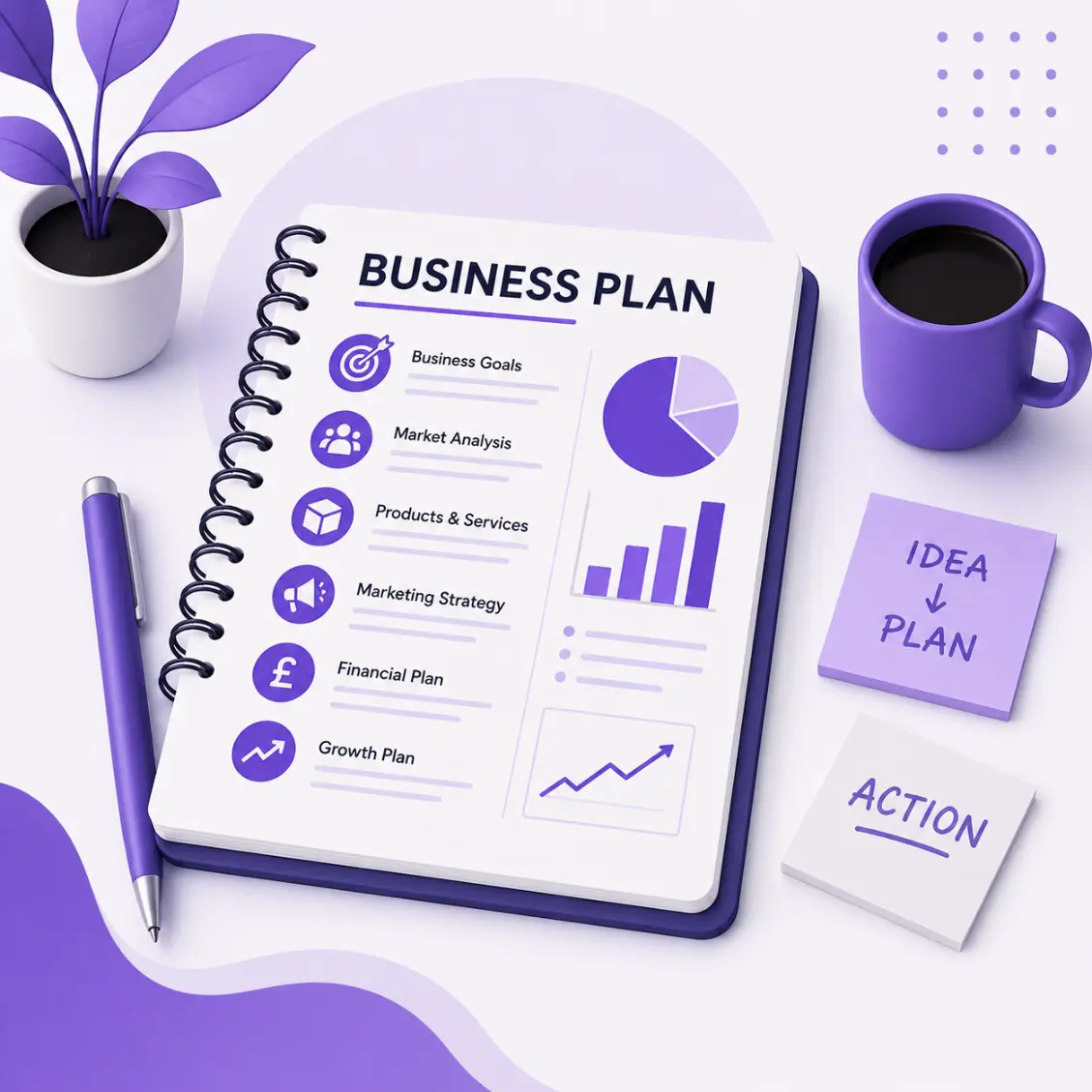
A startup business plan template will usually include a market analysis section. Instead of filling this with generic statistics, focus on information that directly relates to your business idea. Explain how large the market is, whether demand is growing and what trends may influence future opportunities. For example, remote working, AI adoption, sustainability, digital services and flexible business models continue to shape many UK industries in 2026.
You should also think carefully about customer spending behaviour. Are customers likely to pay monthly subscriptions, one-off fees, retainers or premium pricing? Understanding this early makes financial forecasting much easier later in the planning process.
When learning how to write a business plan for a startup, remember that investors and lenders often look for evidence that demand already exists. They want reassurance that your idea solves a genuine problem rather than simply being interesting or innovative. This means your market research should support your revenue assumptions wherever possible.
The goal is not to predict the future perfectly. It is to show that you understand your audience well enough to build a business around their needs. Strong customer understanding improves product development, pricing, marketing and long-term growth decisions across every stage of your business.
Research Your Competitors
Every successful startup operates within a competitive market, even if the competition is indirect. Your startup business plan should therefore include a realistic competitor analysis that explains who else serves your target audience and how your business compares.
A common mistake among founders is claiming they have no competitors. In reality, customers are always solving problems somehow, whether through existing businesses, alternative products, manual processes or even doing nothing at all. A good business plan for startups acknowledges competition openly and explains how the business intends to stand out.
Begin by identifying your direct competitors. These are businesses offering similar products or services to the same audience. Then identify indirect competitors, which may solve the same problem differently. For example, if you offer accounting software for freelancers, your competitors may include spreadsheets, bookkeeping apps and outsourced accountants.
Your competitor analysis should examine areas such as pricing, customer experience, branding, reviews, marketing channels, service quality and unique selling points. Look for patterns in what customers like and dislike. Negative reviews can be especially valuable because they reveal gaps in the market that your startup may be able to address.
A startup business plan template often includes a SWOT analysis section covering strengths, weaknesses, opportunities and threats. This can be useful when comparing your business against competitors. However, the analysis should remain practical and evidence-based rather than overly optimistic.
You do not necessarily need to compete by being cheaper. Many startups succeed because they offer a more specialised, convenient or customer-focused experience. For example, a startup may target a specific niche ignored by larger competitors or simplify a complicated process for smaller businesses.
It is also important to analyse competitor marketing strategies. Study their websites, social media activity, advertising, email marketing and customer engagement. This can help you understand which channels may work best for your own business and where there may be opportunities to differentiate yourself.
When considering how to write a business plan for a startup, remember that readers want to see commercial awareness. Investors and lenders know competition exists. What matters is whether you understand the market and have a realistic strategy for attracting customers.
Your startup business plan should therefore explain not only who your competitors are, but why customers would reasonably choose your business instead. This could include pricing transparency, specialist expertise, better support, faster delivery, improved technology, local knowledge or a stronger customer experience.
A strong competitor analysis demonstrates maturity, preparation and strategic thinking. It shows that your business idea has been tested against real market conditions rather than built purely on assumptions.
Build Your Business Model
A business model explains how your startup will make money. This is one of the most important sections of any startup business plan because it turns your idea into a commercial strategy. Even a strong product or service can fail if the pricing, revenue structure or operational costs are unrealistic.
Your business model should clearly explain what you are selling, how customers pay, how often they pay and what level of profit you expect to generate. A business plan for startups should make this easy to understand rather than overly technical or complicated.
There are many different startup business models. Some businesses rely on one-off purchases, while others use subscriptions, retainers, commissions, licensing, memberships or advertising revenue. Choosing the right model depends on your industry, customer expectations and long-term growth plans.
For example, a digital service provider may use monthly recurring subscriptions because they create predictable income. A consultant or freelancer may charge project-based fees or hourly rates. Ecommerce businesses often rely on product margins, repeat purchases and upselling opportunities.
When using a startup business plan template, you should explain your pricing strategy in detail. Why have you chosen those prices? Are you competing on affordability, premium positioning or value? How do your prices compare with competitors? Can your margins support growth?
It is also important to consider customer acquisition costs. Many startups underestimate how much time and money it takes to attract paying customers. Your startup business plan should therefore include realistic assumptions around advertising, sales activity, software subscriptions, operational costs and support requirements.
Another key part of the business model is scalability. Investors especially want to understand whether revenue can grow without costs increasing at the same rate. For example, software businesses can often scale more efficiently than service-based businesses because digital products can be sold repeatedly without major increases in labour costs.
Learning how to write a business plan for a startup means balancing ambition with realism. Overly aggressive revenue forecasts without supporting evidence can weaken the credibility of the entire document. It is usually better to present conservative projections supported by clear assumptions.
You should also think about future revenue opportunities. Could you introduce additional products, premium tiers, consulting services, training, partnerships or recurring memberships later on? Including future expansion ideas shows strategic thinking while keeping the initial business model focused.
A clear business model demonstrates that you understand not only your idea, but also the financial mechanics behind running a sustainable business. It helps readers understand how the business will generate income, manage costs and move towards profitability over time.
Plan Your Products and Services
A successful startup business plan should clearly explain what your business is selling and why customers are likely to pay for it. This section is where you define your products or services in more detail and show how they solve real problems for your target audience.
Many founders make the mistake of focusing too heavily on features rather than outcomes. Customers are usually more interested in benefits than technical details. For example, a customer may not care about complex software functionality, but they do care about saving time, reducing costs or improving efficiency. A business plan for startups should therefore explain the practical value delivered to customers.
Start by outlining your core product or service offering. Explain exactly what customers receive, how it works and who it is designed for. If you offer multiple products or services, group them logically and explain how they fit together. Avoid unnecessary jargon and keep descriptions easy to understand.
A startup business plan template often includes sections for product development, pricing and future expansion. This is important because readers want to understand whether the business has long-term growth potential or relies on a single offer. For example, a freelance consultant may later expand into online courses, memberships or digital products. An ecommerce business may introduce premium product lines or subscription packages over time.
You should also explain your delivery model. Will products be sold online, through retail partnerships, by appointment or through subscription access? Will services be delivered remotely, locally or nationally? These operational details help make the business feel commercially realistic.
Another important consideration is intellectual property and differentiation. If you have developed original technology, branding, systems or processes, explain how these strengthen your competitive position. Even if your idea is not completely unique, your customer experience or niche focus may still create a valuable advantage.
When considering how to write a business plan for a startup, it is also important to think about customer retention. Acquiring customers can be expensive, so businesses that encourage repeat purchases or long-term relationships are often more sustainable. Explain how your business will encourage loyalty, repeat business or referrals.
You should also be realistic about development timelines and operational limitations. If your product is still being developed, explain the current stage and what still needs to happen before launch. Investors and lenders usually prefer realistic planning over exaggerated claims.
A strong product and service section reassures readers that your offer has been properly considered, positioned and aligned with customer demand. It also helps connect your market research with your financial forecasts and marketing strategy later in the startup business plan.
Create Your Marketing Strategy
A startup business plan is incomplete without a clear strategy for attracting customers. Even the best products or services can struggle if potential customers never hear about them. Your marketing strategy should therefore explain how you plan to generate awareness, traffic, leads and sales in a realistic and cost-effective way.
Many startups have limited budgets in the early stages, which means marketing activity must be focused carefully. A business plan for startups should identify the channels most likely to reach the target audience rather than attempting to be active everywhere at once.
Start by explaining how customers will discover your business. This could include search engines, social media, networking, referrals, online advertising, email marketing, partnerships, local marketing or content creation. Your strategy should align closely with your audience behaviour. For example, professional services firms may benefit from LinkedIn and SEO, while ecommerce brands may rely more heavily on Instagram, TikTok or paid advertising.
Search engine optimisation remains particularly important for startups in 2026 because organic traffic can generate long-term visibility without ongoing advertising costs. Your startup business plan should therefore explain whether content marketing, blog articles, guides or educational resources will form part of your strategy.
Brand positioning also plays a major role in customer acquisition. Explain how you want your business to be perceived in the market. Are you affordable, premium, specialist, fast, local, beginner-friendly or technology-focused? Consistent positioning helps customers understand why they should choose your business instead of competitors.
A startup business plan template will often include sections for sales and marketing forecasting. This means estimating how many customers you expect to acquire, how much they are likely to spend and how quickly your audience may grow. Conservative assumptions are usually more credible than aggressive projections without supporting evidence.
When learning how to write a business plan for a startup, remember that marketing is not only about attracting new customers. It also includes customer retention and relationship building. Email marketing, loyalty programmes, customer communities and strong support can all improve repeat business and referrals.
You should also consider your marketing budget carefully. Paid advertising costs have increased significantly across many platforms, so relying entirely on ads may be risky for early-stage startups. A balanced strategy combining organic growth, partnerships and targeted promotion is often more sustainable.
Your startup business plan should ultimately demonstrate that you understand how customers will move from awareness to purchase. A good marketing strategy connects audience research, competitor analysis and financial forecasting into a practical customer acquisition plan.
Map Your Operations
Operational planning is one of the most overlooked parts of a startup business plan, yet it plays a major role in determining whether a business can run efficiently and scale successfully. This section explains how the business will operate on a practical day-to-day basis.
A business plan for startups should outline the systems, tools, processes and resources required to deliver products or services consistently. Even if your business starts small, having clear operational planning helps reduce confusion, improve productivity and support future growth.
Begin by explaining your business structure. Will you operate as a sole trader, partnership or limited company? This decision affects tax, liability, accounting and administration responsibilities. Many UK startups choose limited companies because they can offer liability protection and may appear more established to customers or investors.
You should also explain where the business will operate from. Some startups are fully remote, while others require offices, retail premises, warehouses or mobile operations. Operational costs should reflect these decisions accurately within the startup business plan.
Technology and software are also important operational considerations in 2026. Many startups rely on cloud-based tools for accounting, communication, customer relationship management, project management and marketing automation. Explaining which systems support the business demonstrates preparation and professionalism.
A startup business plan template may also include staffing plans. If you intend to hire employees, freelancers or contractors, explain which roles are most important and when recruitment may become necessary. Labour costs are often one of the largest expenses for growing businesses, so realistic planning matters.
Operational risk management should also be addressed. For example, what happens if suppliers fail, software systems go offline or demand increases unexpectedly? Showing awareness of potential risks makes your startup business plan more balanced and commercially credible.
Another key consideration is scalability. Can your operations handle growth efficiently? For example, a service business may eventually require additional staff, while a digital business may scale more easily using automation and software systems. Investors and lenders often look closely at operational scalability when evaluating growth potential.
When considering how to write a business plan for a startup, remember that operations are not only about logistics. They are about creating reliable systems that allow the business to deliver value consistently while managing costs and customer expectations.
A well-structured operational plan reassures readers that the business is not built purely around ideas or ambition. It demonstrates that you understand the practical realities of running and growing the business day to day.
Prepare Your Financial Forecasts
Financial forecasting is one of the most important parts of any startup business plan because it shows whether the business is financially realistic. Even a strong idea can struggle if the numbers do not make sense or if costs have been underestimated.
A business plan for startups should include clear financial projections covering revenue, expenses, cash flow and profitability. These forecasts do not need to predict the future perfectly, but they should demonstrate that you understand the financial side of running the business.
Start by estimating your startup costs. These may include software, equipment, website development, branding, insurance, legal costs, stock, office space, marketing and professional services. Many startups underestimate early costs, so it is usually wise to include contingency funding where possible.
Next, forecast your expected revenue. Explain how many customers you expect to acquire, how much they are likely to spend and how frequently they may purchase from you. A startup business plan template often includes monthly forecasts for the first year and annual forecasts for the following years.
It is important to keep projections realistic. Overly optimistic revenue assumptions can weaken credibility, especially if there is little evidence supporting rapid growth. Conservative forecasting with clear reasoning is usually viewed more positively by investors, lenders and financial providers.

Cash flow forecasting is particularly important for startups. A business can appear profitable on paper while still running into financial difficulties if income arrives too slowly. Your startup business plan should therefore show when money is expected to come into the business and when expenses need to be paid out.
Break-even analysis can also strengthen the financial section. This helps identify the point at which your business covers its operating costs and begins generating profit. Understanding this milestone helps with pricing decisions, budgeting and financial planning.
When learning how to write a business plan for a startup, it is useful to separate fixed and variable costs. Fixed costs may include subscriptions, rent and salaries, while variable costs may increase with sales volume. This makes it easier to understand how scaling the business could affect profitability.
You should also include assumptions behind the numbers. For example, if you expect a certain customer growth rate, explain why. This transparency improves credibility and helps readers understand your financial logic.
A strong financial section shows that your startup business plan is grounded in realistic commercial thinking rather than optimism alone. It demonstrates that you understand costs, revenue drivers and financial sustainability from the beginning.
Choose the Right Startup Business Plan Template
Using a startup business plan template can make the planning process much easier, especially for first-time founders. Templates provide structure, help organise information and reduce the risk of missing important sections. However, not every template is suitable for every business.
A startup business plan should reflect your business stage, industry and goals rather than simply copying a generic document. Some founders only need a lean one-page plan, while others require a detailed document for funding applications or investor meetings.
A business plan for startups typically includes sections such as executive summary, market analysis, competitor research, products and services, marketing strategy, operations and financial forecasts. A good template should guide you through these sections logically while remaining flexible enough to adapt to your specific business.
Simple templates are often best for early-stage businesses. Long corporate-style documents can become overwhelming and may include unnecessary detail. A shorter plan that is clear, realistic and actionable is usually more valuable than a lengthy document filled with vague statements.
Digital planning tools have also become more common in 2026. Many startups now use cloud-based planning software, collaborative documents and AI-supported research tools to build and update plans more efficiently. These tools can save time, but founders should still review all content carefully to ensure accuracy and relevance.
When selecting a startup business plan template, think about who will read the document. If the plan is mainly for internal use, simplicity may be enough. If you are applying for funding, the plan should appear more polished and professionally structured.
Visual presentation also matters. Clean formatting, logical headings, charts and tables can make a business plan easier to understand. Investors and lenders often review multiple documents quickly, so readability is important.
Learning how to write a business plan for a startup also involves knowing what to leave out. Avoid filling templates with unnecessary jargon, unrealistic claims or generic corporate language. Every section should add value and support the overall business case.
It is also important to update your template regularly. A startup business plan should evolve alongside the business itself. Financial forecasts, marketing priorities and operational plans may change significantly during the first few years of growth.
Ultimately, a template should support your thinking rather than replace it. The strongest startup business plans are based on real research, practical strategy and realistic assumptions, not simply completed forms.
Avoid Common Business Plan Mistakes
Many startup founders spend significant time writing plans but still make mistakes that reduce credibility and weaken decision-making. Understanding these issues early can improve the overall quality of your startup business plan and make it more useful both internally and externally.
One of the most common mistakes is unrealistic financial forecasting. Some founders assume rapid growth without evidence or underestimate operational costs. A business plan for startups should balance ambition with realism. Investors and lenders are usually more impressed by conservative projections supported by clear assumptions than exaggerated revenue targets.
Another frequent issue is poor market understanding. Businesses sometimes define their audience too broadly or fail to explain why customers would switch from existing competitors. Your startup business plan should show detailed customer awareness and explain the problem your business solves clearly.
Many founders also spend too much time describing the product while neglecting marketing and sales strategy. A good idea alone is rarely enough. Readers want to understand how customers will discover the business and why they will purchase consistently over time.
Lack of competitor analysis is another weakness. Claiming there is “no competition” often damages credibility because every business competes for customer attention in some way. A strong startup business plan acknowledges competitors honestly and explains how the business intends to differentiate itself.
Another mistake is creating a document that is too generic. A startup business plan template can provide structure, but simply filling sections with vague language does not create a persuasive strategy. Specific examples, realistic planning and practical detail make a much stronger impression.
Overcomplicating the plan can also become a problem. Some founders include excessive jargon, technical detail or unnecessary length. Clear communication is usually more effective than complexity. A business plan should be easy for readers to understand quickly.
When learning how to write a business plan for a startup, many people also forget to update the document regularly. Markets change, customer behaviour evolves and financial assumptions shift over time. A business plan should therefore be treated as a living document rather than a one-time task.
Poor presentation can weaken even strong ideas. Spelling mistakes, inconsistent formatting and unclear structure may suggest lack of preparation. Clean formatting and logical organisation improve professionalism significantly.
The best startup business plans are practical, realistic and focused on solving genuine customer problems. Avoiding common mistakes improves not only the quality of the document itself, but also the quality of the decisions guiding the business.
Review and Update Your Plan
A startup business plan should never be treated as a static document that is written once and forgotten. Startups evolve constantly as founders gain more experience, customer feedback, market data and financial understanding. Reviewing and updating your plan regularly helps ensure that your strategy remains realistic and aligned with business goals.
Many founders begin with assumptions about pricing, demand, customer behaviour or marketing channels that later change once the business launches. This is normal. A business plan for startups should therefore provide flexibility while still giving the business a clear sense of direction.
Regular reviews help identify what is working and what needs improvement. For example, you may discover that one marketing channel generates stronger results than expected while another performs poorly. You may also find that customers respond differently to pricing or service packages than originally planned. Updating your startup business plan allows you to adapt strategically rather than reacting impulsively.
Financial forecasting should also be reviewed frequently. Revenue, expenses and cash flow projections often change during the first stages of growth. Comparing forecasts against actual performance helps improve future planning and financial decision-making.
A startup business plan template can make updates easier because it provides a consistent structure to revisit over time. Instead of rewriting the document from scratch, you can adjust individual sections as the business develops.
It is also useful to review your market research regularly. Customer expectations, technology trends and competitor activity can change quickly, especially in digital industries. Businesses that continue learning and adapting are usually better positioned for long-term growth.
When considering how to write a business plan for a startup, remember that planning is not only about launch preparation. It is also about creating an ongoing framework for business management. The plan should support strategic decisions throughout different stages of growth.
Reviewing your plan can also help identify new opportunities. For example, you may discover additional customer segments, expansion opportunities or new revenue streams that were not obvious during the initial planning stage.
Some founders schedule quarterly reviews, while others update plans annually or after major business milestones. The most important thing is consistency. A startup business plan becomes significantly more valuable when it is actively used to guide decisions rather than stored away after completion.
An updated plan also improves readiness for future funding opportunities, partnerships or expansion plans. Businesses that maintain accurate planning documents are usually better prepared to respond quickly when opportunities arise.
General FAQs About Startup Business Plans
What should a startup business plan include?
A startup business plan should include market research, competitor analysis, financial forecasts, products or services, marketing strategy and operational planning.
Why is a business plan for startups important?
A business plan for startups helps founders clarify goals, understand costs, attract funding and make more informed business decisions.
Can I use a startup business plan template?
Yes, a startup business plan template can provide structure and guidance, especially for first-time founders creating a new business.
How long should a startup business plan be?
Most startup business plans are between 10 and 30 pages depending on complexity, funding requirements and business stage.
How detailed should financial forecasts be?
A startup business plan should usually include at least 12 months of detailed financial projections and broader long-term forecasts.
Do investors require a startup business plan?
Many investors and lenders expect a business plan for startups because it demonstrates preparation, market understanding and financial awareness.
What is the biggest mistake when planning a startup?
One of the most common mistakes is unrealistic forecasting without evidence to support growth assumptions or customer demand.
Can AI help with business planning?
AI tools can help generate ideas, templates and research summaries, but founders should still review and customise the final startup business plan carefully.
Is a one-page business plan enough?
A simple one-page plan may work for early-stage planning, but larger businesses or funding applications often require more detail.
How often should I update my business plan?
A startup business plan should be reviewed regularly, especially after launch, major growth changes or financial updates.
Where can I access offers and discounts to help launch my business?
You can access our latest deals and discounts here.
Where can I get help writing a business plan?
Several UK organisations provide free business planning support, templates, and startup guidance. One of the most trusted resources is The Prince’s Trust Enterprise Programme, which offers mentoring and advice for aspiring entrepreneurs.
Recap
Creating a successful startup business plan is about much more than filling out a document. It is about understanding your market, defining your business model, planning your finances and building a realistic strategy for growth. Whether you are launching a freelance business, ecommerce brand, consultancy or technology startup, structured planning gives you a clearer path forward.
Throughout this guide, we explored how to create a startup business plan step by step, including customer research, competitor analysis, operational planning, marketing strategy and financial forecasting. Each section plays a role in helping founders make better decisions and reduce unnecessary risk during the early stages of business development.
A strong business plan for startups should remain practical, flexible and regularly updated. Markets change quickly, especially in 2026, and businesses that continue adapting often perform better long term. Using a startup business plan template can simplify the process, but successful planning still depends on realistic assumptions, proper research and clear goals.
If you are still refining your idea, focus on clarity rather than perfection. A startup business plan becomes more valuable when it is actively used to guide decisions rather than treated as a one-time exercise. Even a simple plan can provide structure, confidence and direction during the early stages of growth.
Conclusion
Learning how to create a startup business plan is one of the most valuable skills for any new founder, freelancer or small business owner. A clear plan helps turn ideas into structured opportunities by combining strategy, research, financial planning and customer understanding into one practical framework.
Many startups fail not because the idea is poor, but because planning was incomplete. Without understanding your audience, costs, competitors and route to revenue, it becomes much harder to make informed decisions or adapt effectively as the business grows. A well-prepared startup business plan reduces uncertainty and improves long-term focus.
This guide has explained how to write a business plan for a startup in a practical and realistic way for UK businesses in 2026. From defining your business idea and researching competitors to forecasting finances and reviewing operations, every section contributes towards building a more sustainable business foundation.
It is also important to remember that planning is not a one-time task. A business plan for startups should evolve alongside the business itself. Updating forecasts, refining marketing strategies and reviewing customer feedback regularly can help improve performance and identify new opportunities over time.
Whether you are applying for funding, preparing to launch or simply organising your ideas more effectively, taking the time to build a proper startup business plan can significantly improve your confidence and decision-making. The goal is not perfection from day one. The goal is creating a realistic roadmap that helps your business move forward with greater clarity, structure and purpose.
Latest Posts:
- Zempler Bank Review 2026: Is It Good Value for UK Startups?
 Introduction Zempler Bank offers a genuine UK business bank account from £0 per month, with app and online banking, Post Office cash deposits and built-in tools for invoicing, receipts and… Read more: Zempler Bank Review 2026: Is It Good Value for UK Startups?
 - Hoxton Mix vs Virtually There: Which Virtual Office Service Is Better?
 Introduction If you’re comparing Hoxton Mix vs Virtually There, you’re likely searching for a virtual office provider that offers the right balance of professionalism, affordability, and flexibility. Whether you’re launching… Read more: Hoxton Mix vs Virtually There: Which Virtual Office Service Is Better?
 - Hoxton Mix vs Icon Offices: Which Virtual Office Is Better?
 Introduction Choosing a virtual office provider can have a significant impact on how your business is perceived, how you manage your mail, and even how effectively you maintain privacy as… Read more: Hoxton Mix vs Icon Offices: Which Virtual Office Is Better?
 - 7 Powerful Benefits of Using a Hoxton Mix Virtual Office Address
 Introduction For startups, freelancers, sole traders and growing SMEs, establishing a professional business presence can be challenging. Renting physical office space in London is often expensive, particularly during the early… Read more: 7 Powerful Benefits of Using a Hoxton Mix Virtual Office Address
 - Hoxton Mix Review: Features, Pricing, Pros and Cons Explained
 Introduction If you’re searching for an honest and detailed hoxton mix review, you’re likely comparing virtual office providers and trying to decide whether Hoxton Mix offers good value for your… Read more: Hoxton Mix Review: Features, Pricing, Pros and Cons Explained
 - Hoxton Mix Virtual Office Discount: Save 10% on Your First 12 Months
 Introduction If you’re looking for a professional London business address without the cost of renting physical office space, a Hoxton Mix Virtual Office discount could help you reduce your startup… Read more: Hoxton Mix Virtual Office Discount: Save 10% on Your First 12 Months
 - Tide Referral Code 2026: Powerful Guide to Claim £200 Cashback with STARTUP200
 Introduction If you’re looking for a Tide referral code in 2026, you’re probably searching for the best possible deal before opening a business account. Whether you’re a sole trader, freelancer,… Read more: Tide Referral Code 2026: Powerful Guide to Claim £200 Cashback with STARTUP200
 - Tide vs High Street Banks: Powerful 2026 Review
 Introduction Choosing the right business banking solution is one of the most important decisions a UK business owner can make. Whether you’re a sole trader, freelancer, contractor, startup founder, or… Read more: Tide vs High Street Banks: Powerful 2026 Review
 - Tide Business Account for Tradespeople | Powerful Guide 2026
 Introduction Running a trade business involves much more than completing jobs and keeping customers happy. Whether you’re a plumber, electrician, builder, carpenter, roofer, landscaper, painter, heating engineer, or general contractor,… Read more: Tide Business Account for Tradespeople | Powerful Guide 2026