

Introduction
For many founders, freelancers, and small business owners, building a website is often the easy part. The real challenge comes afterwards: getting people to actually find it. That is where SEO for startups becomes one of the most important long-term marketing strategies any new business can invest in.
Search engine optimisation helps startups improve their visibility in Google search results, attract relevant visitors, and compete with larger companies without relying entirely on paid advertising. While many startup businesses focus heavily on social media or paid ads during the early stages, organic search traffic can provide a far more sustainable and cost-effective source of growth over time.
This guide is designed specifically for UK startups, SMEs, sole traders, and freelancers who want to understand the core principles behind search engine optimisation without unnecessary jargon or overly technical explanations. Whether you are launching an ecommerce business, a local service company, a consultancy, or a SaaS platform, understanding the SEO basics for startup businesses can help you build stronger online visibility from day one.
One of the biggest misconceptions surrounding SEO is that it is only useful for large companies with substantial marketing budgets. In reality, many smaller businesses are often in a stronger position to benefit from SEO because they can target highly specific search terms, niche audiences, and local search opportunities more effectively than larger competitors.
A strong startup SEO guide should focus on practical, realistic actions that new businesses can actually implement. That means improving website structure, creating useful content, understanding keywords, optimising pages correctly, and building authority gradually over time. SEO is rarely about shortcuts or quick wins. Instead, it is about consistency, relevance, and creating a better experience for both search engines and real users.
For founders looking for beginner SEO for startups advice, the good news is that many of the fundamentals remain relatively straightforward. You do not need advanced coding skills or a dedicated marketing department to start improving your visibility online. Small improvements made consistently can produce significant results over time.
Throughout this article, we will cover the most important SEO tips for startups, including keyword research, on-page optimisation, technical SEO basics, content creation, local SEO, link building, and common mistakes to avoid. The goal is to provide a complete startup SEO guide that helps businesses build a strong foundation for long-term online growth in 2026 and beyond.
Contents
- Why SEO Matters for Startups
- SEO for Startups
- Keyword Research for New Businesses
- Understanding Search Intent
- On-Page SEO Basics
- Technical SEO for Beginners
- Creating Content That Ranks
- Local SEO for Startup Businesses
- Link Building Basics
- Common Startup SEO Mistakes
- Best SEO Tools for Startups
- How Long SEO Takes
- SEO Strategy for Long-Term Growth
Why SEO Matters for Startups
For startup businesses operating in competitive industries, visibility is one of the biggest challenges during the early stages of growth. No matter how strong a product or service may be, customers still need to discover the business before they can make a purchase or enquiry. This is why SEO has become such an important marketing channel for modern startups.
Unlike paid advertising, search engine optimisation focuses on generating long-term organic visibility. Instead of paying continuously for traffic, businesses can build rankings that continue attracting visitors over time. For startups working with limited marketing budgets, this can create a far more sustainable growth model compared to relying entirely on paid campaigns.
One of the key advantages of following a strong startup SEO guide is the ability to target users actively searching for specific products or services. Search traffic is often highly valuable because users already demonstrate intent. Someone searching for “best accounting software for freelancers” or “local electrician in Manchester” is far more likely to convert compared to someone casually scrolling social media.
The SEO basics for startup businesses also help improve credibility and trust. Many users naturally associate higher Google rankings with stronger authority and legitimacy. Appearing prominently in search results can therefore improve both visibility and customer confidence at the same time.
For beginner SEO for startups, it is important to understand that SEO involves several different components working together. Content quality, website performance, keyword relevance, backlinks, user experience, and technical optimisation all contribute towards rankings. Businesses that focus only on one area while neglecting others often struggle to achieve consistent results.
Another major benefit of SEO is its scalability. Startups can begin with relatively small optimisations and expand their strategy gradually over time. For example, a local business might initially target regional keywords before later expanding into broader national search terms as the company grows.
SEO tips for startups should also focus heavily on long-term consistency. Many new businesses expect immediate results and abandon SEO too early when rankings do not improve within weeks. In reality, SEO is usually a medium to long-term investment. Businesses that continue publishing helpful content and improving their websites consistently often see the strongest results after several months.
A well-structured startup SEO guide can also support other marketing channels. High-quality blog content improves social media engagement, helps email marketing campaigns, supports brand awareness, and provides valuable resources for potential customers.
Ultimately, startups that invest early in SEO often place themselves in a significantly stronger competitive position later. Building authority gradually from the beginning is usually easier than trying to recover visibility after competitors have already established dominance within search results.
SEO for Startups
SEO for startups is fundamentally about helping new businesses build visibility, authority, and sustainable traffic through organic search. While the concept itself sounds straightforward, many founders become overwhelmed because SEO includes multiple disciplines that work together simultaneously.
At its core, SEO involves improving a website so that search engines can better understand its content, structure, and relevance for users. Google’s goal is always to deliver the most useful and trustworthy results for every search query. Businesses that align with this objective generally perform best over time.
A strong startup SEO guide should begin with realistic expectations. SEO is not an overnight growth strategy. It often takes several months before significant ranking improvements become visible, particularly in competitive industries. However, the long-term value can be substantial once rankings become established.
The SEO basics for startup businesses typically start with keyword targeting. Businesses must understand exactly what their potential customers are searching for online. This includes identifying both high-volume keywords and longer, more specific search phrases with lower competition.
For example, a startup accounting firm might struggle to rank immediately for broad terms such as “accounting software.” However, targeting more specific phrases like “accounting software for UK freelancers” could produce quicker and more realistic results during the early stages.
Beginner SEO for startups should also focus heavily on website quality and user experience. Google increasingly prioritises websites that load quickly, function properly on mobile devices, and provide clear, helpful information. Poor navigation, slow loading speeds, and confusing layouts can negatively impact both rankings and conversions.
Content creation is another major component of SEO. Publishing informative blog articles, guides, FAQs, and service pages helps search engines understand what the business offers while simultaneously providing value to users. High-quality content also creates opportunities to rank for additional keywords over time.
SEO tips for startups should emphasise consistency rather than perfection. Many businesses delay publishing content because they believe every page must be flawless. In reality, regularly producing useful and relevant content often delivers stronger results than waiting months to publish very little.
Technical SEO also plays an important role. Search engines must be able to crawl and index website pages correctly. Issues such as broken links, duplicate pages, missing metadata, or poor site structure can reduce visibility significantly if ignored.
Link building remains another important ranking factor. When other reputable websites link back to a startup’s content, Google often interprets this as a signal of authority and trustworthiness. Startups can build links gradually through partnerships, useful resources, digital PR, and industry content.
For most businesses, SEO works best when treated as an ongoing process rather than a one-time project. Startups
Keyword Research for New Businesses
Keyword research is one of the most important foundations of any successful SEO strategy. Without understanding what people are actually searching for online, startup businesses risk creating content and website pages that generate very little traffic or commercial value. A strong startup SEO guide should therefore begin with learning how keywords work and how search intent influences rankings.
In simple terms, keywords are the phrases users type into Google when searching for information, products, or services. Search engines use these keywords to determine which pages are most relevant for each query. Businesses that optimise their content around the right keywords are far more likely to appear in search results for their target audience.
For many founders, beginner SEO for startups starts with targeting extremely broad keywords. While this may seem logical initially, broad keywords are often highly competitive and difficult for new websites to rank for. Instead, startups usually benefit more from targeting specific long-tail keywords that reflect clear user intent.
For example, attempting to rank for a phrase like “marketing software” would be incredibly difficult for most startup businesses. However, a more focused keyword such as “marketing software for UK freelancers” may offer significantly better opportunities with lower competition and stronger conversion potential.
The SEO basics for startup businesses should always include a balance between search volume and competition. High search volume alone does not necessarily make a keyword valuable. Businesses must also consider whether they realistically have the authority and resources required to compete for those rankings.
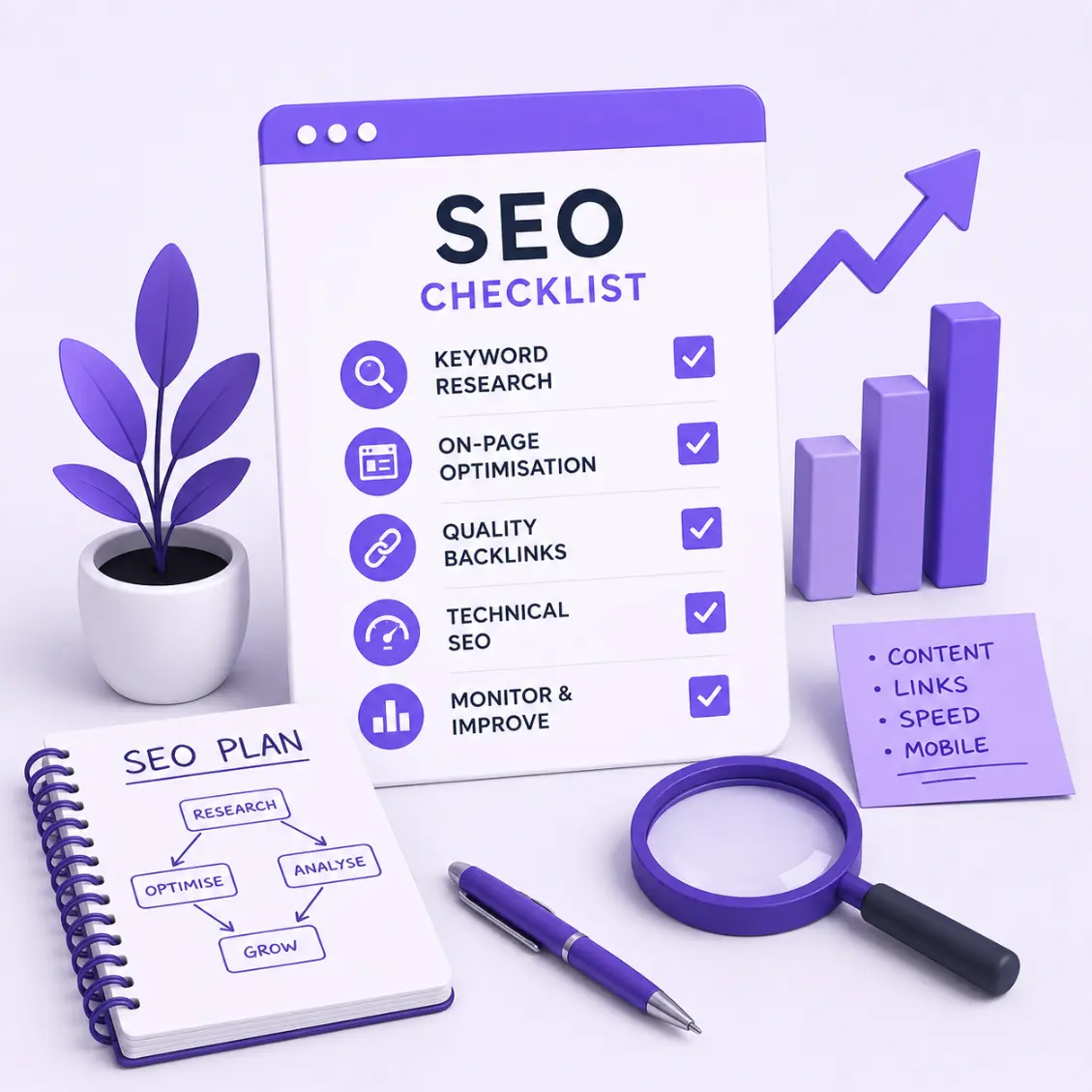
Several keyword research tools can help startups identify opportunities. Google Keyword Planner, Ahrefs, SEMrush, Ubersuggest, and Google Search Console all provide valuable data regarding search volumes, trends, and keyword difficulty. Even free tools can provide enough insight for businesses starting their SEO journey.
SEO tips for startups should also encourage businesses to think carefully about customer intent. Users searching “how to choose accounting software” are usually researching options, while users searching “buy accounting software UK” may be much closer to making a purchase decision. Understanding this difference helps businesses create more targeted content.
Another useful strategy involves analysing competitors. Reviewing which keywords competing businesses rank for can reveal content gaps and opportunities. Many startups discover niche search terms that larger competitors have overlooked entirely.
A good startup SEO guide should also explain the importance of semantic keywords and topical relevance. Google increasingly evaluates content based on overall topic coverage rather than relying purely on exact-match keywords. This means businesses should naturally include related phrases, synonyms, and supporting terms throughout their content.
Local keyword targeting can also be highly effective for smaller businesses. Including location-based searches such as “Manchester web designer” or “Birmingham accountant for startups” can improve local visibility significantly.
Ultimately, effective keyword research helps startups create content with clear direction and measurable search potential. Businesses that invest time understanding user behaviour and search intent usually build stronger SEO foundations than those simply guessing which keywords might work.
Understanding Search Intent
Search intent is one of the most important concepts within modern SEO, yet it is often overlooked by startup businesses focusing purely on keywords. Understanding why users search for certain terms is just as important as knowing which terms they use. Google increasingly prioritises pages that closely match user intent rather than simply containing exact keywords repeatedly.
A strong startup SEO guide should therefore explain the four main types of search intent: informational, navigational, commercial, and transactional. Each type reflects a different stage within the customer journey and requires different types of content to perform well in search results.
Informational searches occur when users want to learn something. Examples include searches such as “what is SEO,” “how backlinks work,” or “SEO tips for startups.” These searches usually perform best with educational blog posts, guides, tutorials, and FAQ content.
Navigational searches happen when users are trying to find a specific website or brand. Searches such as “Google Search Console login” or “Ahrefs pricing” fall into this category. These are less relevant for early-stage startup SEO strategies unless brand awareness is already growing.
Commercial intent searches indicate users are researching products or services before making a decision. Examples include “best website builders for startups” or “top SEO software UK.” These searches often work well for comparison articles, reviews, and buying guides.
Transactional searches demonstrate clear buying intent. Phrases such as “hire SEO consultant London” or “buy accounting software” suggest users are ready to take action. Service pages, landing pages, and product pages usually perform best for transactional queries.
For beginner SEO for startups, aligning content with the correct intent can dramatically improve rankings and conversions. Many businesses create content targeting keywords without considering whether the format actually matches what users expect to see.
For example, someone searching “best CRM software for startups” probably expects a comparison guide rather than a homepage promoting one specific product. If the page fails to satisfy user expectations, Google may reduce its visibility over time.
The SEO basics for startup businesses should also include analysing search engine results pages directly. Reviewing the top-ranking pages for a keyword often reveals what Google currently considers most relevant. If most top-ranking pages are guides and tutorials, creating a sales-focused landing page may struggle to compete.
SEO tips for startups should encourage content planning around different stages of the customer journey. Informational content helps attract awareness-stage users, while commercial and transactional pages support conversions later.
Search intent also influences keyword selection itself. Long-tail keywords often reveal stronger intent signals compared to broader searches. Someone searching “affordable SEO software for small businesses” demonstrates much clearer intent than someone simply searching “SEO.”
A good startup SEO guide recognises that satisfying user intent improves more than rankings alone. Pages that genuinely answer user questions usually generate stronger engagement metrics, lower bounce rates, more backlinks, and higher trust levels overall.
As Google continues improving its understanding of user behaviour through AI and machine learning, search intent is likely to become even more important within SEO strategies moving forward. Businesses that focus on genuinely helping users rather than simply targeting keywords are usually rewarded most consistently over time.
On-Page SEO Basics
On-page SEO refers to the process of optimising individual website pages so that search engines can better understand their content and relevance. It is one of the most controllable aspects of SEO because businesses can directly improve their own website structure, content, and optimisation without relying on external factors.
For startup businesses, on-page SEO often delivers some of the quickest opportunities for improvement. Many new websites launch with missing metadata, weak page structures, duplicate content, or poorly optimised headings. Addressing these issues early can help create a much stronger SEO foundation moving forward.
A strong startup SEO guide should begin with page titles and meta descriptions. The page title is one of the most important ranking signals because it helps Google understand the main topic of the page. It also influences click-through rates within search results. Effective titles should be clear, relevant, and naturally include target keywords where appropriate.
Meta descriptions are not direct ranking factors, but they play an important role in encouraging users to click on search results. Strong descriptions should summarise the page clearly while highlighting value and relevance for users.
The SEO basics for startup businesses should also cover heading structure. Proper use of H1, H2, and H3 headings improves both readability and search engine understanding. The H1 should clearly describe the main topic of the page, while supporting headings help organise content logically.
URL structure is another important consideration. Clean, descriptive URLs are easier for both users and search engines to understand. Shorter URLs containing relevant keywords often perform better than long, confusing page addresses filled with unnecessary parameters.
For beginner SEO for startups, internal linking is another highly valuable strategy. Linking related pages together helps search engines crawl websites more effectively while also guiding users towards additional relevant content. Strong internal linking can improve engagement metrics and distribute authority across important pages.
Content quality remains central to successful on-page SEO. Google increasingly prioritises pages that provide genuinely useful, accurate, and comprehensive information. Thin or low-value pages often struggle to maintain rankings over time.
SEO tips for startups should also emphasise keyword placement without over-optimisation. Keywords should appear naturally within headings, introductory paragraphs, image alt text, and throughout the body content where relevant. However, excessive repetition can harm readability and may negatively affect rankings.
Image optimisation is another area frequently overlooked by startup businesses. Large image files can slow down websites significantly, affecting both user experience and SEO performance. Compressing images and using descriptive alt text improves accessibility and helps search engines understand visual content.
Mobile optimisation has become essential within modern SEO strategies. Most searches now occur on mobile devices, and Google primarily uses mobile-first indexing when evaluating websites. Businesses with poor mobile experiences may struggle to compete effectively in search results.
A good startup SEO guide should ultimately reinforce that on-page SEO is not about manipulating search engines. Instead, it is about improving clarity, structure, usability, and relevance so that both users and search engines can navigate content more effectively.
Technical SEO for Beginners
Technical SEO focuses on improving the behind-the-scenes elements of a website that affect search engine crawling, indexing, and overall performance. While technical SEO can initially sound intimidating for newer business owners, many of the core fundamentals are relatively manageable once broken down into simpler concepts.
A strong startup SEO guide should explain that technical SEO is essentially about helping search engines access, understand, and process website content efficiently. Even excellent content can struggle to rank if technical issues prevent Google from properly crawling or indexing pages.
One of the most important aspects of technical SEO is website speed. Slow-loading websites create poor user experiences and can negatively impact rankings. Users expect pages to load quickly, particularly on mobile devices. Startup businesses should therefore prioritise fast hosting, optimised images, efficient coding, and lightweight website designs wherever possible.
The SEO basics for startup businesses should also include mobile responsiveness. Google now uses mobile-first indexing, meaning it primarily evaluates the mobile version of websites when determining rankings. Businesses with difficult mobile navigation, broken layouts, or slow mobile performance risk losing significant visibility.
Website security is another key technical factor. HTTPS encryption is now considered standard practice for modern websites. Secure websites help protect user data and also contribute towards trust signals within search engines.
For beginner SEO for startups, crawlability is another essential concept. Search engines use automated bots to crawl websites and discover content. If important pages cannot be crawled properly due to broken links, incorrect settings, or poor site structure, rankings may suffer regardless of content quality.
XML sitemaps help search engines identify website pages more efficiently. Submitting a sitemap through Google Search Console improves visibility and indexing accuracy, particularly for newer websites with limited authority.
SEO tips for startups should also include regular monitoring for technical errors. Broken links, duplicate content, missing metadata, redirect problems, and indexing issues can all negatively affect search performance if left unresolved.
Structured data has become increasingly valuable within SEO strategies. Structured markup helps search engines better understand page content and can improve eligibility for enhanced search features such as rich snippets, FAQs, reviews, and product listings.
Another important technical factor involves Core Web Vitals, which measure user experience signals including loading speed, visual stability, and interactivity. While these are only part of Google’s ranking systems, improving user experience generally benefits both SEO and conversions simultaneously.
A good startup SEO guide should also address website architecture. Organising content logically helps both users and search engines navigate websites more effectively. Clear navigation menus, sensible page hierarchies, and strong internal linking all contribute towards better technical SEO performance.
For many startup businesses, technical SEO improvements do not necessarily require advanced development skills. Modern website platforms such as WordPress, Shopify, Wix, and Squarespace already handle many technical fundamentals reasonably well. However, regular maintenance and optimisation still remain important.
Ultimately, technical SEO forms the foundation supporting all other SEO efforts. Businesses investing heavily in content and keywords while ignoring technical performance often struggle to achieve consistent results. Ensuring websites are fast, secure, crawlable, and mobile-friendly provides a much stronger platform for long-term organic growth.
Creating Content That Ranks
Content remains one of the most important elements within any successful SEO strategy. Search engines rely heavily on written content to understand what a website is about, which topics it covers, and whether it provides useful value for users. For startup businesses looking to improve online visibility, producing high-quality content consistently is often one of the most effective long-term growth strategies available.
A strong startup SEO guide should explain that content creation is no longer simply about publishing blog posts filled with keywords. Google’s algorithms have become increasingly sophisticated and now focus heavily on relevance, expertise, usefulness, and user satisfaction. Businesses producing genuinely helpful content are far more likely to achieve sustainable rankings than those attempting outdated SEO tactics.
The SEO basics for startup businesses should begin with understanding audience needs. Successful content usually solves a specific problem, answers a common question, or provides clear value to readers. Businesses that create content purely for search engines rather than real users often struggle to build meaningful engagement or authority.
For beginner SEO for startups, educational content is often one of the best starting points. Guides, tutorials, FAQs, industry insights, comparison articles, and problem-solving resources can all attract valuable search traffic while building trust with potential customers.
Keyword research should guide content planning, but keywords should never dominate the writing unnaturally. Search engines increasingly evaluate overall topic relevance rather than simple keyword repetition. This means businesses should focus on covering topics comprehensively while naturally incorporating related phrases and semantic terms.
SEO tips for startups should also encourage content depth and originality. Thin content offering little value rarely performs well in competitive search results. Longer, more detailed content often ranks more effectively because it covers subjects more thoroughly and satisfies user intent more completely.
Consistency is another important factor. Many startup businesses publish several blog posts initially before abandoning content creation entirely. However, consistent publishing schedules help demonstrate relevance and freshness to both users and search engines over time.
Formatting also influences content performance significantly. Clear headings, shorter paragraphs, bullet points, tables, and visual elements improve readability and engagement. Users generally prefer content that is easy to scan quickly, particularly on mobile devices.
A good startup SEO guide should also explain the importance of evergreen content. Evergreen articles remain relevant over long periods and continue generating traffic consistently. Topics such as beginner guides, tutorials, and foundational industry advice often provide stronger long-term SEO value compared to purely news-based content.
Internal linking between related articles can strengthen content performance further. Linking relevant blog posts together helps search engines understand topical relationships while encouraging users to explore additional pages on the website.
Visual content also supports SEO indirectly. Images, infographics, videos, and charts can improve engagement metrics and increase the likelihood of backlinks or social shares. Proper image optimisation using descriptive alt text additionally helps search engines understand visual elements.
Content updates are another frequently overlooked strategy. Refreshing older articles with updated information, new statistics, improved formatting, and additional insights can help maintain rankings and relevance over time.
Ultimately, businesses that consistently create useful, well-structured, and audience-focused content often build stronger SEO authority gradually. While content marketing requires patience, it remains one of the most scalable and sustainable approaches within modern SEO strategies.
Local SEO for Startup Businesses
For many smaller companies, local SEO can provide some of the most valuable and realistic ranking opportunities available. While competing nationally against major brands may be difficult during the early stages, targeting local customers often allows startup businesses to generate visibility much faster within their own geographic area.
Local SEO focuses on improving visibility for searches connected to specific locations. These searches often include phrases such as “near me,” city names, or regional service queries. For businesses operating locally, appearing prominently within Google Maps and local search results can significantly increase enquiries, website traffic, and customer trust.
A strong startup SEO guide should explain that local SEO differs slightly from broader organic SEO because proximity, local relevance, and business reputation all influence rankings heavily.
One of the most important components of local SEO is creating and optimising a Google Business Profile. This free tool allows businesses to appear within Google Maps and local search listings. Completing the profile fully with accurate contact information, business descriptions, categories, opening hours, and images can improve local visibility substantially.
The SEO basics for startup businesses should also include consistency across online listings. Search engines compare business information across directories, websites, and platforms to verify legitimacy. Inconsistent business names, phone numbers, or addresses can reduce local ranking strength.
For beginner SEO for startups, local keyword targeting is another effective strategy. Businesses should naturally incorporate geographic terms within service pages, metadata, headings, and content where appropriate. For example, phrases such as “Manchester digital marketing agency” or “London accountant for startups” can help improve local search relevance.
Customer reviews also play an increasingly important role within local SEO. Positive reviews help improve credibility while also influencing rankings within local map results. Encouraging satisfied customers to leave genuine reviews can therefore support both SEO performance and conversion rates simultaneously.
SEO tips for startups should also encourage the creation of dedicated local landing pages where relevant. Businesses serving multiple cities or regions may benefit from creating location-specific pages tailored towards each area.
Local backlinks can further strengthen authority. Mentions from local newspapers, business directories, partnerships, sponsorships, and community organisations all contribute towards stronger local SEO signals.
Mobile optimisation is particularly important within local SEO because many local searches occur on smartphones while users are actively looking for nearby businesses or services. Fast-loading mobile pages and clear contact information can significantly improve user experience and conversion opportunities.
A good startup SEO guide should also mention the importance of localised content. Publishing articles about local events, regional industry insights, or community involvement can help businesses strengthen geographic relevance within search engines.
For service-based businesses especially, local SEO often delivers some of the highest commercial intent traffic available. Users searching for local services are frequently much closer to making enquiries or purchases compared to broader informational searches.
Ultimately, local SEO provides startup businesses with an opportunity to compete more effectively within manageable markets before expanding into broader national visibility strategies. Businesses that establish strong local authority early often create a strong platform for wider growth later.
Link Building Basics
Link building remains one of the most influential ranking factors within modern SEO. When reputable websites link to another website, search engines often interpret those links as signals of trust, authority, and credibility. For startup businesses trying to improve visibility in competitive search results, building high-quality backlinks can significantly strengthen organic rankings over time.
A strong startup SEO guide should explain that not all backlinks are equal. Links from trusted, relevant, and authoritative websites generally provide far more SEO value than low-quality or unrelated links. In fact, poor-quality link building tactics can sometimes damage rankings rather than improve them.
The SEO basics for startup businesses should focus on earning links naturally through useful content and genuine industry relationships. Search engines increasingly prioritise authenticity and relevance when evaluating backlink profiles.
For beginner SEO for startups, one of the safest and most effective approaches is creating valuable resources that other websites genuinely want to reference. Detailed guides, original research, industry statistics, infographics, calculators, and expert insights often attract links more naturally than purely promotional pages.
Digital PR has also become an increasingly popular link building strategy. Startups can gain valuable backlinks by contributing expert commentary, participating in interviews, publishing data-driven content, or sharing unique business insights with journalists and industry publications.
SEO tips for startups should also encourage relationship-building within relevant industries. Partnerships, networking opportunities, podcasts, collaborations, and guest contributions can all help businesses earn relevant backlinks gradually over time.
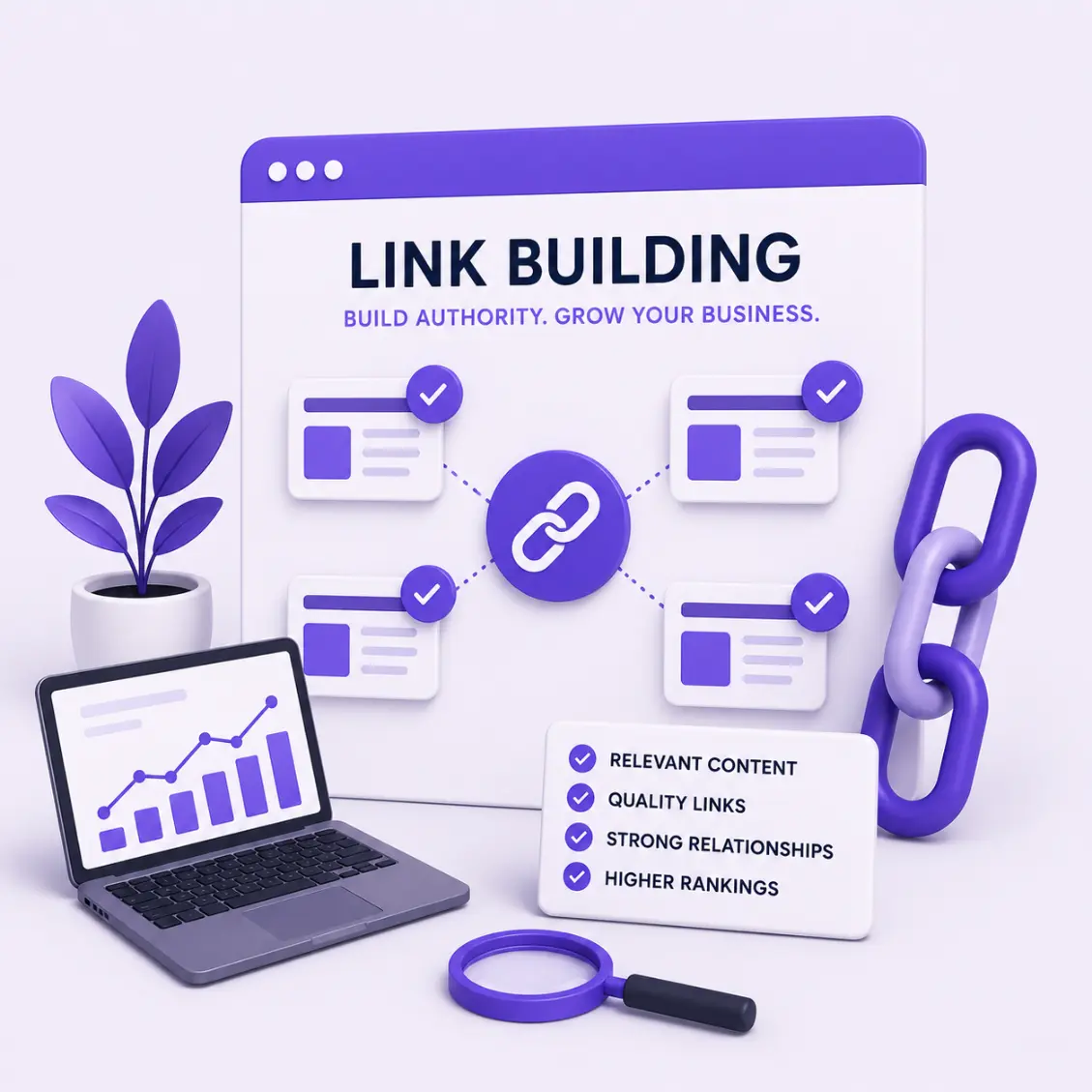
Internal links are another important but often overlooked aspect of link strategy. Linking between related pages on a website helps distribute authority while improving crawlability and user navigation. Strong internal linking structures can support SEO performance significantly even before external backlinks are acquired.
A good startup SEO guide should also warn against outdated black-hat SEO tactics. Buying large quantities of cheap backlinks, participating in spammy link schemes, or using automated link-building tools can lead to penalties and long-term ranking issues. Modern SEO requires patience and quality-focused strategies rather than shortcuts.
Competitor backlink analysis can reveal useful opportunities for startup businesses. Reviewing where competing websites earn links from may highlight relevant directories, publications, or partnerships worth pursuing.
Local businesses can often gain strong backlinks through local sponsorships, charities, events, and community organisations. These links not only support SEO performance but can also strengthen local brand visibility simultaneously.
The SEO basics for startup businesses should also include citation building. Listings on trusted directories and business platforms help strengthen legitimacy and local search relevance. However, businesses should prioritise quality directories rather than submitting to hundreds of low-value websites.
Anchor text diversity is another important consideration. Repeatedly using identical keyword-rich anchor text can appear manipulative. Natural backlink profiles usually contain a mix of branded terms, URLs, generic phrases, and occasional keywords.
For many startups, link building takes time because authority develops gradually. New websites naturally begin with limited trust signals compared to established competitors. However, businesses that consistently publish valuable content and build genuine industry relationships often strengthen their backlink profiles steadily over time.
Ultimately, successful link building is less about manipulating algorithms and more about building authority, trust, and visibility within an industry. Startups that focus on creating genuinely useful resources and building authentic relationships usually achieve more sustainable SEO success long term.
Common Startup SEO Mistakes
Many startup businesses begin SEO with good intentions but unknowingly make mistakes that limit their long-term growth potential. Because SEO involves multiple moving parts, it is easy for inexperienced businesses to focus on the wrong priorities or follow outdated advice that no longer works effectively.
A strong startup SEO guide should help businesses recognise these common mistakes early so they can avoid wasting time, money, and resources on ineffective strategies.
One of the biggest mistakes involves expecting immediate results. SEO is rarely a short-term marketing channel. Many startups abandon SEO after only a few weeks because rankings have not improved quickly enough. In reality, building organic authority often takes several months, particularly for newer websites competing against established domains.
The SEO basics for startup businesses should reinforce the importance of patience and consistency. Businesses that continue improving their websites steadily over time generally outperform those constantly switching strategies or chasing shortcuts.
Another common mistake is targeting overly competitive keywords too early. New businesses often attempt to rank for broad, high-volume terms dominated by major brands with significantly stronger authority. Focusing instead on long-tail keywords and niche opportunities usually produces better early results.
For beginner SEO for startups, poor content quality is another major issue. Thin blog posts, duplicated pages, AI-generated spam content, or keyword-stuffed articles rarely perform well long term. Search engines increasingly reward originality, expertise, and genuine usefulness.
Ignoring technical SEO can also create major problems. Broken links, poor mobile performance, slow loading speeds, duplicate pages, and indexing issues all reduce visibility if left unresolved. Even strong content may struggle to rank if technical foundations are weak.
SEO tips for startups should also warn against publishing content without clear search intent. Businesses sometimes create pages targeting keywords without considering what users actually expect to find. Content that fails to satisfy intent often experiences low engagement and weaker rankings.
Neglecting local SEO is another missed opportunity for many smaller businesses. Companies operating regionally often overlook Google Business Profile optimisation, local landing pages, or review generation despite these areas offering strong commercial traffic potential.
Some startups also focus too heavily on vanity metrics rather than meaningful business outcomes. High traffic volumes alone do not necessarily generate revenue. Businesses should prioritise attracting relevant users likely to convert into leads or customers.
A good startup SEO guide should additionally highlight the risks associated with outdated SEO tactics. Buying spammy backlinks, overusing keywords unnaturally, hiding text, or creating low-quality doorway pages may have worked years ago but can now trigger ranking penalties.
Another common issue involves inconsistency. Businesses often publish content heavily for a short period before abandoning SEO efforts entirely. Search engine optimisation works best when approached as an ongoing long-term strategy rather than a temporary campaign.
Analytics and tracking are frequently neglected too. Without monitoring rankings, traffic sources, engagement metrics, and conversions, businesses struggle to understand which SEO activities are delivering results.
Ultimately, avoiding major SEO mistakes is often just as important as implementing positive strategies. Startups that focus on quality, consistency, technical performance, and user experience usually place themselves in a much stronger position for sustainable organic growth over time.
Best SEO Tools for Startups
SEO tools can help startup businesses save time, identify opportunities, monitor rankings, and improve website performance more efficiently. While many advanced SEO platforms can become expensive, startups do not necessarily need large budgets to begin improving their organic visibility. In fact, several free and affordable tools provide more than enough functionality for businesses during the early stages of growth.
A strong startup SEO guide should explain that tools are designed to support strategy rather than replace it. Businesses still need to understand SEO fundamentals, user intent, and content quality regardless of which platforms they use.
One of the most important free tools available is Google Search Console. This platform allows businesses to monitor website indexing, keyword visibility, technical issues, mobile usability, and organic search performance directly from Google itself. For beginner SEO for startups, Search Console provides some of the most valuable insights available without any financial investment.
Google Analytics also remains essential for measuring traffic, engagement, and conversions. Understanding how users behave on a website helps businesses identify which pages perform well and where improvements may be required.
The SEO basics for startup businesses should also include keyword research tools. Platforms such as Ahrefs, SEMrush, Moz, and Ubersuggest help businesses discover keyword opportunities, analyse competitors, and estimate search volumes. While premium subscriptions can become costly, many platforms offer limited free plans suitable for smaller businesses.
For startups focused on content optimisation, tools such as Surfer SEO, Clearscope, and Frase can help analyse topical relevance and competitor coverage. However, businesses should avoid relying too heavily on automated optimisation scores alone. Content should still prioritise user value and readability above purely algorithmic recommendations.
SEO tips for startups should additionally highlight technical SEO tools. Screaming Frog SEO Spider is widely used for identifying broken links, duplicate content, missing metadata, redirect chains, and crawl errors. Even the free version offers substantial functionality for smaller websites.
PageSpeed Insights and Lighthouse help businesses monitor website performance and Core Web Vitals. Improving speed and usability not only supports SEO but also improves user experience and conversion potential.
A good startup SEO guide should also include local SEO tools where relevant. Platforms such as BrightLocal and Whitespark help businesses monitor local rankings, citations, reviews, and Google Business Profile performance.
Content planning tools can also support SEO strategies significantly. AnswerThePublic, Google Trends, and AlsoAsked help businesses identify common user questions and trending search topics that can inspire valuable content ideas.
For startups with limited resources, it is often better to use a smaller number of tools effectively rather than paying for multiple expensive platforms unnecessarily. Many businesses achieve excellent results using primarily free Google tools alongside one affordable SEO platform.
Automation can also improve efficiency. Scheduling tools, reporting dashboards, and SEO plugins help streamline repetitive tasks and website management. WordPress users, for example, often benefit from plugins such as Rank Math or Yoast SEO for basic optimisation support.
Ultimately, SEO tools should support informed decision-making rather than replacing strategic thinking entirely. Businesses that combine useful data insights with strong content, technical optimisation, and consistent execution usually achieve the strongest long-term results.
How Long SEO Takes
One of the most common questions startup businesses ask is how long SEO actually takes to produce results. Unfortunately, there is no universal answer because timelines vary significantly depending on competition levels, website quality, industry authority, resources, and the consistency of SEO efforts being implemented.
However, a realistic startup SEO guide should explain that SEO is usually a medium to long-term strategy rather than a quick solution. Businesses expecting immediate rankings within days or weeks are often disappointed because organic authority develops gradually over time.
For beginner SEO for startups, the first few months are typically focused on building foundations. This includes technical optimisation, keyword research, content creation, internal linking, metadata improvements, and indexing. During this stage, rankings may fluctuate frequently as search engines begin evaluating the website more thoroughly.
In lower-competition industries or local markets, some businesses may start seeing measurable traffic improvements within three to six months. However, more competitive sectors often require significantly longer timeframes before strong rankings become established.
The SEO basics for startup businesses should reinforce that domain authority plays a major role in ranking speed. New websites naturally begin with very limited trust and backlink authority compared to older, established competitors. Google generally becomes more confident in websites gradually as they continue publishing useful content and earning credibility signals.
Content quality and consistency also influence timelines heavily. Businesses publishing helpful, well-optimised content regularly often build momentum faster than those updating their websites only occasionally.
SEO tips for startups should additionally explain that rankings are rarely static. Search engine algorithms continuously evolve, competitors continue optimising their own websites, and user behaviour changes over time. SEO therefore requires ongoing maintenance rather than a one-off setup process.
Backlink acquisition also affects SEO speed significantly. Websites earning high-quality backlinks from reputable sources generally strengthen authority more quickly than websites with little external recognition.
Technical performance can either accelerate or slow progress as well. Fast-loading, mobile-friendly websites with strong user experiences often perform better compared to poorly structured websites with technical issues.
A good startup SEO guide should also distinguish between different types of keywords. Long-tail and niche keywords often rank faster because competition is lower. Broader commercial keywords typically require more authority and stronger backlink profiles before meaningful rankings become achievable.
Businesses should focus on measurable progress indicators beyond rankings alone. Improvements in impressions, indexed pages, click-through rates, engagement metrics, and keyword visibility all demonstrate positive SEO momentum even before major rankings are achieved.
For many startups, SEO results compound gradually over time. Early content may initially generate relatively little traffic, but as website authority strengthens, newer and older pages often begin performing better collectively.
Patience is therefore one of the most important elements of successful SEO strategies. Businesses that continue publishing useful content, improving technical performance, and strengthening authority consistently usually outperform competitors that abandon SEO too early.
Ultimately, SEO should be viewed as a long-term investment in sustainable visibility rather than a short-term marketing tactic. While results may take time, strong organic rankings can continue generating highly valuable traffic for years once established properly.
SEO Strategy for Long-Term Growth
Building a successful SEO strategy requires startup businesses to think beyond short-term rankings and focus instead on sustainable long-term growth. Many businesses approach SEO with a campaign mindset, expecting rapid traffic increases after publishing a few blog posts or making basic website improvements. In reality, the strongest SEO results usually come from consistent long-term execution rather than isolated bursts of activity.
A strong startup SEO guide should explain that long-term SEO success depends on building authority gradually across multiple areas simultaneously. This includes technical optimisation, content quality, user experience, backlink growth, keyword targeting, and overall brand credibility.
The SEO basics for startup businesses should begin with setting realistic goals. Businesses should avoid focusing purely on broad vanity keywords and instead prioritise measurable commercial outcomes such as qualified traffic, enquiries, leads, and conversions.
For beginner SEO for startups, one of the most effective long-term strategies involves building topical authority. Rather than creating random standalone articles, businesses should publish clusters of related content covering their industry comprehensively. Search engines increasingly reward websites that demonstrate depth, expertise, and consistency across entire subject areas.
For example, a startup marketing agency may benefit from publishing interconnected content around SEO, paid advertising, email marketing, analytics, and conversion optimisation rather than targeting unrelated topics purely for traffic potential.
SEO tips for startups should also encourage regular content audits. Over time, websites naturally accumulate outdated pages, duplicate content, broken links, and declining articles. Reviewing and updating older content helps maintain relevance and strengthen rankings.
Data-driven decision-making is another major component of long-term SEO growth. Monitoring traffic patterns, keyword visibility, user behaviour, and conversion metrics helps businesses refine strategies based on real performance data rather than assumptions.
A good startup SEO guide should also reinforce the importance of adapting to search engine changes. Google updates its algorithms frequently, and user behaviour continues evolving alongside advances in AI-driven search experiences. Businesses that prioritise quality, expertise, and user value generally adapt more successfully than those relying on manipulative tactics.
Brand authority increasingly influences SEO performance as well. Businesses with strong reputations, positive reviews, recognised expertise, and trusted industry visibility often perform more strongly within search results. SEO therefore overlaps heavily with broader brand-building activities.
The SEO basics for startup businesses should also include diversification. While Google remains extremely important, startups should avoid relying entirely on one traffic source. Strong SEO strategies often complement email marketing, social media, video content, digital PR, and direct brand engagement.
Scalability is another important advantage of long-term SEO investment. Content created today can continue generating traffic for years if maintained properly. Over time, websites build momentum as authority compounds across larger content libraries and backlink profiles.
For startups especially, patience and consistency often become major competitive advantages. Many businesses abandon SEO after failing to achieve rapid results, leaving opportunities available for companies willing to continue investing steadily.
Ultimately, SEO should not simply be viewed as a marketing tactic but as a long-term business asset. Businesses that consistently improve website quality, publish useful content, strengthen authority, and prioritise user experience usually place themselves in a significantly stronger position for sustainable online growth in the years ahead.
General FAQs About SEO for Startups
What is SEO for startups?
SEO for startups refers to the process of improving a startup’s visibility within Google search results through content, technical optimisation, keyword targeting, and authority building.
Why is SEO important for startup businesses?
The SEO basics for startup businesses help companies generate long-term organic traffic without relying entirely on paid advertising channels.
How long does SEO take to work?
Most startup businesses begin seeing measurable SEO improvements within three to six months, although competitive industries may take longer.
Can startups do SEO themselves?
Yes, many businesses begin with beginner SEO for startups strategies internally before later hiring specialists or agencies as they grow.
What are the best SEO tips for startups?
Some of the most effective SEO tips for startups include targeting long-tail keywords, improving website speed, creating helpful content, and building backlinks gradually.
What is included in a startup SEO guide?
A strong startup SEO guide usually covers keyword research, technical SEO, content optimisation, local SEO, link building, and analytics tracking.
Is local SEO important for startups?
Local SEO can be extremely valuable for startups targeting regional customers because it improves visibility within nearby search results and Google Maps.
How often should startups publish content?
Most businesses benefit from publishing high-quality content consistently, whether weekly, fortnightly, or monthly depending on available resources.
What are long-tail keywords?
Long-tail keywords are more specific search phrases that usually have lower competition and clearer user intent compared to broad keywords.
Do backlinks still matter for SEO?
Yes, backlinks remain an important ranking factor because they help search engines evaluate website authority and trustworthiness.
Can startups improve SEO without hiring a developer?
Yes, many startup businesses can improve SEO using beginner-friendly website platforms that include built-in optimisation tools, mobile-friendly templates, and basic technical SEO settings. Platforms like UENI are often designed specifically for smaller businesses wanting a simpler way to build an SEO-friendly online presence.
Recap
SEO can feel overwhelming initially, particularly for newer businesses juggling limited budgets, multiple priorities, and growing competition online. However, understanding the core principles behind SEO for startups gives businesses a significant long-term advantage when building sustainable online visibility.
Throughout this guide, we explored the SEO basics for startup businesses, including keyword research, search intent, on-page optimisation, technical SEO, local visibility, content creation, and link building. While SEO includes many moving parts, the overall objective remains relatively simple: helping search engines and users understand why your business provides valuable, trustworthy, and relevant information.
For many businesses, beginner SEO for startups starts with small improvements. Optimising website pages properly, creating useful content consistently, improving website speed, and targeting realistic keywords can gradually build stronger rankings over time.
One of the most important SEO tips for startups is consistency. Businesses that continue investing steadily in quality content, user experience, and authority building often outperform competitors focused purely on shortcuts or short-term tactics.
A strong startup SEO guide is ultimately about creating long-term business growth rather than chasing temporary rankings. Organic search traffic can become one of the most valuable and cost-effective acquisition channels available once authority begins compounding.
Whether you are launching a local service business, ecommerce store, consultancy, or SaaS platform, investing in SEO early can help establish stronger visibility, credibility, and sustainable growth opportunities moving forward.
Conclusion
Building a successful SEO strategy takes time, patience, and consistency, but the long-term rewards can be substantial for startup businesses willing to invest properly in their online visibility. SEO for startups is not about manipulating search engines or chasing quick wins. Instead, it focuses on creating useful content, improving website quality, understanding customer intent, and building authority gradually over time.
For many businesses, the biggest advantage of SEO is sustainability. Unlike paid advertising, which stops generating traffic as soon as spending ends, strong organic rankings can continue delivering valuable visitors, enquiries, and customers for years. This makes SEO particularly attractive for startups and SMEs looking to grow efficiently without depending entirely on advertising budgets.
Throughout this startup SEO guide, we covered the core foundations required for long-term success, including keyword research, technical optimisation, local SEO, content marketing, and backlink development. These SEO basics for startup businesses help create a strong framework that supports both visibility and customer trust.
For founders exploring beginner SEO for startups, the most important step is often simply getting started. Many businesses delay SEO because they believe the process is too technical or time-consuming. In reality, small consistent improvements usually produce stronger long-term results than waiting for perfect conditions.
The most effective SEO tips for startups ultimately revolve around helping users. Search engines increasingly reward businesses that provide genuine value, answer questions clearly, and deliver strong website experiences.
As online competition continues increasing in 2026 and beyond, startups investing early in SEO often place themselves in a far stronger competitive position later. Businesses that build authority steadily today are usually much better prepared for long-term digital growth tomorrow.
Latest Posts:
- Zempler Bank Review 2026: Is It Good Value for UK Startups?
 Introduction Zempler Bank offers a genuine UK business bank account from £0 per month, with app and online banking, Post Office cash deposits and built-in tools for invoicing, receipts and… Read more: Zempler Bank Review 2026: Is It Good Value for UK Startups?
 - Hoxton Mix vs Virtually There: Which Virtual Office Service Is Better?
 Introduction If you’re comparing Hoxton Mix vs Virtually There, you’re likely searching for a virtual office provider that offers the right balance of professionalism, affordability, and flexibility. Whether you’re launching… Read more: Hoxton Mix vs Virtually There: Which Virtual Office Service Is Better?
 - Hoxton Mix vs Icon Offices: Which Virtual Office Is Better?
 Introduction Choosing a virtual office provider can have a significant impact on how your business is perceived, how you manage your mail, and even how effectively you maintain privacy as… Read more: Hoxton Mix vs Icon Offices: Which Virtual Office Is Better?
 - 7 Powerful Benefits of Using a Hoxton Mix Virtual Office Address
 Introduction For startups, freelancers, sole traders and growing SMEs, establishing a professional business presence can be challenging. Renting physical office space in London is often expensive, particularly during the early… Read more: 7 Powerful Benefits of Using a Hoxton Mix Virtual Office Address
 - Hoxton Mix Review: Features, Pricing, Pros and Cons Explained
 Introduction If you’re searching for an honest and detailed hoxton mix review, you’re likely comparing virtual office providers and trying to decide whether Hoxton Mix offers good value for your… Read more: Hoxton Mix Review: Features, Pricing, Pros and Cons Explained
 - Hoxton Mix Virtual Office Discount: Save 10% on Your First 12 Months
 Introduction If you’re looking for a professional London business address without the cost of renting physical office space, a Hoxton Mix Virtual Office discount could help you reduce your startup… Read more: Hoxton Mix Virtual Office Discount: Save 10% on Your First 12 Months
 - Tide Referral Code 2026: Powerful Guide to Claim £200 Cashback with STARTUP200
 Introduction If you’re looking for a Tide referral code in 2026, you’re probably searching for the best possible deal before opening a business account. Whether you’re a sole trader, freelancer,… Read more: Tide Referral Code 2026: Powerful Guide to Claim £200 Cashback with STARTUP200
 - Tide vs High Street Banks: Powerful 2026 Review
 Introduction Choosing the right business banking solution is one of the most important decisions a UK business owner can make. Whether you’re a sole trader, freelancer, contractor, startup founder, or… Read more: Tide vs High Street Banks: Powerful 2026 Review
 - Tide Business Account for Tradespeople | Powerful Guide 2026
 Introduction Running a trade business involves much more than completing jobs and keeping customers happy. Whether you’re a plumber, electrician, builder, carpenter, roofer, landscaper, painter, heating engineer, or general contractor,… Read more: Tide Business Account for Tradespeople | Powerful Guide 2026