
Introduction
Choosing between ANNA vs Mettle is becoming an increasingly common challenge for UK freelancers, startups, sole traders, and small businesses looking for modern digital banking solutions in 2026. Both providers have established themselves as strong alternatives to traditional high street business banking, offering app-based financial management, expense tracking, invoicing tools, and streamlined account setup processes designed specifically for smaller businesses.
However, despite sharing many similarities, ANNA and Mettle approach business banking in very different ways. ANNA focuses heavily on automation, admin reduction, tax support, and integrated invoicing tools, while Mettle positions itself as a straightforward, no-monthly-fee business account backed by NatWest. For business owners comparing digital banking platforms, understanding these differences can help avoid choosing an account that does not properly align with day-to-day operational needs.
This guide is designed for UK entrepreneurs who want a clear and practical Anna vs Mettle comparison without unnecessary jargon. Whether you are launching your first limited company, operating as a freelancer, running a side hustle, or managing an established SME, selecting the right banking platform can significantly impact your financial organisation, bookkeeping efficiency, and cash flow visibility.
One of the major reasons many businesses are now moving toward digital-first providers is convenience. Traditional banks often involve slower onboarding, outdated interfaces, and limited automation features. By contrast, both ANNA and Mettle offer fast online applications, real-time notifications, mobile expense tracking, and integrations with accounting software platforms commonly used by UK businesses.
There are also differences in pricing structures, customer support, tax functionality, cashback offers, invoicing capabilities, and account flexibility. Some business owners may prioritise automation and integrated admin tools, while others simply want free everyday business banking with minimal complexity. This ANNA vs Mettle business account guide explores these differences in detail so you can make an informed decision based on your business model and future growth plans.
If you are considering opening either account, ANNA currently offers an ANNA +Taxes free 30 day trial for eligible customers, while Mettle offers the opportunity to earn up to £50 cashback when using referral code ‘QPBB6’ and making a qualifying transaction within 30 days of opening the account. Offers are subject to eligibility and may change over time.
Contents:
- What Are ANNA and Mettle?
- ANNA vs Mettle Business Account Features
- Pricing, Monthly Fees and Charges
- Invoicing and Accounting Tools
- Business Banking App Experience
- Who Should Use ANNA?
- Who Should Use Mettle?
- How to Open an Account Step-by-Step
- ANNA and Mettle Offers & Promotions
- Final ANNA vs Mettle Comparison
- General FAQs
- Offer FAQs
- Recap
- Conclusion
What Are ANNA and Mettle?
ANNA and Mettle are both digital-first business banking providers designed for UK freelancers, sole traders, startups, contractors, and small businesses that want modern financial management tools without relying on traditional branch banking. While they compete within the same fintech space, the way they approach business banking is noticeably different.
ANNA, which stands for “Absolutely No Nonsense Admin”, positions itself as more than simply a business account provider. The platform combines banking, invoicing, receipt capture, expense management, bookkeeping support, and tax automation into one ecosystem. ANNA is particularly popular among freelancers and small businesses looking to reduce manual admin and simplify financial organisation.
The platform includes features such as automatic expense categorisation, payment reminders, invoice generation, tax estimates, and integrations with accounting software. ANNA has become especially attractive to businesses that manage client invoicing regularly and want to automate repetitive admin tasks.
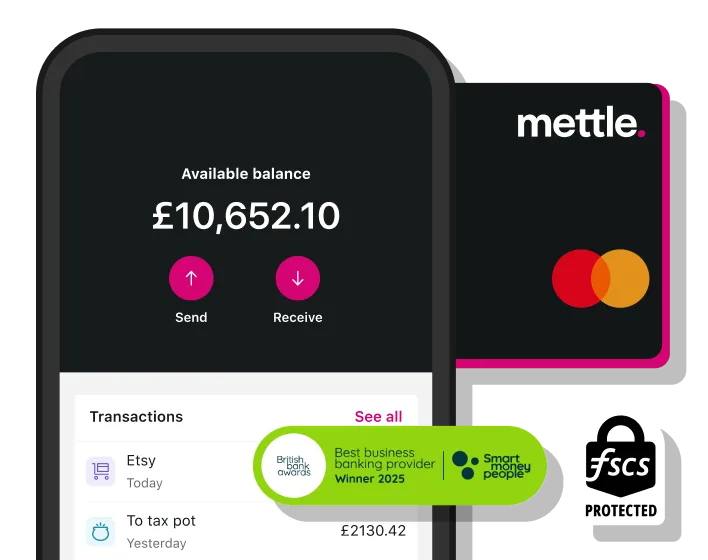
Mettle, by comparison, focuses on providing straightforward and free business banking functionality. Backed by NatWest, Mettle offers a streamlined mobile banking experience with no monthly account fee for eligible UK businesses. The platform is designed primarily for sole traders and limited companies that want simple business banking without overly advanced financial management tools.
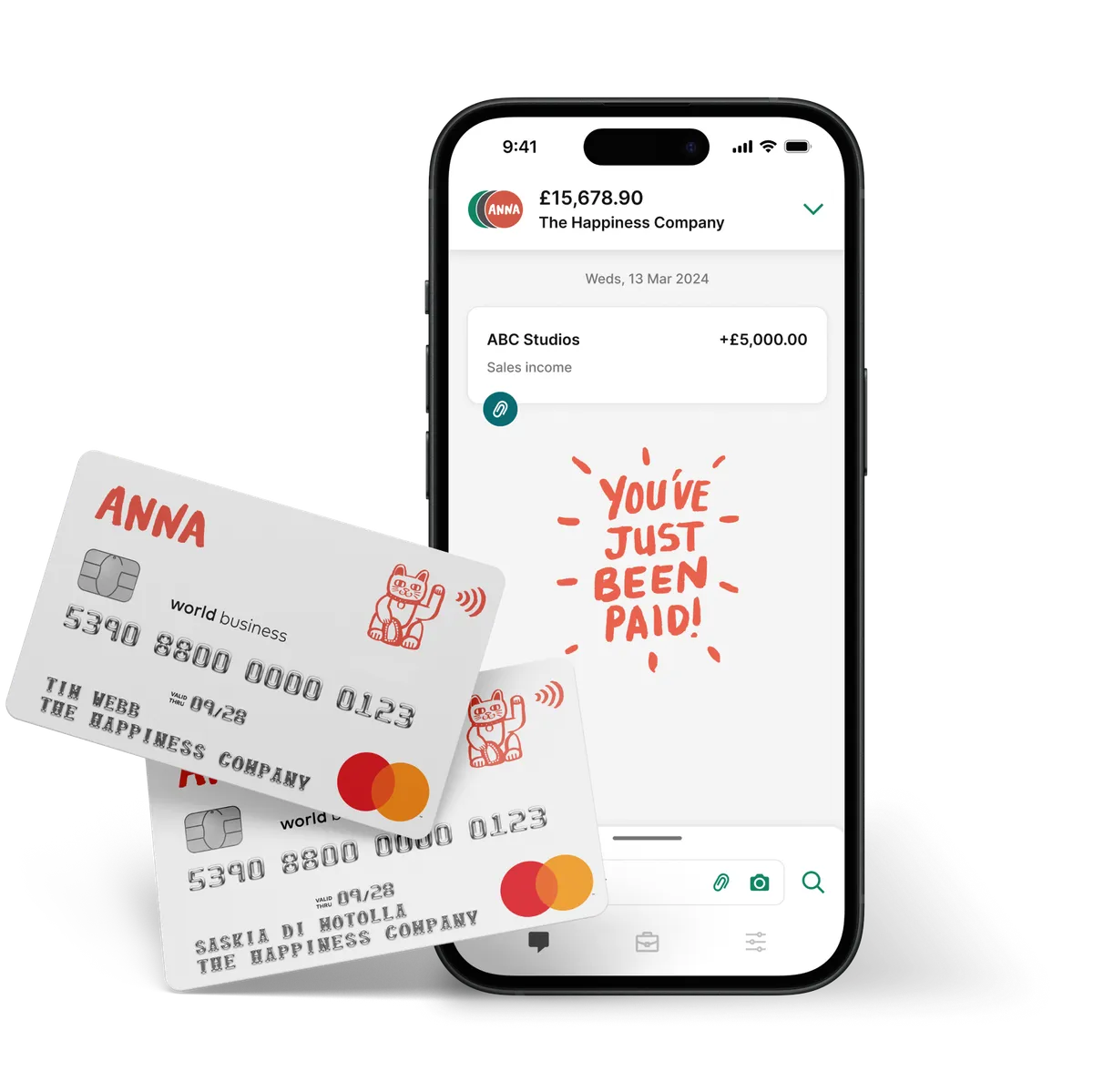
Within this Anna vs Mettle business banking comparison, one of the biggest distinctions is complexity versus simplicity. ANNA aims to become a central operational finance platform, whereas Mettle prioritises clean business banking functionality and accessibility.
Both providers allow users to:
- Open accounts online
- Access mobile banking apps
- Use Mastercard debit cards
- Track spending in real time
- Separate personal and business finances
- Export transactions
- Integrate with accounting software
However, the depth of functionality differs substantially once you move beyond basic banking.
ANNA also includes optional paid subscription tiers that unlock more advanced bookkeeping and tax features. Businesses wanting automation may find this particularly useful as they scale operations. Mettle keeps things more lightweight, which may appeal to smaller businesses wanting simplicity without subscription costs.
Another important factor in the Anna vs Mettle comparison is customer type eligibility. Mettle primarily serves UK sole traders and limited companies with straightforward structures, while ANNA supports a broader range of small business users and operational needs.
For startups evaluating digital banking options, the decision often comes down to whether they prioritise advanced financial admin tools or free everyday banking functionality. Businesses heavily focused on invoicing and tax organisation may gravitate toward ANNA, while businesses wanting minimal fees and simple app-based banking may prefer Mettle.
As digital business banking adoption continues growing in the UK, both providers remain strong alternatives to traditional banks for entrepreneurs seeking flexibility, speed, and mobile-first money management.
ANNA vs Mettle Business Account Features
When comparing ANNA vs Mettle business account functionality, the differences become clearer once you examine the individual features each provider offers to UK business owners. Although both platforms deliver digital banking services, their overall priorities and user experiences vary significantly.
ANNA focuses heavily on automation, financial organisation, and reducing administrative workloads. The platform is built for businesses that invoice customers regularly, manage receipts frequently, or need integrated bookkeeping support alongside their business banking account.
Some of ANNA’s standout features include:
- Automatic invoice generation
- Receipt scanning
- Expense categorisation
- Tax reminders
- Payment chasing automation
- VAT calculation tools
- Cash flow insights
- Accountant integrations
- Multi-user access options
For freelancers, agencies, consultants, and growing SMEs, these tools can substantially reduce the amount of time spent on financial admin every month. This is one of the major reasons ANNA continues gaining popularity among service-based businesses across the UK.
Mettle, meanwhile, takes a more streamlined approach to business banking. Rather than focusing extensively on admin automation, it prioritises simplicity and usability. The app is designed to help businesses manage incoming and outgoing payments efficiently while offering basic financial management tools within a clean mobile interface.
Key Mettle features include:
- Free business banking
- Instant payment notifications
- Spending categorisation
- Integrated invoicing
- Tax pots
- Accounting software integrations
- Mastercard debit card
- Mobile cheque deposits
One of the strongest elements within this ANNA vs Mettle features comparison is usability. Both apps are intuitive and modern, but they target slightly different user priorities.
ANNA appeals more to businesses wanting an “all-in-one” operational finance platform, while Mettle appeals to businesses seeking low-maintenance digital banking with minimal complexity.
Another important difference is automation depth. ANNA’s invoice reminders, AI-assisted admin support, and tax estimation tools create a more proactive experience. Mettle’s approach is intentionally simpler, helping users maintain visibility over spending and transactions without overwhelming them with advanced tools.
Customer support experiences also differ. ANNA is known for conversational in-app support and strong onboarding guidance, while Mettle benefits from its NatWest backing and reliability-focused infrastructure.
For businesses comparing Anna vs Mettle business banking solutions in 2026, the ideal choice often depends on workflow requirements. Companies with high invoice volumes or more complex financial admin may gain greater long-term value from ANNA’s automation ecosystem. Businesses prioritising free banking and straightforward money management may find Mettle more suitable.
Ultimately, both providers offer strong alternatives to traditional business current accounts, but they serve slightly different operational styles and business priorities.
Pricing, Monthly Fees and Charges
Pricing is one of the biggest deciding factors when businesses compare ANNA vs Mettle business banking platforms. While both providers offer modern digital banking experiences for UK startups and freelancers, their pricing models are structured very differently, which can significantly influence long-term value depending on how a business operates.
Mettle is widely recognised for offering free business banking with no monthly account fee for eligible users. This makes it especially appealing for sole traders, freelancers, side hustles, and small businesses wanting straightforward banking without committing to a paid subscription. Businesses can open an account, manage transactions, send invoices, and use the mobile app without paying a recurring monthly charge.
For many early-stage businesses, this simplicity is highly attractive. New companies often prioritise cost control during their first year, making Mettle an accessible entry point into digital business banking. The lack of monthly fees also means businesses can separate personal and business finances professionally without increasing overheads.
However, while Mettle’s pricing model is simple, the platform offers fewer advanced admin and automation tools compared to ANNA. This is where the ANNA pricing structure becomes more nuanced.
ANNA offers multiple account tiers designed around different business needs. While there are entry-level plans available, many of the platform’s more advanced features are tied to paid subscriptions. Businesses paying for ANNA are effectively investing in automation, financial organisation, and admin reduction rather than just banking access.
This distinction is important within any Anna vs Mettle comparison because ANNA is not positioning itself purely as a free banking app. Instead, it aims to replace several separate operational tools businesses may otherwise pay for individually, such as invoicing software, receipt management apps, bookkeeping support, and tax tracking systems.
For businesses that invoice regularly, manage many transactions, or struggle with financial admin, ANNA’s paid plans may actually provide better overall value despite the subscription cost. Time savings alone can justify the additional expense for some business owners.
Another key difference involves cash handling and international functionality. Businesses that regularly deposit cash or make international payments should carefully compare fee structures before choosing between providers. Certain transaction types may incur charges depending on account tier and usage levels.
The ANNA vs Mettle business account pricing debate ultimately depends on business complexity. Sole traders with straightforward finances may prefer Mettle’s free structure, while growing SMEs or admin-heavy businesses may gain more operational efficiency through ANNA’s broader ecosystem.
It is also important to remember that pricing structures and included features can change over time. Promotional offers, subscription packages, and eligibility criteria may vary throughout 2026, so businesses should always review the latest fee schedules before opening an account.
For businesses focused purely on minimising banking costs, Mettle will likely appear more attractive initially. For businesses looking to reduce admin time and centralise financial workflows, ANNA’s subscription model may deliver stronger long-term operational value.
Invoicing and Accounting Tools
One of the most important areas in the ANNA vs Mettle features comparison is invoicing and accounting functionality. For freelancers, consultants, agencies, contractors, and service-based businesses, the ability to manage invoices, receipts, expenses, and taxes efficiently can save significant amounts of time every month.
ANNA has built much of its reputation around simplifying financial administration for small businesses. The platform goes far beyond standard banking by integrating invoicing, bookkeeping assistance, expense tracking, and tax estimation directly into the user experience. This makes ANNA particularly appealing for businesses that handle frequent client billing or need stronger financial organisation.
The invoicing system within ANNA is especially comprehensive. Businesses can create and send professional invoices directly from the app, track payment statuses, and automate reminders for overdue invoices. This automation reduces the need for separate invoicing platforms and helps improve cash flow visibility.
Another major advantage within this Anna vs Mettle business banking comparison is ANNA’s receipt management functionality. Users can photograph receipts directly inside the app, allowing expenses to be categorised automatically. Over time, this can substantially reduce bookkeeping workloads and simplify tax preparation.
ANNA also provides tax estimates and reminders, which many freelancers and sole traders find useful when managing self-assessment obligations. Instead of manually tracking liabilities, users receive clearer visibility into potential tax obligations throughout the year.
Mettle also includes invoicing tools, but its overall approach is intentionally more lightweight. The platform offers simple invoice creation and payment tracking functionality designed for smaller businesses that want straightforward financial visibility without extensive automation layers.
One of Mettle’s strongest accounting-related features is its integration with FreeAgent for eligible users. This partnership can provide substantial value to businesses already using FreeAgent for bookkeeping and accounting purposes. For some business owners, this integration alone may make Mettle highly attractive despite offering fewer native admin tools than ANNA.
Within the broader Anna vs Mettle comparison, the decision often comes down to workflow complexity. Businesses managing large invoice volumes, complex expense tracking, or multiple financial admin tasks may find ANNA’s integrated ecosystem more efficient. Businesses wanting simpler bookkeeping support combined with free business banking may lean toward Mettle.
Another consideration is scalability. ANNA’s automation-focused infrastructure may become increasingly valuable as businesses grow and financial administration becomes more demanding. Mettle’s streamlined experience works well for smaller operations but may feel more limited for businesses requiring deeper financial workflow management.
Ultimately, both providers support accounting integrations and digital financial management, but ANNA positions itself much more aggressively as an operational finance platform rather than simply a business current account.
For UK freelancers and startups comparing ANNA vs Mettle business account functionality in 2026, invoicing and bookkeeping needs may ultimately become one of the biggest deciding factors.
Business Banking App Experience
For many UK entrepreneurs, the mobile app experience is now just as important as the business account itself. Most freelancers, startups, and small business owners manage finances primarily through smartphones, which means usability, reliability, speed, and app functionality play a major role in the overall ANNA vs Mettle comparison.
Both providers deliver modern mobile-first business banking experiences, but they are designed with slightly different priorities in mind. ANNA focuses heavily on operational workflows and admin management, while Mettle emphasises simplicity, speed, and clean everyday banking functionality.
ANNA’s app is built to act as a financial operations hub rather than simply a place to check balances and send payments. The interface includes invoicing tools, expense tracking, receipt uploads, tax calculations, transaction categorisation, and automated admin assistance all within the same environment. Businesses that regularly manage invoices or reconcile expenses often appreciate having these tools integrated directly into the banking platform.
One of the strongest aspects of ANNA’s app experience is automation. The platform actively assists users with financial organisation rather than functioning passively as a transaction viewer. Notifications, invoice reminders, receipt prompts, and bookkeeping-related features help business owners stay organised without relying on multiple external systems.
The conversational support style inside the app also contributes to ANNA’s reputation for user friendliness. Many users appreciate the platform’s approachable interface and practical financial guidance, especially newer business owners navigating business banking for the first time.
However, because ANNA offers more advanced functionality, the app can initially feel more feature-heavy compared to simpler banking alternatives. Businesses seeking minimalism may find Mettle easier to navigate day-to-day.
Mettle’s app experience is intentionally streamlined. The interface focuses on clarity, fast navigation, and straightforward business banking management. Users can quickly review transactions, categorise spending, create invoices, and monitor balances without excessive complexity.
This simplicity is one of Mettle’s biggest strengths within the ANNA vs Mettle business banking debate. For sole traders or freelancers who mainly need a clean business current account without extensive admin tools, Mettle often feels easier to manage.
The app also benefits from NatWest’s infrastructure backing, which can provide additional confidence for businesses prioritising reliability and stability. Real-time transaction notifications, spending insights, and tax pots are integrated in a way that remains accessible even for users with limited accounting knowledge.
Another important difference within this Anna vs Mettle features comparison is how each provider approaches financial workflows. ANNA aims to centralise admin management inside the banking platform, while Mettle aims to keep banking simple and frictionless.
Businesses operating with higher invoice volumes or more complex expense management may benefit from ANNA’s broader capabilities. Businesses focused mainly on sending payments, receiving funds, and maintaining financial separation may find Mettle’s cleaner interface more suitable.
Customer reviews across both platforms are generally positive, although preferences often depend heavily on business type and operational style. Some users value ANNA’s advanced automation, while others prefer Mettle’s simplicity and lower-maintenance experience.
Ultimately, the best app experience depends less on which platform has more features and more on which platform aligns with how a business actually manages money day-to-day.
Who Should Use ANNA?
ANNA is particularly well suited to UK business owners who want more than simply a business current account. Within the broader ANNA vs Mettle business account comparison, ANNA stands out most strongly for businesses seeking automation, admin reduction, invoicing support, and integrated financial organisation tools.
Freelancers are one of the core audiences that tend to benefit most from ANNA’s ecosystem. Businesses that regularly invoice clients, chase payments, track expenses, or manage receipts often find significant value in ANNA’s automation-focused approach. Instead of using separate tools for invoicing, bookkeeping, expense management, and banking, users can centralise much of their financial workflow inside a single platform.
Consultants, agencies, contractors, creatives, and service-based businesses are especially likely to appreciate ANNA’s operational features. For businesses with recurring client billing or project-based work, invoice generation and automated payment reminders can reduce admin workloads substantially.
Another area where ANNA performs well within the Anna vs Mettle business banking comparison is financial visibility. Businesses wanting better oversight of expenses, tax liabilities, and cash flow often benefit from the platform’s integrated tracking and categorisation systems. These features can be particularly useful for business owners managing finances independently without dedicated accounting teams.
Startups and growing SMEs may also find ANNA more scalable over time. As businesses expand, financial administration often becomes increasingly complex. Receipt management, tax preparation, invoicing workflows, and expense reconciliation can consume large amounts of time. ANNA’s automation tools are designed specifically to reduce this operational burden.
The platform may also appeal to founders who value efficiency and digital convenience. Businesses comfortable operating entirely online are likely to benefit from ANNA’s app-based infrastructure and modern onboarding process.
However, ANNA may not be ideal for every business type. Companies looking purely for free business banking with minimal additional features may find the platform unnecessarily comprehensive. Businesses that rarely invoice clients or have very simple transaction requirements may not fully utilise ANNA’s broader feature set.
Pricing can also influence suitability. While ANNA’s paid plans may provide strong value for admin-heavy businesses, smaller sole traders with limited operational complexity may prefer lower-cost alternatives.
Within this ANNA vs Mettle comparison, ANNA is best viewed as a hybrid between business banking and operational finance software. Businesses wanting automation, organisation, and integrated admin management are far more likely to gain meaningful long-term value from the platform.
ANNA may be especially suitable for:
- Freelancers managing regular invoices
- Consultants and agencies
- Contractors handling multiple clients
- Startups wanting automation tools
- Businesses needing receipt tracking
- SMEs seeking better financial organisation
- Founders managing bookkeeping internally
For businesses prioritising efficiency and reduced admin overhead, ANNA continues to position itself as one of the most feature-rich digital business banking providers available to UK entrepreneurs in 2026.
Who Should Use Mettle?
Mettle is best suited to UK sole traders, freelancers, startups, and small businesses that want straightforward digital business banking without unnecessary complexity or ongoing monthly costs. Within the wider ANNA vs Mettle comparison, Mettle stands out for its simplicity, accessibility, and focus on core banking functionality.
One of Mettle’s biggest advantages is its free business banking model. Many small businesses simply want a separate account for managing business income and expenses professionally without paying subscription fees or navigating overly advanced financial tools. For these users, Mettle offers a clean and efficient solution.
Freelancers and sole traders are among the strongest target audiences for Mettle. Businesses with relatively simple finances often do not require extensive automation systems or integrated bookkeeping ecosystems. Instead, they prioritise reliable banking, real-time spending visibility, invoicing capability, and straightforward expense management. Mettle performs strongly across all of these areas.
The app experience also contributes heavily to Mettle’s appeal. The platform is intentionally lightweight and easy to navigate, making it attractive for users who prefer simplicity over feature-heavy financial platforms. Transactions, balances, invoices, and spending categories are all clearly presented within the app, allowing users to manage finances quickly without extensive onboarding or training.

Another major advantage in this Anna vs Mettle business banking comparison is Mettle’s backing from NatWest. Some businesses feel more comfortable using a fintech platform supported by a major UK banking institution, particularly when compared with newer standalone fintech brands. This association can create additional trust and confidence for businesses moving away from traditional banks for the first time.
Mettle is also highly suitable for businesses already using FreeAgent or planning to integrate accounting software into their workflow. The FreeAgent integration available to eligible users can provide strong value for bookkeeping and tax management without needing a more complex all-in-one financial platform.
Businesses operating with relatively low invoice volumes or straightforward transaction activity may find Mettle entirely sufficient for their needs. Side hustles, part-time freelancers, independent contractors, and micro-businesses often prioritise keeping operational costs low while still maintaining professional banking separation.
However, businesses requiring deeper automation or extensive financial admin support may eventually outgrow Mettle’s functionality. Compared with ANNA, the platform offers fewer built-in tools for invoice automation, receipt management, tax estimation, and operational finance management.
Within the broader ANNA vs Mettle features comparison, Mettle succeeds by keeping things intentionally simple rather than trying to become a comprehensive finance ecosystem.
Mettle may be particularly suitable for:
- Freelancers wanting free business banking
- Sole traders with straightforward finances
- Small startups controlling overheads
- Businesses wanting a simple mobile app
- Users prioritising ease of use
- Entrepreneurs wanting NatWest-backed infrastructure
- Businesses already using FreeAgent
For many smaller UK businesses, simplicity can actually be a major advantage. Instead of paying for advanced tools they may never fully use, Mettle provides an efficient and accessible digital banking experience that covers the essentials effectively.
As a result, Mettle remains one of the strongest free business banking options available to UK entrepreneurs in 2026.
How to Open an Account Step-by-Step
Opening either ANNA or Mettle is significantly faster and more convenient than applying for a traditional high street business account. Both providers have streamlined digital onboarding systems that allow most eligible UK businesses to complete applications online without visiting a branch or submitting excessive paperwork.
Within this ANNA vs Mettle business account guide, one of the strongest shared advantages is onboarding speed. Many users can open an account within a relatively short timeframe, although verification checks and eligibility reviews may vary depending on business structure and application details.
The process for opening an ANNA account is designed to be fully digital and app-based. Applicants begin by downloading the ANNA app or starting the application online. Businesses are typically asked to provide basic company information, personal identification documents, and details about business activity.
For sole traders and limited companies, the onboarding experience is generally straightforward. Verification checks may include identity confirmation, Companies House validation, and anti-money laundering reviews. Once approved, users can begin accessing account functionality directly from the app.
ANNA’s setup process also introduces users to its wider ecosystem of invoicing, expense management, bookkeeping, and automation tools. Businesses wanting to centralise financial administration often appreciate this integrated onboarding experience.
Businesses interested in opening an ANNA account can view the latest offer here: https://startupdeals.co.uk/recommends/anna-money-business-current-account
Mettle follows a similarly digital application process. Applicants download the app, submit verification information, and provide business details during onboarding. The platform is designed to minimise friction and simplify account opening for freelancers, sole traders, and small businesses.
One of Mettle’s strongest onboarding advantages within the Anna vs Mettle comparison is simplicity. Because the platform focuses primarily on core business banking, the setup process often feels streamlined and uncluttered.
Businesses applying for Mettle generally need:
Proof of identity
UK business registration details (if applicable)
Business activity information
A compatible smartphone device
Verification checks can vary depending on risk reviews and business structure. Some applicants may receive approval quickly, while others may require additional documentation.
Mettle’s cashback promotion can also provide additional incentive for eligible users opening new accounts. Businesses using referral code QPBB6 may qualify to earn up to £50 cashback after making a qualifying transaction within the first 30 days of account opening.
Businesses interested in Mettle can view the latest offer here: https://startupdeals.co.uk/recommends/mettle-business-current-account
Overall, both providers deliver fast and modern onboarding experiences compared with many traditional banks. The better option largely depends on whether businesses prefer ANNA’s broader operational finance ecosystem or Mettle’s simpler business banking approach.
For startups and freelancers prioritising convenience, both providers remain highly competitive digital banking options in 2026.
ANNA vs Mettle Offers & Promotions
Promotional offers can play an important role when businesses compare ANNA vs Mettle business banking options, especially for UK startups, freelancers, sole traders, and SMEs looking to maximise value during the early stages of growth. While features, pricing, app usability, and operational functionality remain the most important long-term considerations within this ANNA vs Mettle comparison, welcome offers and incentives can still provide meaningful short-term benefits when opening a new business account.
ANNA currently promotes an ANNA +Taxes free 30 day trial for eligible new customers. Within this ANNA vs Mettle business account comparison, the ANNA offer is designed to showcase the platform’s broader operational finance ecosystem rather than simply incentivising account openings with cashback alone. The trial gives businesses temporary access to some of ANNA’s more advanced automation, bookkeeping, invoicing, and tax-related functionality without immediate subscription costs.
For freelancers, sole traders, agencies, consultants, and growing SMEs comparing Anna vs Mettle business banking platforms, this can be a valuable opportunity to test ANNA’s admin and automation tools before committing financially. Businesses that regularly manage invoices, track receipts, organise expenses, or prepare tax records may benefit most from trialling ANNA’s integrated functionality.
One of the strongest elements within this ANNA vs Mettle features comparison is ANNA’s focus on reducing administrative workload. The ANNA +Taxes functionality includes integrated bookkeeping assistance, receipt management, expense categorisation, tax estimates, and financial organisation tools designed to simplify day-to-day operational finance management.
Eligibility requirements for the ANNA promotion can vary depending on business structure, account status, onboarding approval, and promotional availability at the time of application. In some cases, businesses may need to remain active users during the trial period or complete full verification checks before accessing promotional functionality.
Businesses can review the current ANNA offer here: https://startupdeals.co.uk/recommends/anna-money-business-current-account
Mettle’s promotion takes a different approach within the wider ANNA vs Mettle comparison. Eligible businesses can currently earn up to £50 cashback by opening a Mettle account, entering referral code QPBB6, and making a qualifying transaction within the first 30 days of account opening.
This cashback incentive may appeal particularly to startups, freelancers, and sole traders comparing ANNA vs Mettle business banking providers who want immediate financial value from opening a new business account. Compared with ANNA’s software-focused promotion, Mettle’s cashback structure is more direct and easier for many businesses to understand.
To qualify for the Mettle cashback promotion, businesses generally need to:
- Open an eligible Mettle business account
- Enter referral code QPBB6 during signup
- Complete a qualifying card transaction within 30 days
- Meet any applicable eligibility criteria
The promotion is typically available to UK sole traders and directors of limited companies, although exact eligibility requirements may vary over time.
Businesses can review the latest Mettle offer here: https://startupdeals.co.uk/recommends/mettle-business-current-account
Within this broader Anna vs Mettle business account comparison, the two offers reflect the providers’ overall positioning strategies. ANNA uses promotional access to demonstrate the value of its operational finance ecosystem and automation tools, while Mettle focuses more heavily on straightforward cashback incentives linked to account usage.
Neither promotion should be the sole deciding factor when choosing between ANNA vs Mettle business banking solutions. Businesses should prioritise long-term suitability, pricing structure, invoicing requirements, automation needs, app functionality, bookkeeping integrations, and operational workflow compatibility before making a final decision.
However, for businesses already considering one of these digital business banking platforms, the promotional incentives may provide additional value during onboarding and account setup.
It is also important to remember that promotional terms, eligibility conditions, cashback rules, and referral programmes can change frequently. Businesses should always verify current offer details directly before applying. The right choice within this ANNA vs Mettle comparison ultimately depends on company structure, operational complexity, financial workflows, and how much automation is needed from a business banking provider.
Final ANNA vs Mettle Comparison
When reviewing the full ANNA vs Mettle comparison, it becomes clear that both providers serve slightly different business needs despite operating within the same UK digital business banking market. Neither platform is universally “better” for every business. Instead, the right choice depends heavily on operational complexity, financial workflows, automation requirements, and how businesses prefer to manage day-to-day banking.
Within this ANNA vs Mettle business account comparison, ANNA positions itself as a broader financial management platform rather than simply a business current account. The platform is designed for businesses that want invoicing, bookkeeping support, receipt management, tax estimates, expense categorisation, and admin automation integrated directly into their business banking experience. For freelancers, agencies, consultants, contractors, and SMEs managing regular invoices or complex financial admin, these features can provide meaningful operational efficiencies.
Businesses spending significant time organising receipts, chasing invoices, reconciling expenses, or preparing tax records may gain substantial value from ANNA’s ecosystem. One of the biggest strengths within this ANNA vs Mettle features comparison is ANNA’s ability to reduce repetitive admin work and centralise multiple operational finance tools inside one platform. Businesses prioritising automation and financial organisation often view this as a major advantage.
Mettle takes a much simpler approach to digital business banking. Instead of focusing heavily on automation and operational finance management, Mettle prioritises accessibility, simplicity, usability, and free everyday business banking functionality for UK startups and sole traders.
For sole traders, freelancers, and startups with relatively straightforward financial requirements, Mettle’s clean app experience and no-monthly-fee structure may feel more practical. Businesses comparing Anna vs Mettle business banking platforms that mainly want a reliable account for payments, expenses, and everyday transaction management often find Mettle highly effective without needing additional complexity or subscription-based admin tools.
Another important distinction within this ANNA vs Mettle business account comparison is scalability. ANNA’s broader automation and bookkeeping functionality may become increasingly valuable as businesses grow and financial administration becomes more demanding. Mettle’s streamlined structure works extremely well for smaller operations and newer businesses but may feel more limited for businesses needing deeper workflow automation or integrated admin support.
The decision within this Anna vs Mettle comparison may also depend on personality and working style. Some business owners prefer highly automated systems with integrated finance tools and invoicing workflows, while others prefer minimalist digital business banking experiences that remain clean, simple, and distraction free.
Businesses prioritising admin efficiency, invoicing automation, bookkeeping support, and operational finance management are more likely to benefit from ANNA. Businesses prioritising free business banking, simplicity, straightforward usability, and low-maintenance financial management may lean more heavily toward Mettle.
Both providers remain strong alternatives to traditional high street business banking in 2026. Both ANNA and Mettle offer faster onboarding, app-based business banking, real-time transaction visibility, modern financial tools, and improved accessibility for UK freelancers, startups, and SMEs.
Ultimately, the better option in this ANNA vs Mettle comparison depends on whether businesses value automation and integrated operational support or simplicity and low-cost business banking more heavily within their day-to-day financial management.
General FAQs
Is ANNA better than Mettle for freelancers?
Within the ANNA vs Mettle comparison, ANNA is often better for freelancers who invoice clients regularly and want automation tools, while Mettle is better for those wanting simpler free business banking.
Does Mettle charge monthly fees?
Mettle does not currently charge monthly account fees for eligible users, which makes it attractive within the ANNA vs Mettle business account market for startups and sole traders.
Can limited companies use ANNA?
Yes, ANNA supports UK limited companies as well as freelancers, contractors, and sole traders using its digital business banking platform.
Is Mettle backed by a traditional bank?
Yes, Mettle is backed by NatWest, which gives some businesses additional confidence when comparing Anna vs Mettle business banking providers.
Does ANNA include invoicing tools?
Yes, ANNA includes integrated invoicing, automated payment reminders, and receipt management tools within its wider financial admin ecosystem.
Which provider is better for bookkeeping?
In most ANNA vs Mettle features comparison scenarios, ANNA offers more advanced bookkeeping support and automation features than Mettle.
Can I use accounting software with both providers?
Yes, both ANNA and Mettle integrate with popular accounting software platforms used by UK freelancers and small businesses.
Is ANNA free to use?
ANNA offers different pricing tiers depending on required functionality. Some advanced bookkeeping and automation tools may require paid plans.
Does Mettle offer cashback?
Yes, eligible businesses may earn cashback through promotional referral offers when opening a new Mettle account and meeting qualifying conditions.
Which app is easier to use?
Many users find Mettle simpler and more lightweight, while ANNA offers broader functionality for businesses wanting operational finance tools.
Can sole traders apply for both accounts?
Yes, both providers support UK sole traders within their business banking eligibility requirements.
Which provider is better for startups?
The best option depends on operational needs. ANNA may suit startups wanting automation, while Mettle may suit startups prioritising free business banking.
Offer FAQs
What is the ANNA +Taxes free 30 day trial?
The ANNA +Taxes free 30 day trial gives eligible businesses temporary access to ANNA’s tax and admin management tools without immediate subscription charges.
Who qualifies for the ANNA offer?
Eligibility for the ANNA promotion depends on business type, successful onboarding, and current promotional terms available at application.
How do I claim the ANNA trial?
Businesses can usually activate the ANNA +Taxes trial during signup through the official offer page and account onboarding process.
What does the ANNA +Taxes feature include?
The feature may include bookkeeping support, tax estimates, receipt management, invoice functionality, and expense categorisation tools.
Is the ANNA offer available for limited companies?
Yes, eligible UK limited companies may qualify for the ANNA promotional offer depending on current terms and conditions.
What is the Mettle cashback offer?
Eligible users can earn up to £50 cashback by opening a Mettle account, entering referral code QPBB6, and making a qualifying transaction.
How do I qualify for the Mettle cashback?
Businesses must usually open an eligible account, enter the referral code correctly, and complete a qualifying card transaction within 30 days.
Is the Mettle cashback guaranteed?
No, cashback offers are subject to eligibility checks, qualifying activity, and current promotional conditions.
Can sole traders claim the Mettle offer?
Yes, eligible sole traders operating within the UK may qualify for the Mettle cashback promotion.
Do limited companies qualify for the cashback?
Yes, directors of eligible UK limited companies may qualify for the Mettle promotional cashback offer.
How long does it take to receive the cashback?
Payment timelines can vary depending on verification checks and promotional processing periods after the qualifying transaction is completed.
Can existing users claim the offers?
Most ANNA vs Mettle business banking promotions are usually limited to new customers only, although eligibility rules can vary.
Recap
Choosing between ANNA vs Mettle ultimately comes down to the type of business you operate and the level of financial functionality you need from your business account. This ANNA vs Mettle comparison highlights two highly competitive digital business banking providers designed for UK freelancers, startups, sole traders, and SMEs, but each platform approaches business banking differently.
ANNA is best suited to businesses looking for automation, invoicing support, bookkeeping tools, expense management, and integrated admin functionality within a single platform. In this ANNA vs Mettle business account comparison, ANNA stands out particularly strongly for freelancers, agencies, contractors, consultants, and growing businesses that regularly manage invoices, receipts, tax admin, and operational finance workflows. ANNA’s broader ecosystem is designed to reduce repetitive admin and improve financial organisation for busy business owners.
One of the biggest advantages in this Anna vs Mettle business banking comparison is ANNA’s focus on automation and operational efficiency. Businesses comparing ANNA vs Mettle features comparison results will often find ANNA more appealing if they want integrated invoicing, bookkeeping support, receipt tracking, and financial admin tools built directly into their business account experience.
Mettle, meanwhile, focuses more heavily on simplicity, accessibility, and free digital business banking. Its no-monthly-fee structure, straightforward app experience, and NatWest backing make it particularly attractive within the ANNA vs Mettle business banking market for sole traders, freelancers, startups, and smaller businesses wanting uncomplicated business banking without advanced automation features.
Throughout this ANNA vs Mettle business account comparison, one of the clearest differences has been operational depth. ANNA positions itself as a broader operational finance platform with advanced admin and invoicing capabilities, while Mettle prioritises clean, simple, and efficient business banking functionality for everyday financial management.
Businesses wanting advanced automation, integrated bookkeeping, and financial admin support may gain greater long-term value from ANNA: https://startupdeals.co.uk/recommends/anna-money-business-current-account
Businesses wanting free and straightforward digital business banking with a simpler experience may prefer Mettle:
https://startupdeals.co.uk/recommends/mettle-business-current-account
Both providers remain highly competitive alternatives to traditional high street business banking in 2026, especially for UK businesses wanting faster onboarding, app-based financial management, modern banking tools, and improved visibility over business finances.
Conclusion
The decision between ANNA vs Mettle is not simply about choosing the “best” business account overall. This ANNA vs Mettle comparison is really about choosing the business banking platform that aligns most closely with how your company operates day-to-day, manages finances, and handles admin workflows.
For businesses prioritising automation, invoice management, tax organisation, and integrated financial workflows, ANNA offers one of the most feature-rich ecosystems currently available within the UK digital business banking market. In this ANNA vs Mettle business banking comparison, ANNA stands out particularly strongly for freelancers, consultants, agencies, contractors, and growing SMEs that spend significant time managing receipts, invoices, bookkeeping, tax admin, and operational finance tasks.
One of the biggest strengths within this ANNA vs Mettle features comparison is ANNA’s ability to reduce repetitive financial admin and centralise multiple operational tools inside one business account platform. For many businesses comparing ANNA vs Mettle business account functionality, the automation, invoicing support, and bookkeeping tools available through ANNA can justify the subscription-based approach very quickly through time savings alone.
Mettle, on the other hand, succeeds through simplicity and accessibility. Businesses comparing Anna vs Mettle business banking solutions that want straightforward digital banking with no monthly fees, a clean mobile experience, and reliable everyday functionality may find Mettle far more practical. Freelancers, sole traders, startups, and side hustles with simpler financial requirements often appreciate Mettle’s low-maintenance approach and easy-to-use business account structure.
Within this broader ANNA vs Mettle comparison, neither provider is necessarily superior for every business type. The better choice depends on whether you value advanced automation and operational finance tools or simple, free, and accessible business banking more heavily. Businesses looking for admin reduction and integrated finance management may prefer ANNA, while businesses wanting straightforward digital business banking may lean toward Mettle.
Latest Posts:
- Zempler Bank Review 2026: Is It Good Value for UK Startups?
 Introduction Zempler Bank offers a genuine UK business bank account from £0 per month, with app and online banking, Post Office cash deposits and built-in tools for invoicing, receipts and… Read more: Zempler Bank Review 2026: Is It Good Value for UK Startups?
 - Hoxton Mix vs Virtually There: Which Virtual Office Service Is Better?
 Introduction If you’re comparing Hoxton Mix vs Virtually There, you’re likely searching for a virtual office provider that offers the right balance of professionalism, affordability, and flexibility. Whether you’re launching… Read more: Hoxton Mix vs Virtually There: Which Virtual Office Service Is Better?
 - Hoxton Mix vs Icon Offices: Which Virtual Office Is Better?
 Introduction Choosing a virtual office provider can have a significant impact on how your business is perceived, how you manage your mail, and even how effectively you maintain privacy as… Read more: Hoxton Mix vs Icon Offices: Which Virtual Office Is Better?
 - 7 Powerful Benefits of Using a Hoxton Mix Virtual Office Address
 Introduction For startups, freelancers, sole traders and growing SMEs, establishing a professional business presence can be challenging. Renting physical office space in London is often expensive, particularly during the early… Read more: 7 Powerful Benefits of Using a Hoxton Mix Virtual Office Address
 - Hoxton Mix Review: Features, Pricing, Pros and Cons Explained
 Introduction If you’re searching for an honest and detailed hoxton mix review, you’re likely comparing virtual office providers and trying to decide whether Hoxton Mix offers good value for your… Read more: Hoxton Mix Review: Features, Pricing, Pros and Cons Explained
 - Hoxton Mix Virtual Office Discount: Save 10% on Your First 12 Months
 Introduction If you’re looking for a professional London business address without the cost of renting physical office space, a Hoxton Mix Virtual Office discount could help you reduce your startup… Read more: Hoxton Mix Virtual Office Discount: Save 10% on Your First 12 Months
 - Tide Referral Code 2026: Powerful Guide to Claim £200 Cashback with STARTUP200
 Introduction If you’re looking for a Tide referral code in 2026, you’re probably searching for the best possible deal before opening a business account. Whether you’re a sole trader, freelancer,… Read more: Tide Referral Code 2026: Powerful Guide to Claim £200 Cashback with STARTUP200
 - Tide vs High Street Banks: Powerful 2026 Review
 Introduction Choosing the right business banking solution is one of the most important decisions a UK business owner can make. Whether you’re a sole trader, freelancer, contractor, startup founder, or… Read more: Tide vs High Street Banks: Powerful 2026 Review
 - Tide Business Account for Tradespeople | Powerful Guide 2026
 Introduction Running a trade business involves much more than completing jobs and keeping customers happy. Whether you’re a plumber, electrician, builder, carpenter, roofer, landscaper, painter, heating engineer, or general contractor,… Read more: Tide Business Account for Tradespeople | Powerful Guide 2026