

Introduction
Choosing the right business account is one of the first important decisions a new founder makes, which is why this anna money review is designed to help UK startups, sole traders, freelancers, and small business owners decide whether ANNA is the right fit. When you are launching a business, you do not just need somewhere to receive payments. You need a simple way to manage invoices, track expenses, stay organised for tax, and keep your business finances separate from your personal money.
ANNA Money is positioned as a modern business account and admin app for small businesses. It combines business banking-style features with tools for invoicing, expense tracking, receipt capture, tax support, and company formation. That makes it particularly interesting for new founders who want fewer separate tools and less financial admin from day one.
This article looks at the ANNA business account in detail, including who it is best for, how it works, what features are included, how the ANNA Money business account compares with other startup banking options, and whether ANNA Money for startups is genuinely useful or just another fintech app with clever marketing.
If you are comparing providers, this guide will also help you understand where ANNA stands against more familiar names in the UK business account space. For example, some founders prioritise low fees, while others want built-in tax tools, automated admin, or quick company formation support. A good ANNA bank account review should therefore look beyond the card and app, and consider whether the overall service saves time for real small business owners.
You can apply for the ANNA Money business account here: https://startupdeals.co.uk/recommends/anna-money-business-current-account
Offers, pricing, eligibility, and account features may change, and approval may depend on your business type, verification checks, and ANNA’s current terms. Always check the latest details before applying.
Contents:
- What Is ANNA Money?
- ANNA Money Review: How Good Is the Business Account?
- Who Is ANNA Money For?
- Who Is ANNA Money Applicable For?
- Key Benefits of ANNA Money
- How to Open an ANNA Business Account Step by Step
- ANNA Money Features Explained
- ANNA Money Company Formation Services
- ANNA Money vs Other Business Accounts
- PROMO Offer: ANNA +Taxes Free 30 Day Trial
- ANNA Money Fees and Pricing
- ANNA Money Pros and Cons
- General FAQs About ANNA Money
- FAQs About the ANNA +Taxes Offer
- Recap
- Conclusion
What Is ANNA Money?
ANNA Money is a UK business finance platform designed for small businesses, freelancers, sole traders, startups, and limited company owners who want to reduce everyday financial admin. ANNA stands for “Absolutely No Nonsense Admin”, which gives a useful clue about what the service is trying to solve. Rather than simply offering an account number, sort code, and debit card, ANNA focuses heavily on helping business owners manage the practical admin that comes with running a company.
The ANNA business account gives eligible businesses access to a UK account, payment features, a business debit card, invoice tools, receipt capture, expense tracking, tax reminders, and optional accounting support. This makes it different from a traditional high-street business bank account, where you may need to connect several third-party tools to achieve the same workflow.
For founders, the appeal is convenience. A new business owner may need to register a company, open a business account, send their first invoice, track spending, put money aside for tax, and understand what needs to be filed with HMRC. ANNA aims to bring several of those tasks into one place, which is why the ANNA Money business account is often considered by people who want a simpler setup.
It is also important to understand what ANNA is not. ANNA is not a traditional bank in the same way as a major UK high-street bank. It offers business account services and payment functionality, but users should check how funds are protected, what services are included, and whether the account suits their own needs before applying. A balanced ANNA bank account review should make this distinction clear because not every business owner needs the same type of provider.
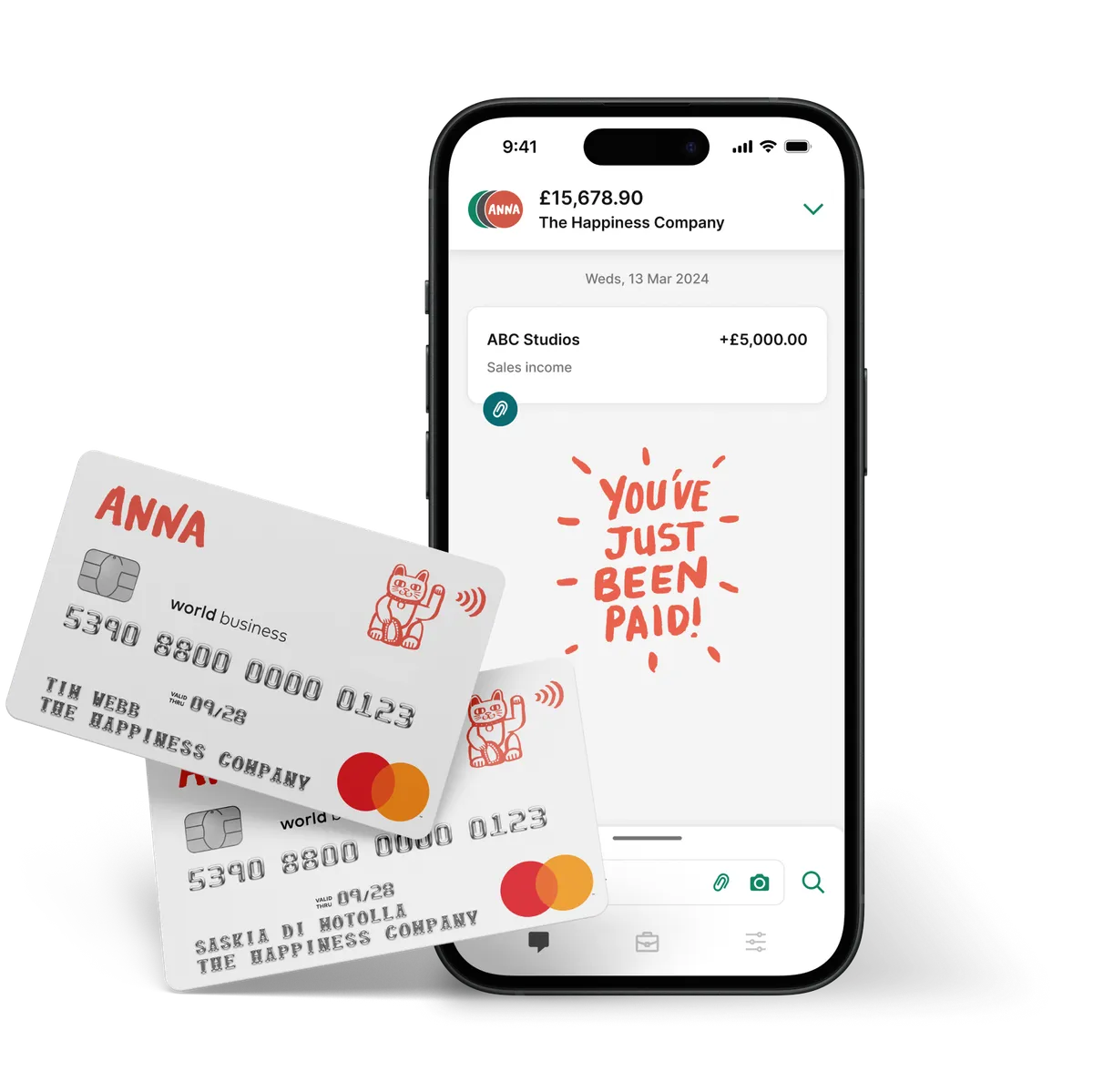
ANNA Money for startups can be especially useful where the founder wants support beyond basic banking. For example, a freelancer may value invoice chasing and receipt capture, while a limited company director may be more interested in company formation, bookkeeping support, and tax tools. The right fit depends on how much admin support you want from your business account.
Overall, ANNA Money is best viewed as a business account and admin platform rather than a simple current account. That is what makes it attractive for small businesses that want practical support, but it also means you should compare its features, fees, and limitations carefully before deciding.
ANNA Money Review: How Good Is the Business Account?
The ANNA Money business account is strongest when judged as a practical startup finance tool rather than as a like-for-like replacement for every type of traditional business bank account. For many small business owners, the biggest challenge is not simply opening an account. It is staying on top of invoices, receipts, payments, bookkeeping, tax deadlines, and general admin while trying to win customers and grow the business.
From that perspective, ANNA performs well because it is built around the daily jobs that founders actually need to complete. The app helps users send invoices, record expenses, manage receipts, monitor income, and keep business transactions separate. For a startup, this can be valuable because good financial habits are easier to build at the beginning than fix later.
The ANNA business account is also appealing because it is designed for speed and simplicity. Many new founders do not want a slow branch-based application process, paper-heavy onboarding, or a complicated interface. They want to apply online, get set up quickly, and start using the account for real business activity. That makes ANNA Money for startups a strong option for people who value convenience.
Another major advantage is that ANNA connects account activity with admin features. A basic business account might show transactions, but ANNA goes further by helping users understand what those transactions mean for business admin. For example, receipt capture and invoice tools can reduce the risk of missing records, while tax-focused features can help founders think ahead instead of panicking near a filing deadline.
However, this does not mean ANNA is the right choice for every business. Some established companies may need lending, complex cash management, international banking, branch services, or more advanced finance controls. Others may already use separate accounting software and may not need ANNA’s additional admin features. That is why any ANNA bank account review should consider business size, trading style, and admin needs.
For a sole trader, freelancer, consultant, small limited company, or early-stage startup, the ANNA Money business account is a compelling choice because it combines several useful tools in one place. It is particularly strong for founders who want business banking-style features alongside invoicing, tax reminders, expense tools, and company formation support.
If your priority is a simple, startup-friendly business account with built-in admin support, ANNA is well worth considering. If your priority is traditional banking depth, credit products, or complex finance operations, you may want to compare ANNA with other providers before applying.
Who Is ANNA Money For?
The ANNA Money business account is primarily designed for small business owners who want a simple way to manage business finances and reduce admin. While larger companies may require more advanced financial infrastructure, ANNA focuses heavily on startups, freelancers, sole traders, contractors, consultants, and small limited companies that value speed, automation, and convenience.
For many founders, traditional banking can feel outdated and unnecessarily complicated. Opening a business account with a high-street bank may involve lengthy application processes, branch appointments, paperwork, and slow onboarding. ANNA takes a different approach by focusing on digital-first business banking-style services that can often be managed entirely online.
ANNA Money for startups is especially attractive because new businesses often need more than just a current account. Early-stage companies typically need invoicing support, bookkeeping tools, expense tracking, receipt storage, and reminders for tax obligations. Instead of connecting several different apps together, the ANNA business account attempts to centralise these tasks into one platform.
Freelancers and sole traders are another major audience for ANNA. Self-employed professionals often struggle with organisation because they are balancing client work with admin. A freelancer may need to send invoices, track payments, record receipts, and estimate taxes while also managing projects and finding new work. In this type of situation, the ANNA Money business account can reduce friction by automating parts of the process.
Limited company directors may also find value in ANNA’s setup. Small limited companies often need a business account quickly after incorporation, and many founders want a provider that supports company formation and ongoing admin together. Because ANNA offers both company registration and business finance tools, it appeals to founders who want an integrated startup experience.
The ANNA bank account review conversation also frequently includes digital entrepreneurs, ecommerce sellers, social media freelancers, creators, and remote-first businesses. These types of businesses often prioritise app usability, mobile banking-style features, fast invoicing, and flexibility over branch access or complex banking products.
However, ANNA is not necessarily ideal for every company. Businesses with more complex financial needs, high cash handling requirements, large lending needs, or international treasury requirements may prefer a traditional bank or enterprise-level finance provider. Similarly, businesses that already use dedicated accounting systems and finance teams may not benefit as much from ANNA’s admin-focused tools.
Overall, the ANNA business account is best suited to modern small businesses that want simplicity, automation, and practical admin support without unnecessary complexity.
Who Is ANNA Money Applicable For?
One reason the ANNA Money business account has become increasingly popular is because it supports a wide range of business types. Many business account providers focus narrowly on limited companies or established businesses, whereas ANNA positions itself as a flexible option for different forms of self-employment and entrepreneurship.
Sole traders are among the most obvious users. Many sole traders start their business without formal finance systems in place, which can lead to confusion around invoices, receipts, taxes, and business expenses. The ANNA business account gives sole traders a more organised way to manage business income separately from personal spending, while also providing tools that simplify everyday admin.
Freelancers are another strong fit. Designers, marketers, writers, consultants, developers, photographers, and contractors often invoice clients regularly and need simple financial tools that work well from a mobile phone. The ANNA Money business account appeals to freelancers because it combines invoicing, payment tracking, receipt capture, and expense monitoring into one platform.
ANNA Money for startups is also highly relevant for newly formed limited companies. Founders launching a startup often need to move quickly. They may need to register a company, set up a business account, receive payments from customers, and stay compliant with tax requirements within a short period of time. ANNA supports this type of fast-moving business setup particularly well.
Small ecommerce businesses may also benefit from ANNA. Online sellers frequently need digital-first finance tools that help them manage payments, expenses, subscriptions, supplier invoices, and tax preparation. While larger ecommerce brands may eventually require more advanced systems, ANNA can be a practical solution during the early growth stages.
Partnerships and micro-businesses may also find ANNA suitable depending on eligibility requirements and operational needs. For small teams that do not need enterprise-level banking complexity, the ANNA business account can provide a cleaner and more streamlined alternative to traditional business banking.
The ANNA bank account review discussion is also relevant for side hustlers transitioning into full-time self-employment. Many people launching a business while still employed elsewhere need an affordable and simple way to separate business finances from personal finances. ANNA’s straightforward onboarding and admin features can help create that separation early.
Despite its broad appeal, there are still businesses that may not find ANNA suitable. Companies with very high transaction volumes, advanced lending requirements, large payroll operations, or specialist financial structures may eventually outgrow the platform. Similarly, businesses that depend heavily on physical branch access or cash deposits should compare features carefully before applying.
For startups, freelancers, sole traders, and modern digital businesses, however, ANNA remains one of the more accessible and admin-friendly options currently available in the UK business account market.
Key Benefits of ANNA Money
The biggest strength of the ANNA Money business account is that it focuses on solving practical business admin problems rather than acting purely as a place to hold money. For startups and small businesses, reducing admin time can be almost as valuable as reducing costs, especially during the early stages of growth.
One of the most important benefits is simplicity. The ANNA business account is designed for founders who want to manage their finances quickly without needing complicated banking systems. The app interface is straightforward, and many tasks can be completed directly from a mobile device. This makes ANNA particularly attractive for busy entrepreneurs who spend more time working with clients than managing spreadsheets.
Another major benefit is invoicing support. Many freelancers and startups struggle with chasing invoices, tracking payments, and staying organised. ANNA helps streamline this process with integrated invoicing tools that allow users to create, send, and monitor invoices from within the platform. For businesses with irregular income patterns, this can improve organisation significantly.
Expense management is another strong area. Receipt capture and transaction categorisation can help reduce bookkeeping stress, particularly for sole traders and small companies that do not yet have dedicated finance staff. Instead of collecting paper receipts manually, users can manage expenses digitally through the ANNA Money business account app.
ANNA Money for startups also stands out because of its tax-focused tools. Many new founders underestimate how stressful tax admin becomes once the business starts generating income. Features that help users estimate taxes, separate funds, or monitor liabilities can make financial planning more manageable.
The company formation option is another key advantage. New founders can register a company and then move directly into setting up business finance tools within the same ecosystem. This integrated approach is one reason ANNA appeals strongly to startup founders launching their first business.
Speed is another important benefit. Traditional business banking can sometimes involve long waits, physical appointments, and complex onboarding processes. ANNA’s digital-first setup is often significantly faster and more convenient for eligible businesses.
Finally, ANNA appeals to founders who prefer modern fintech-style tools rather than traditional banking environments. The platform feels designed around modern small business workflows, which is why many entrepreneurs view the ANNA bank account review conversation positively when comparing digital business account providers.
For startups, freelancers, sole traders, and growing small businesses, these combined features make ANNA a compelling alternative to traditional business banking setups.
How to Open an ANNA Business Account Step by Step
Opening the ANNA Money business account is designed to be considerably simpler than applying for many traditional business bank accounts. For startups and small businesses, speed matters because founders often need to start invoicing clients, receiving payments, and managing expenses as quickly as possible. ANNA’s onboarding process is built around digital applications, which helps reduce paperwork and delays for eligible applicants.
The first step is choosing the type of account or service you need. ANNA supports different business structures including sole traders and limited companies, so applicants should make sure they select the correct setup option during registration. Some founders may already have a registered company, while others may want to combine company formation with opening the ANNA business account.
After selecting the appropriate setup, users are asked to complete an online application. This typically involves entering business details, personal identification information, and information about how the business operates. Like most financial platforms, ANNA must complete verification and compliance checks before approving accounts.
Applicants may be asked to provide identification documents, proof of address, or business registration information depending on the type of business and account requested. Limited companies may also need to provide Companies House information or director details during the onboarding process.
One reason ANNA Money for startups appeals to founders is because the application process is mobile-friendly and can usually be completed remotely. Instead of attending branch appointments or mailing physical paperwork, many users can complete onboarding digitally through the ANNA platform.
Once approved, users gain access to the ANNA Money business account features including payment functionality, invoicing tools, expense tracking, and account management features. Depending on the plan selected, users may also gain access to additional admin or tax-related tools.
For founders launching a new company, ANNA’s integrated company formation option can simplify the process further. Rather than registering a company separately and then searching for a business account afterwards, users can move through the startup process more efficiently within the same ecosystem.
The ANNA bank account review process should also include realistic expectations around eligibility. Approval is not guaranteed, and some industries or business models may face additional verification requirements. Founders should also review pricing plans carefully because different subscription levels include different features and allowances.
Businesses interested in opening an account can apply here: https://startupdeals.co.uk/recommends/anna-money-business-current-account
Eligibility criteria, account availability, and features are subject to change. Applicants should always check the latest terms and conditions before applying.
ANNA Money Features Explained
The ANNA Money business account includes a range of features aimed at helping startups and small businesses manage both banking-style tasks and business admin in one place. While some providers focus purely on payments and card functionality, ANNA’s platform is built more broadly around day-to-day business operations.
One of the most widely used features is invoicing. Users can create and send invoices directly from the ANNA platform, helping freelancers and small businesses manage client billing more efficiently. Invoice tracking tools can also help founders monitor whether payments have been received, which is especially useful for businesses with multiple clients or recurring invoices.
Expense management is another important part of the ANNA business account experience. Users can capture receipts digitally, categorise transactions, and monitor spending patterns through the app. For startups trying to stay organised during rapid growth, these tools can reduce the risk of missing records or losing receipts before tax deadlines.
The ANNA Money business account also includes payment functionality through business debit cards and account services. This allows users to separate business and personal finances more effectively, which is one of the first financial habits many accountants recommend for startups and self-employed workers.
Tax support tools are another major selling point. ANNA Money for startups is particularly appealing because new founders often struggle with tax preparation and financial organisation during their first year of trading. Features that help estimate taxes, organise expenses, and monitor business cash flow can reduce stress significantly.

Some plans also include bookkeeping and accounting-related support through ANNA +Taxes. This expands the platform beyond simple account management and moves it closer to an all-in-one admin solution for smaller businesses.
The ANNA bank account review conversation also regularly highlights automation features. Instead of manually organising every transaction or expense, users can automate parts of the process through the platform. This is especially valuable for freelancers and sole traders who handle their own admin without a finance team.
Company formation is another notable feature because ANNA combines startup registration with ongoing business account tools. This integrated approach is relatively unusual compared with traditional banks that focus purely on financial products.
Customer support and app usability also play an important role in the overall experience. Many founders choose fintech-style providers because they prefer mobile-first interfaces and quicker support compared with traditional banking environments.
Overall, the feature set is strongest for startups, freelancers, sole traders, and small businesses that want practical admin support alongside business account functionality. Larger businesses with more complex finance requirements may still need additional tools or specialist providers, but for early-stage companies, ANNA offers a strong all-in-one proposition.
ANNA Money Company Formation Services
One feature that helps ANNA stand out from many competitors is its company formation support. While most business account providers only focus on banking-style services, ANNA also allows founders to register a UK limited company through the platform. For first-time entrepreneurs, this can simplify the process of launching a business significantly.
Starting a company in the UK involves several steps including selecting a company name, registering with Companies House, appointing directors, and creating a compliant company structure. Many new founders find this process confusing, particularly if they have never operated a limited company before. ANNA aims to make the setup process more accessible by combining formation services with business finance tools.
This integrated approach is one reason ANNA Money for startups continues to attract attention. A founder can potentially register a company, apply for a business account, and start managing invoices and expenses within the same ecosystem rather than using several separate providers.
The ANNA business account is especially attractive for founders who prioritise convenience and speed. Instead of researching multiple formation agents, business banking providers, and accounting tools separately, startups can centralise several important functions through one platform.
For limited company directors, this can also improve organisation from the beginning. Many startups struggle because financial systems are added gradually over time rather than planned properly from launch. By combining company setup with admin tools, invoicing, expense tracking, and tax-focused features, ANNA encourages a more structured approach early on.
The ANNA bank account review discussion often highlights this combination of company formation and business admin as one of the platform’s strongest differentiators. While traditional banks may offer business accounts, they rarely help founders with incorporation and startup admin workflows in the same way.
However, founders should still compare pricing, included features, and ongoing account costs before committing. Some businesses may only need a basic formation service, while others may value ongoing admin support enough to justify ANNA’s subscription options.
It is also important to understand that forming a company carries legal and tax responsibilities. Registering a limited company means directors must comply with Companies House and HMRC requirements including annual filings, bookkeeping obligations, and tax reporting. Tools can help simplify admin, but they do not remove these obligations entirely.
For startups and first-time founders, though, the convenience factor is significant. ANNA’s company formation support helps reduce friction during one of the busiest stages of building a business, which is why it remains appealing for entrepreneurs launching new ventures in the UK.
ANNA Money vs Other Business Accounts
The UK business account market has become increasingly competitive in recent years, with traditional banks now competing against digital-first fintech providers that focus heavily on startups and small businesses. As a result, many founders researching the ANNA Money business account are also comparing it with alternatives such as Tide, Monzo Business, Starling Business, Revolut Business, and high-street banking providers.
One of ANNA’s biggest strengths compared with traditional banks is simplicity. High-street business banking often involves slower onboarding, branch appointments, paper-heavy applications, and less integrated admin functionality. ANNA takes a more modern approach by focusing on digital setup, automation, and business admin support.
Compared with providers like Tide or Monzo Business, the ANNA business account stands out because of its strong admin and tax-focused features. While many fintech accounts offer payments and debit cards, ANNA places greater emphasis on invoicing, receipt management, expense tracking, tax reminders, and company formation support. For founders who want an all-in-one operational platform rather than just a payment account, this can be a major advantage.
ANNA Money for startups is also particularly appealing for founders launching a business for the first time. Many new entrepreneurs are not just looking for banking functionality. They need help staying organised, understanding business admin, and managing financial workflows efficiently. ANNA’s automation and startup-focused features address this need directly.
However, other providers may be stronger in specific areas. Some competitors offer broader international banking functionality, larger integrations ecosystems, lower subscription costs, or more advanced finance products. Businesses with more complex operational needs may therefore prefer alternative providers depending on priorities.
Traditional banks may still appeal to businesses that want lending relationships, branch access, established reputations, or broader corporate banking services. Larger businesses with dedicated finance teams may not value ANNA’s admin-focused features as much as smaller companies do.
The ANNA bank account review conversation often depends heavily on business size and founder priorities. For example, a freelancer or sole trader may prioritise invoicing and receipt capture, while a scaling ecommerce business may care more about integrations, transaction limits, or international payments.
Pricing structures also differ significantly between providers. Some business accounts advertise free entry-level plans but charge for additional features, while others bundle admin tools into paid subscriptions. Founders should compare total value rather than focusing only on headline monthly costs.
Ultimately, ANNA performs best when compared through the lens of startup convenience and admin reduction. If your priority is a streamlined platform that combines business account features with invoicing, tax tools, expense management, and company formation, ANNA is one of the strongest fintech-focused options currently available for UK startups and small businesses.
PROMO Offer: ANNA +Taxes Free 30 Day Trial
One of the most attractive incentives currently available with the ANNA Money business account is the ANNA +Taxes free 30 day trial. This offer is designed to give eligible users access to additional accounting and tax-focused tools that go beyond the standard business account features.
For many startups and freelancers, accounting admin becomes one of the biggest operational headaches during the first year of trading. Founders often underestimate the amount of time required to organise receipts, categorise transactions, prepare records for tax filings, and stay compliant with HMRC requirements. The ANNA +Taxes service is intended to reduce some of this workload by combining bookkeeping-style support with business finance tools.
The free 30 day trial allows eligible businesses to explore these features before committing to a paid subscription. Depending on the current package available, users may gain access to tools such as bookkeeping support, tax estimates, expense categorisation, receipt management, invoicing support, and accounting workflows.
ANNA Money for startups is especially relevant here because early-stage founders are often managing finances themselves without an accountant or finance team. A platform that simplifies admin can therefore save both time and stress during the critical first stages of growth.
The ANNA business account becomes significantly more powerful when combined with the +Taxes functionality because the platform moves beyond banking-style services into broader business operations support. Rather than simply monitoring transactions, users can potentially organise financial records more efficiently and prepare for tax obligations with greater confidence.
Businesses interested in exploring the ANNA +Taxes trial can apply through the official offer page here: https://startupdeals.co.uk/recommends/anna-money-business-current-account
As with all promotional offers, eligibility requirements and included features may vary depending on the business type, subscription selected, and ANNA’s current terms. Some businesses may need to complete verification checks or maintain an active account to continue accessing certain features.
Founders should also understand that while software can simplify admin, it does not replace professional financial advice. Businesses with complex accounting needs should still consider consulting a qualified accountant where appropriate.
The ANNA bank account review process should therefore consider not only the account itself, but also the wider ecosystem of admin and tax tools included. For startups that want fewer separate platforms and more automation, the ANNA +Taxes offer can add meaningful value beyond basic business account functionality.
Offer availability, pricing, and features are subject to change—check current T&Cs before applying.
ANNA Money Fees and Pricing
Understanding pricing is an important part of any ANNA bank account review because startup founders need to balance affordability with functionality. While some business account providers compete mainly on low costs, ANNA positions itself more as a combined business finance and admin platform, which means pricing should be considered alongside the included tools and support.
The ANNA Money business account typically offers different pricing tiers depending on the level of functionality required. Some plans are designed for freelancers and sole traders with simpler needs, while others include additional tools aimed at limited companies and growing startups.
One of the reasons ANNA Money for startups attracts attention is because many early-stage businesses value convenience more than simply choosing the cheapest possible account. If invoicing, tax support, bookkeeping tools, and admin automation save significant time each month, founders may view subscription costs as worthwhile operational expenses rather than pure banking fees.
However, businesses should still review pricing carefully. Different plans may include varying transaction allowances, card usage limits, invoicing features, or accounting support. Businesses with higher activity levels should compare monthly costs against expected usage patterns before choosing a subscription.
The ANNA business account also competes in a market where some providers advertise free entry-level business accounts. Founders should therefore compare not only monthly pricing, but also the practical value of included features. A lower-cost account may still require separate invoicing software, bookkeeping tools, or accounting integrations that increase overall operational costs.
The ANNA bank account review discussion also often includes value-for-time considerations. Small business owners frequently spend hours managing receipts, organising invoices, tracking expenses, and preparing tax information manually. If ANNA’s automation features reduce this workload meaningfully, the subscription pricing may justify itself through time savings alone.
Businesses should also check whether charges apply for specific services such as cash deposits, international transfers, extra cards, or premium accounting features. These costs can vary depending on the plan selected and how the account is used.
Importantly, startup founders should avoid selecting a provider based purely on introductory offers or marketing claims. Instead, businesses should assess whether the platform supports their operational workflow effectively over the long term.
For freelancers, sole traders, and startups that prioritise simplicity, automation, and integrated admin tools, ANNA’s pricing structure may represent good value. Businesses with more advanced banking needs or minimal admin requirements, however, may prefer alternative providers depending on their priorities and usage patterns.
ANNA Money Pros and Cons
Like any business finance platform, the ANNA Money business account has both strengths and limitations. The right choice depends largely on the type of business you run, how much admin support you need, and whether you value automation and convenience over more traditional banking services.
One of the biggest advantages of ANNA is its focus on reducing admin for startups and small businesses. Many founders spend excessive amounts of time organising receipts, tracking invoices, preparing for taxes, and managing business expenses manually. ANNA aims to simplify these tasks through automation and integrated financial tools.
The invoicing functionality is one of the strongest aspects of the platform. Freelancers and service-based businesses often rely heavily on invoice payments, and the ability to create, send, and track invoices within the same platform can improve organisation significantly. This is one reason the ANNA business account appeals strongly to consultants, freelancers, and digital-first businesses.
Another major advantage is accessibility. ANNA Money for startups works well because onboarding is designed to be digital and relatively fast for eligible applicants. Founders launching a business often need operational tools quickly, and ANNA’s mobile-first approach reduces friction compared with some traditional banking providers.
The company formation support is another important benefit. Instead of using separate services for incorporation and business finance setup, founders can centralise several early-stage business tasks within one platform. For first-time entrepreneurs, this can simplify the startup process considerably.
Tax and expense tools are also valuable for small business owners who do not yet have dedicated accountants or finance teams. Features such as receipt capture, transaction categorisation, and tax-focused workflows can help businesses stay more organised throughout the year rather than scrambling near filing deadlines.
However, there are also limitations to consider. Businesses with more advanced finance requirements may eventually outgrow the platform. Larger companies may require lending products, advanced cash management, complex accounting integrations, or specialist banking support that ANNA does not prioritise.
Some businesses may also prefer traditional banking providers with physical branch access and long-established reputations. While fintech platforms have grown rapidly in popularity, not every business owner feels comfortable moving fully away from traditional banking institutions.
The ANNA bank account review conversation should also include pricing considerations. While the included tools may offer good value for many startups, businesses that only need a very basic account may find simpler alternatives more cost-effective.
Overall, the ANNA Money business account performs best for freelancers, startups, sole traders, and modern small businesses that want a practical combination of business account functionality and admin automation. Businesses needing enterprise-level banking depth may want to compare additional providers before making a decision.
General FAQs About ANNA Money
Is ANNA Money a real bank?
ANNA is a business finance platform rather than a traditional high-street bank, offering the ANNA business account alongside invoicing, expense management, and admin tools for startups and small businesses.
Who is the ANNA Money business account best for?
The ANNA Money business account is best suited to freelancers, startups, sole traders, contractors, and small limited companies looking for simple business finance and admin support.
Can sole traders use ANNA Money?
Yes, sole traders can apply for the ANNA business account if they meet the eligibility requirements and verification checks.
Is ANNA Money good for startups?
ANNA Money for startups is popular because it combines invoicing, expense tracking, tax tools, and business account functionality in one platform.
Does ANNA offer company formation?
Yes, ANNA allows eligible founders to register a UK limited company alongside opening the ANNA Money business account.
Does ANNA Money support invoicing?
Yes, the ANNA business account includes invoicing tools that help businesses create, send, and track invoices.
Can freelancers use the ANNA business account?
Yes, freelancers are one of the main audiences for the ANNA Money business account because of the platform’s invoicing and admin tools.
Does ANNA help with taxes?
ANNA includes tax-focused tools and optional +Taxes support designed to help businesses stay organised for HMRC obligations.
Is ANNA suitable for limited companies?
Yes, the ANNA bank account review process often highlights limited companies as one of the core target audiences for the platform.
Can startups apply online?
Yes, ANNA Money for startups is designed around digital onboarding and online applications for eligible businesses.
FAQs About the ANNA +Taxes Offer
What is the ANNA +Taxes free trial?
The ANNA +Taxes offer gives eligible users access to additional bookkeeping and tax-focused tools for a limited free trial period.
How long is the ANNA +Taxes trial?
The current ANNA Money business account promotion includes a free 30 day trial, although offers may change over time.
Who can access the ANNA +Taxes offer?
Eligibility for the ANNA business account and +Taxes features may depend on business type, verification status, and current terms.
Is the ANNA +Taxes offer available for startups?
Yes, ANNA Money for startups is one of the primary audiences targeted by the +Taxes trial and admin support features.
Does the free trial renew automatically?
Businesses should always review the latest ANNA business account terms and pricing details before activating any free trial.
What features are included with ANNA +Taxes?
Features may include bookkeeping support, receipt management, tax estimation tools, expense categorisation, and admin automation.
Can freelancers use ANNA +Taxes?
Yes, freelancers using the ANNA Money business account may benefit from invoicing and bookkeeping support through the +Taxes tools.
Does the ANNA +Taxes offer include accounting advice?
The ANNA bank account review process should note that software tools do not replace regulated professional accounting advice.
Can limited companies access the offer?
Yes, limited companies may be eligible for the ANNA business account and associated +Taxes features depending on current criteria.
Is there a contract for the ANNA +Taxes trial?
Trial terms, subscription conditions, and cancellation rules may vary, so businesses should check the latest ANNA terms before signing up.
Does ANNA help with receipt tracking?
Yes, the ANNA Money business account includes receipt capture and expense tracking tools designed for small businesses and startups.
Can startups cancel after the trial?
Businesses should review the current ANNA business account subscription terms to understand cancellation policies and billing arrangements.
Recap
This anna money review has explored how the platform works, who it is designed for, and whether it represents good value for UK startups, freelancers, sole traders, and small business owners. Rather than acting purely as a business account provider, ANNA positions itself as a wider admin and finance platform built around the real operational needs of smaller businesses.
The ANNA business account stands out because it combines invoicing, expense management, receipt tracking, tax-focused tools, and company formation support within one ecosystem. For founders trying to reduce admin workload during the early stages of growth, this integrated approach can save time and improve organisation significantly.
ANNA Money for startups is particularly appealing because many new businesses want simplicity more than complexity. Instead of connecting multiple apps and providers together, founders can manage several important business functions from one place.
The platform is especially well suited to freelancers, consultants, sole traders, contractors, and small limited companies that value automation and convenience. Businesses with more advanced financial requirements may still want to compare alternative providers, particularly if they need lending, complex international banking, or enterprise-level finance tools.
Businesses interested in exploring the ANNA Money business account and current offers can apply here: https://startupdeals.co.uk/recommends/anna-money-business-current-account
Eligibility requirements, pricing, and available features are subject to change, so always review the latest terms before applying.
Conclusion
For many UK startups and small businesses, choosing the right financial platform is no longer just about opening a basic business account. Founders increasingly want tools that simplify invoicing, reduce admin, improve organisation, and help them stay on top of taxes from the beginning. That is exactly where ANNA aims to position itself.
This anna money review shows that the platform is particularly strong for freelancers, sole traders, startups, and small limited companies looking for a more modern and practical alternative to traditional business banking. The combination of invoicing tools, expense tracking, tax-focused support, receipt capture, and company formation services gives the ANNA business account a broader appeal than many simple fintech payment accounts.
ANNA Money for startups works especially well because it focuses on the real problems early-stage founders face every day. Rather than forcing users to connect several different systems together, ANNA attempts to centralise key financial and admin workflows into one platform. For busy entrepreneurs, this convenience can save considerable time and reduce operational stress.
Of course, no provider is perfect for every business. Companies with complex finance requirements, international treasury needs, or large-scale banking operations may eventually need more specialist solutions. However, for the majority of freelancers, startups, consultants, contractors, and growing small businesses, the ANNA Money business account offers a strong balance between functionality, usability, and admin support.
If you want a startup-focused business account that goes beyond basic banking and helps simplify everyday operations, ANNA is well worth considering.
You can explore the latest ANNA offers and apply for the business account here: https://startupdeals.co.uk/recommends/anna-money-business-current-account
Offers, pricing, and eligibility requirements are subject to change, so always check the latest terms and conditions before applying.
Latest Posts:
- Zempler Bank Review 2026: Is It Good Value for UK Startups?
 Introduction Zempler Bank offers a genuine UK business bank account from £0 per month, with app and online banking, Post Office cash deposits and built-in tools for invoicing, receipts and… Read more: Zempler Bank Review 2026: Is It Good Value for UK Startups?
 - Hoxton Mix vs Virtually There: Which Virtual Office Service Is Better?
 Introduction If you’re comparing Hoxton Mix vs Virtually There, you’re likely searching for a virtual office provider that offers the right balance of professionalism, affordability, and flexibility. Whether you’re launching… Read more: Hoxton Mix vs Virtually There: Which Virtual Office Service Is Better?
 - Hoxton Mix vs Icon Offices: Which Virtual Office Is Better?
 Introduction Choosing a virtual office provider can have a significant impact on how your business is perceived, how you manage your mail, and even how effectively you maintain privacy as… Read more: Hoxton Mix vs Icon Offices: Which Virtual Office Is Better?
 - 7 Powerful Benefits of Using a Hoxton Mix Virtual Office Address
 Introduction For startups, freelancers, sole traders and growing SMEs, establishing a professional business presence can be challenging. Renting physical office space in London is often expensive, particularly during the early… Read more: 7 Powerful Benefits of Using a Hoxton Mix Virtual Office Address
 - Hoxton Mix Review: Features, Pricing, Pros and Cons Explained
 Introduction If you’re searching for an honest and detailed hoxton mix review, you’re likely comparing virtual office providers and trying to decide whether Hoxton Mix offers good value for your… Read more: Hoxton Mix Review: Features, Pricing, Pros and Cons Explained
 - Hoxton Mix Virtual Office Discount: Save 10% on Your First 12 Months
 Introduction If you’re looking for a professional London business address without the cost of renting physical office space, a Hoxton Mix Virtual Office discount could help you reduce your startup… Read more: Hoxton Mix Virtual Office Discount: Save 10% on Your First 12 Months
 - Tide Referral Code 2026: Powerful Guide to Claim £200 Cashback with STARTUP200
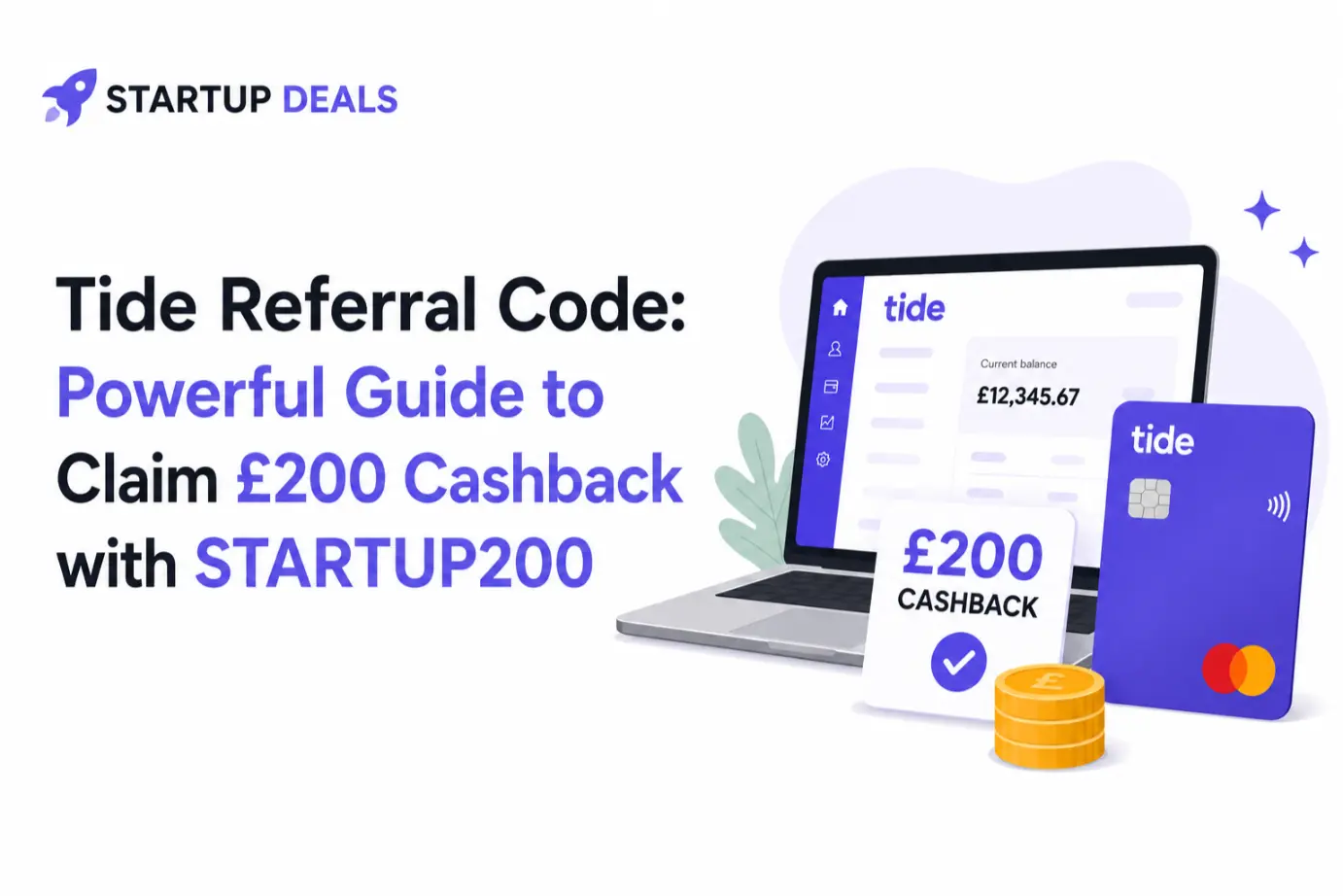 Introduction If you’re looking for a Tide referral code in 2026, you’re probably searching for the best possible deal before opening a business account. Whether you’re a sole trader, freelancer,… Read more: Tide Referral Code 2026: Powerful Guide to Claim £200 Cashback with STARTUP200
 - Tide vs High Street Banks: Powerful 2026 Review
 Introduction Choosing the right business banking solution is one of the most important decisions a UK business owner can make. Whether you’re a sole trader, freelancer, contractor, startup founder, or… Read more: Tide vs High Street Banks: Powerful 2026 Review
 - Tide Business Account for Tradespeople | Powerful Guide 2026
 Introduction Running a trade business involves much more than completing jobs and keeping customers happy. Whether you’re a plumber, electrician, builder, carpenter, roofer, landscaper, painter, heating engineer, or general contractor,… Read more: Tide Business Account for Tradespeople | Powerful Guide 2026