
Introduction
Choosing the right business bank account can have a significant impact on how efficiently you manage your finances, track expenses, invoice clients, and monitor cash flow. For many UK sole traders, freelancers, startups and small businesses, the decision often comes down to Monzo vs Mettle.
Both providers offer app-based business banking designed to simplify financial management, but they take noticeably different approaches. Mettle focuses on straightforward business banking with built-in bookkeeping tools and FreeAgent integration, while Monzo Business combines business banking with the modern digital experience that has made Monzo one of the UK’s most recognised fintech brands.
If you’re trying to decide whether Mettle or Monzo is the better fit for your business, this guide will walk you through everything you need to know. We’ll compare account features, fees, integrations, user experience, eligibility, customer support, and available promotions so you can make an informed decision.
For business owners looking to maximise value, both providers currently offer incentives for new customers.
Mettle currently offers £50 when eligible customers open an account, enter referral code QPBB6, and make a qualifying transaction within 30 days of account opening.
Monzo Business currently offers £50 when eligible customers open an account using referral code 4z09hx0 and make a qualifying card payment from their new business account.
Offers are subject to eligibility requirements and may change at any time.
Whether you’re a sole trader launching a side business, a freelancer managing multiple clients, or a limited company looking for a modern banking solution, understanding the differences between these providers can save both time and money.
Throughout this guide, we’ll examine where each account excels, where potential limitations exist, and which type of business is most likely to benefit from each platform. By the end, you’ll have a clear understanding of whether Monzo or Mettle aligns better with your business needs in 2026.
Contents:
- What Are Monzo and Mettle?
- Who Should Use Monzo or Mettle?
- Monzo vs Mettle Comparison
- Features and Tools
- Fees and Pricing
- Accounting Integrations
- Mobile App Experience
- Customer Support
- How to Open an Account
- Offers and Promotions
- General FAQs
- Offer FAQs
- Recap
- Conclusion
What Are Monzo and Mettle?
Monzo and Mettle are two of the most popular digital banking options available to UK business owners, but they originate from very different backgrounds.
Monzo began as a consumer-focused challenger bank and quickly gained popularity through its intuitive mobile app, spending insights, budgeting tools, and customer-friendly approach. Building on its success in personal banking, Monzo expanded into business banking by introducing dedicated business accounts designed for sole traders and limited companies.
Today, Monzo Business accounts are aimed at entrepreneurs who want a seamless banking experience integrated into an app they may already use personally. The platform focuses heavily on user experience, spending visibility, instant notifications, invoicing functionality, and modern money management tools.
Mettle, on the other hand, was specifically built for business customers from the outset. Backed by the NatWest Group, Mettle was designed to help sole traders and small businesses manage their finances more efficiently through dedicated business banking features and bookkeeping tools.
One of Mettle’s strongest selling points is its integration with accounting software, particularly FreeAgent. Eligible customers can gain access to FreeAgent at no additional cost, which can represent significant savings for businesses that need bookkeeping and tax management functionality.
When considering mettle vs Monzo, it is important to understand that both accounts aim to solve similar problems. They provide business banking without requiring a visit to a branch, offer rapid account setup processes, and include mobile-first account management.
However, their priorities differ.
Monzo places a stronger emphasis on customer experience, app functionality, budgeting tools, and banking innovation. Mettle focuses more heavily on bookkeeping support, accounting integrations, and helping business owners stay organised for tax purposes.
Another distinction lies in pricing structures. While both providers offer free account options, Monzo also provides paid business plans that unlock additional features. Mettle keeps its proposition simpler by focusing on its core free business account offering.
For many businesses, deciding between these providers ultimately comes down to operational needs. Some businesses prioritise bookkeeping and accounting support, while others value budgeting features and app functionality.
Understanding these differences is the foundation of any Monzo vs mettle comparison and helps determine which platform is likely to provide the greatest long-term value.
Who Should Use Monzo or Mettle?
Choosing between Monzo and Mettle often depends less on banking features and more on the specific requirements of your business.
Both providers serve UK business owners, but each appeals to slightly different customer profiles.
Mettle is particularly popular among sole traders, freelancers, contractors, consultants, and small limited companies that want straightforward business banking combined with accounting support. Businesses that value bookkeeping efficiency often find Mettle attractive because of its accounting-focused ecosystem and FreeAgent integration.
For self-employed professionals who handle their own tax returns and bookkeeping, Mettle can simplify administrative work significantly. Rather than managing multiple disconnected systems, users can combine banking activity with accounting workflows in one streamlined process.
Monzo Business often appeals to entrepreneurs who already use Monzo personally and enjoy the platform’s modern approach to banking. The intuitive interface, real-time notifications, spending categorisation, invoicing tools, and cash flow visibility make it attractive for business owners who want an engaging and highly polished banking experience.
Limited companies can benefit from both providers, but Monzo’s paid plans may appeal to businesses seeking additional features beyond standard banking functionality.
When evaluating whether Is Mettle better than Monzo, the answer largely depends on what matters most to your business.
If bookkeeping support, accounting integrations, and tax organisation are top priorities, Mettle may have the advantage.
If app experience, budgeting features, and digital banking innovation are more important, Monzo may feel like the stronger choice.
Many freelancers and sole traders compare mettle vs Monzo because both accounts can help separate business finances from personal finances without introducing unnecessary complexity.
Businesses operating entirely online often find either platform suitable because both allow account management through mobile apps and online interfaces.
For startups, the decision frequently comes down to future growth plans. Businesses expecting to rely heavily on accounting software may lean towards Mettle, while businesses seeking a broader fintech ecosystem may prefer Monzo.
The reality is that there is no universal winner in the Is Monzo better than Mettle debate. Each provider serves a slightly different audience and offers strengths that appeal to different types of business owners.
The key is understanding your priorities before opening an account. A business that values bookkeeping automation may reach a different conclusion from a business that prioritises digital banking features, even though both are evaluating the same two providers.
Monzo vs Mettle Comparison
When comparing Monzo vs Mettle side by side, it becomes clear that both providers deliver strong digital banking experiences, but they focus on different aspects of business finance management.
At a basic level, both accounts offer UK business owners a dedicated business bank account, app-based account management, debit cards, spending notifications, transaction categorisation, and online banking functionality. Both eliminate much of the friction traditionally associated with business banking and allow entrepreneurs to manage finances from anywhere.
The differences become more apparent once you look beyond the core banking features.
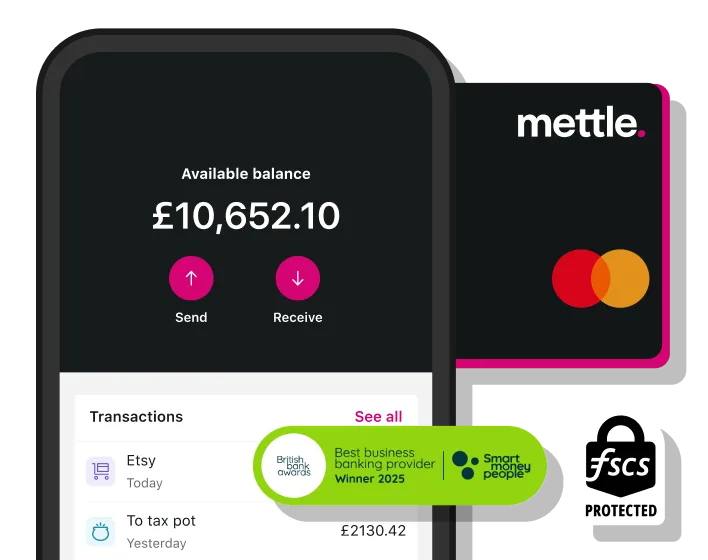
Mettle positions itself as a practical financial management solution for sole traders and small businesses. The account focuses on helping users stay organised, track business income and expenses, and simplify bookkeeping. This approach has made Mettle particularly popular among freelancers, contractors, and self-employed professionals who want straightforward banking without unnecessary complexity.
Monzo Business takes a broader approach. In addition to business banking features, Monzo places significant emphasis on user experience, cash flow visibility, budgeting tools, invoicing functionality, and financial insights. The platform feels more like a comprehensive money management ecosystem than a traditional bank account.
One of the biggest areas of comparison is pricing flexibility. Mettle primarily focuses on its free account offering, while Monzo provides both free and paid business plans. This allows Monzo users to access additional tools if their requirements become more advanced over time.
The Monzo vs Mettle comparison also highlights differences in business support tools. Mettle’s close alignment with bookkeeping workflows can make it particularly appealing to businesses that manage their own accounts. Monzo, meanwhile, excels in helping users understand spending patterns and manage cash flow through a highly polished app experience.
Another important consideration is business stage.
New sole traders often find Mettle attractive because of its simplicity and accounting-focused features. More established businesses may appreciate Monzo’s broader feature set and optional upgrades.
When asking Is Mettle better than Monzo, businesses focused on bookkeeping efficiency may answer yes. However, businesses prioritising budgeting tools and app functionality may reach the opposite conclusion.
Likewise, anyone asking Is Monzo better than Mettle should consider their operational priorities rather than looking for a universal winner.
Ultimately, both providers represent strong alternatives to traditional business banks. The best choice depends on whether your business values accounting simplicity or enhanced financial management functionality.
Monzo vs Mettle Features and Tools
Features are often where the real differences emerge when evaluating mettle vs Monzo.
Both providers have invested heavily in technology, but they have chosen to develop different capabilities based on the needs of their target audiences.
Mettle focuses on helping business owners manage everyday finances while reducing administrative workload. Users can send and receive payments, monitor transactions in real time, categorise spending, and manage business finances through the mobile app. The platform also includes invoicing functionality and expense management tools designed to simplify record keeping.
One of Mettle’s standout strengths is its bookkeeping support. The platform helps users organise financial data efficiently, making it easier to prepare for tax returns and accounting tasks. For many sole traders, this can save considerable time throughout the year.
Monzo Business provides a broader range of money management features. Real-time notifications keep users informed of account activity instantly, while spending insights and categorisation help monitor business expenditure. Monzo also offers invoice creation, payment tracking, and budgeting tools that help business owners maintain visibility over cash flow.
The Monzo app is frequently praised for its design and ease of use. Business owners can create spending categories, review financial trends, and gain valuable insights into business performance through a user-friendly interface.
A key advantage of Monzo is flexibility. Businesses can begin with a free account and later upgrade to a paid plan if they require additional features.
In many Monzo v mettle comparison discussions, app experience is a major deciding factor. Both apps perform well, but Monzo often receives particular recognition for user experience and interface design.
That said, Mettle’s streamlined approach can be equally attractive for business owners who simply want efficient banking without additional complexity.
For those asking Is Monzo better than Mettle in terms of features, the answer depends on priorities. Monzo generally offers a wider range of financial management tools.
However, for users focused on bookkeeping and administrative efficiency, Is Mettle better than Monzo becomes a very reasonable question.
The strongest feature set is ultimately the one that aligns most closely with how you operate your business. A freelancer managing invoices and expenses may prefer Mettle’s simplicity, while a growing startup seeking deeper financial visibility may favour Monzo’s broader toolkit.
Monzo vs Mettle Fees and Pricing
Fees are one of the most important factors when choosing a business account, particularly for startups and small businesses seeking to minimise operating costs.
Fortunately, both Monzo and Mettle offer accessible entry points for businesses looking to avoid traditional banking fees.
Mettle’s proposition is deliberately straightforward. The provider focuses on offering a free business account with core banking functionality included. Users can manage payments, receive transfers, track spending, and access business banking tools without paying a monthly account fee.
This simplicity is one of the reasons Mettle remains popular among freelancers and sole traders. Business owners can access modern banking services without worrying about subscription costs or complicated pricing structures.
Monzo Business also offers a free business account option, making it competitive with Mettle at the entry level. However, Monzo additionally provides paid plans that unlock extra features and tools.
This tiered approach can benefit businesses whose requirements evolve over time. Rather than switching providers, users can upgrade within the Monzo ecosystem as their needs become more sophisticated.
When conducting a Monzo vs Mettle assessment, businesses should look beyond monthly fees and evaluate overall value.
For example, bookkeeping support, invoicing capabilities, integrations, and time-saving features can all influence the true cost of a business account. A provider that saves several hours of administration each month may deliver greater value than one with marginally lower fees.
The mettle vs Monzo debate often centres on this concept of value rather than pure pricing.
Mettle’s accounting-focused approach may appeal to cost-conscious business owners seeking efficiency gains. Monzo’s premium plans may appeal to businesses willing to pay for additional functionality and insights.
Businesses asking Is Mettle better than Monzo from a pricing perspective may appreciate Mettle’s simplicity and lack of complicated upgrade paths.
Meanwhile, businesses asking Is Monzo better than Mettle may value the flexibility of choosing between free and paid plans as business needs evolve.
Ultimately, both providers offer competitive pricing compared with many traditional business banks. The better value proposition depends on how much you will actually use the features available and whether those tools help your business save time, improve financial visibility, or streamline administration.
Monzo vs Mettle Accounting Integrations
Accounting integrations are often one of the most important considerations when selecting a business bank account. While both providers support modern business finance management, there are meaningful differences when comparing Monzo vs Mettle in this area.
For many sole traders, freelancers and small business owners, bookkeeping is one of the most time-consuming administrative responsibilities. Manually categorising transactions, reconciling accounts and preparing information for accountants can quickly become a burden.
Mettle has built much of its reputation around helping business owners simplify these tasks. The platform is particularly well known for its integration with FreeAgent, which can provide significant value for businesses that manage their own bookkeeping and tax obligations. Having banking activity connected directly to accounting workflows can reduce duplication, improve accuracy and save considerable time throughout the year.
For self-employed professionals, this integration is often one of the strongest arguments in favour of Mettle. Transactions can be reviewed and organised more efficiently, helping users stay on top of financial records and tax obligations.
Monzo also supports accounting connectivity and business management tools, allowing users to maintain visibility over business finances and streamline reporting processes. Many businesses successfully use Monzo alongside popular accounting software platforms and bookkeeping workflows. However, the focus differs slightly.
Mettle tends to position accounting support as a central part of its business proposition, whereas Monzo focuses more broadly on financial management, budgeting, cash flow visibility and overall banking experience.
This distinction is often highlighted in a Monzo v mettle comparison because bookkeeping requirements vary significantly between businesses. A sole trader who completes their own accounts may place enormous value on accounting integrations, while a startup founder with an external accountant may be more concerned with spending visibility and cash flow management.
When evaluating Is Mettle better than Monzo from an accounting perspective, many self-employed professionals find Mettle particularly attractive because of its accounting-focused ecosystem. Conversely, those asking Is Monzo better than Mettle may prioritise the broader financial management experience rather than focusing exclusively on bookkeeping.
The reality is that both providers support modern accounting workflows, but Mettle’s emphasis on bookkeeping efficiency gives it a clear advantage for business owners who want to minimise administrative workload and simplify tax preparation throughout the year.
Mobile App Experience
Digital banking is largely defined by the quality of the mobile app, making user experience one of the most important factors in any mettle vs Monzo evaluation.
Business owners increasingly expect to manage finances entirely from their smartphones. Whether checking balances, sending payments, reviewing expenses or monitoring cash flow, the mobile app often becomes the primary way users interact with their business account.
Monzo has long been recognised as one of the leaders in digital banking user experience. Its app is known for being intuitive, visually appealing and easy to navigate. Real-time notifications provide immediate visibility of account activity, while spending categories and financial insights help users understand how money moves through their business.
The platform’s design philosophy focuses on simplicity without sacrificing functionality. Even users with limited financial experience can quickly understand account activity and manage everyday banking tasks.
Mettle also delivers a strong mobile banking experience. The app allows users to manage transactions, review account activity, create invoices and organise business finances efficiently. The interface is straightforward and intentionally focused on helping business owners complete tasks quickly.
Where Monzo often wins praise for innovation and design, Mettle tends to win appreciation for practicality and ease of use.
Many business owners comparing Monzo vs Mettle discover that both apps perform exceptionally well, but their preferences come down to personal priorities. Those seeking extensive financial insights, budgeting functionality and polished design may favour Monzo. Those seeking straightforward business banking with bookkeeping support may find Mettle perfectly suited to their needs.
The Monzo v mettle comparison becomes particularly subjective in this area because app preferences differ significantly from one user to another. Some users value visual dashboards and spending analytics, while others simply want an efficient platform for managing business transactions.
When considering Is Monzo better than Mettle, many users point to Monzo’s reputation for app innovation and user experience. However, Is Mettle better than Monzo can be equally valid for business owners who prefer a simpler, more accounting-focused environment.
Ultimately, both providers offer mobile experiences that are significantly more modern than many traditional business banks, making either option a strong choice for digitally focused businesses.

Customer Support
Customer support can become critically important when issues arise with payments, account access or transaction disputes. Although digital banking focuses heavily on technology, human support remains a major consideration when comparing Monzo vs Mettle.
Both providers primarily operate through digital channels rather than traditional branch networks. This allows them to offer modern banking experiences while keeping operational costs relatively low.
Mettle provides support through its app and online channels, helping users resolve account-related queries and banking issues efficiently. Because the platform is focused specifically on business customers, many support interactions are centred around practical business banking needs.
Business owners who value simplicity often appreciate Mettle’s focused approach. The support experience is designed around helping customers manage day-to-day business finances and resolve issues without unnecessary complexity.
Monzo similarly offers digital customer support through in-app messaging and online resources. The company has invested heavily in customer experience throughout its growth and has built a reputation for maintaining accessible support channels.
Many users appreciate the ability to communicate directly through the app rather than relying on lengthy phone queues or branch appointments.
The mettle vs Monzo debate in relation to support often comes down to individual experiences rather than objective feature differences. Response times can vary depending on demand, issue complexity and account type. As a result, some customers report excellent experiences with one provider while others prefer the alternative.
When conducting a Monzo vs mettle comparison, it is important to consider the type of support your business is likely to need. Businesses with straightforward banking requirements may rarely need assistance and therefore place greater emphasis on app functionality. Businesses processing significant transaction volumes may place greater importance on support availability and issue resolution processes.
For those asking Is Mettle better than Monzo, the answer may depend on whether Mettle’s business-focused support aligns more closely with their requirements. Meanwhile, users asking Is Monzo better than Mettle may value Monzo’s broader digital banking ecosystem and established customer experience framework.
In practice, both providers deliver support models that are consistent with modern digital banking expectations, making either suitable for businesses comfortable managing finances online.nces. Tide offers a higher potential reward, but Mettle provides a simpler route to earning a bonus.
How to Open an Account
One of the biggest advantages of modern fintech banking is the speed and convenience of account opening.
Unlike many traditional banks that may require branch visits, paper forms or lengthy approval processes, both Monzo and Mettle allow users to complete applications digitally.
The process generally begins by downloading the provider’s mobile app and starting an application. Applicants are asked to provide basic personal information, business details and identification documents required for verification purposes.
For sole traders, the process is usually straightforward because there are fewer business ownership checks required. Limited companies may need to provide additional information relating to directors, shareholders and company registration details.
Mettle has designed its onboarding process to be simple and business-focused. Applicants can submit required information digitally and monitor progress through the app.
Monzo follows a similarly streamlined process, allowing users to verify identity and provide business information without needing to visit a branch.
When comparing Monzo vs Mettle, the account opening experience is one area where both providers perform strongly. Most eligible applicants can complete applications relatively quickly, making both options attractive for startups and newly formed businesses that need banking facilities without delay.
The application process is also relevant when considering promotional offers.
For example, businesses interested in the Mettle incentive must open an eligible account, enter referral code QPBB6, and complete a qualifying transaction within 30 days of account opening.
Similarly, businesses interested in the Monzo incentive must open an eligible account using referral code 4z09hx0 and complete a qualifying card payment.
These requirements make it important to review all promotional terms during the application process.
Whether evaluating mettle vs Monzo, most applicants find that both providers offer significantly more convenient onboarding experiences than many traditional banks. This ease of access is one reason both platforms continue to attract freelancers, sole traders, startups and growing small businesses throughout the UK.
Monzo vs Mettle Offers and Promotions
For many business owners, a welcome incentive can make the decision between Monzo and Mettle even more attractive. While account features, fees and integrations should remain the primary consideration, receiving a cash bonus for opening an account can provide additional value during the early stages of using a new business banking provider.
Mettle currently offers eligible new customers the opportunity to earn £50 when opening a business account. To qualify, applicants must open an eligible Mettle account, enter referral code QPBB6 during the application process, and complete a qualifying transaction within the first 30 days of opening the account.
The qualifying transaction requirement is particularly important because simply opening the account is not enough to trigger the reward. New customers should ensure they actively use the account within the specified timeframe to meet the promotional criteria.
Businesses interested in opening a Mettle account can claim the offer via: https://startupdeals.co.uk/recommends/mettle-business-current-account
Monzo Business also offers a £50 incentive for eligible new customers. To qualify, applicants must open an eligible Monzo Business account using referral code 4z09hx0 and make a qualifying card payment from their newly opened business account.
As with Mettle, it is important to complete the required activity within the timeframe specified in the promotion’s terms and conditions.
Businesses interested in opening a Monzo Business account can claim the offer via: https://startupdeals.co.uk/recommends/monzo-business-account
When comparing Monzo vs Mettle purely on promotional value, both providers currently offer the same headline reward amount. This means the decision should largely come down to which account best fits your ongoing business requirements rather than focusing exclusively on the welcome incentive.
For sole traders who value bookkeeping support and FreeAgent integration, Mettle’s £50 offer may simply be an added bonus on top of an already compelling proposition.
For entrepreneurs who value Monzo’s user experience, spending insights and digital banking ecosystem, the Monzo reward may provide a welcome incentive to get started.
The Monzo v mettle comparison ultimately becomes more about long-term value than short-term rewards. A £50 bonus is useful, but choosing the account that saves time, improves financial visibility and supports business growth will typically deliver far greater value over the long run.
All promotions are subject to eligibility requirements and may change or be withdrawn at any time. Always review the latest terms and conditions before applying. Subject to change—check current T&Cs.
General FAQs
Is Mettle better than Monzo?
Whether Is Mettle better than Monzo depends on your priorities. Mettle is often preferred by sole traders and freelancers who value bookkeeping tools and accounting integrations.
Is Monzo better than Mettle?
Is Monzo better than Mettle for many business owners comes down to app experience, budgeting tools and overall user experience. Monzo offers a broader financial management ecosystem.
Can sole traders use Monzo Business?
Yes, eligible UK sole traders can open a Monzo Business account and access its business banking features.
Can sole traders use Mettle?
Yes, Mettle is particularly popular among sole traders, freelancers and self-employed professionals across the UK.
Does Mettle charge a monthly fee?
Mettle is known for its straightforward approach and free business banking proposition for eligible customers.
Does Monzo offer paid business plans?
Yes, Monzo provides both free and paid business account options, allowing businesses to upgrade as their needs grow.
Which account is best for bookkeeping?
Many users conducting a Monzo v mettle comparison choose Mettle because of its strong bookkeeping focus and accounting integrations.
Which account has the better mobile app?
The answer varies by user preference. Monzo is frequently praised for app design, while Mettle is appreciated for simplicity and practicality.
Can limited companies use Monzo and Mettle?
Yes, both providers offer business banking solutions suitable for eligible UK limited companies.
Which account is best for startups?
Both providers are suitable for startups, but the best choice depends on whether you prioritise bookkeeping support or broader financial management features.
What should I check before opening a business bank account?
The FCA recommends understanding fees, account features, eligibility requirements, complaint procedures, and any terms attached to promotions or incentives before opening an account.
FAQs About the Monzo and Mettle Offers
What is the Mettle referral code?
The current Mettle referral code is QPBB6 for eligible new customers.
How much can I earn with the Mettle offer?
Eligible customers can earn £50 after opening an account, entering referral code QPBB6 and completing a qualifying transaction within 30 days.
What qualifies as a Mettle qualifying transaction?
Mettle specifies that a qualifying transaction must be completed within the first 30 days after account opening. Always check the latest terms for full details.
How long do I have to claim the Mettle reward?
You must complete the required qualifying activity within 30 days of opening your account.
What is the Monzo Business referral code?
The current Monzo Business referral code is 4z09hx0 for eligible new customers.
How much does the Monzo Business offer pay?
Eligible customers can earn £50 after meeting the promotion’s qualifying requirements.
How do I qualify for the Monzo reward?
You must open an eligible Monzo Business account using referral code 4z09hx0 and make a qualifying card payment.
Can existing customers claim either offer?
No, these promotions are generally intended for eligible new customers. Check the latest terms and conditions for confirmation.
Can the offers change?
Yes, promotional offers can change, be updated or be withdrawn at any time.
Are the offers available to limited companies?
Eligible limited companies may qualify, subject to each provider’s requirements and account eligibility rules.
Recap
Choosing between Monzo and Mettle ultimately comes down to the specific needs of your business. Both providers offer modern, app-based business banking solutions that are significantly more flexible and user-friendly than many traditional business bank accounts.
Throughout this Monzo vs Mettle comparison, we’ve seen that Mettle tends to appeal most strongly to sole traders, freelancers and small business owners who want straightforward business banking combined with bookkeeping support and accounting integrations. Its focus on helping users stay organised and manage financial administration efficiently makes it particularly attractive for self-employed professionals.
Monzo, meanwhile, stands out for its polished user experience, budgeting tools, spending insights and broader digital banking ecosystem. Business owners who value cash flow visibility, financial management features and a highly refined mobile app may find Monzo better aligned with their requirements.
Both providers currently offer incentives for eligible new customers. Mettle offers £50 when you open an eligible account, enter referral code QPBB6, and complete a qualifying transaction within 30 days. Monzo Business offers £50 when you open an eligible account using referral code 4z09hx0 and make a qualifying card payment.
If you’re considering Mettle, you can learn more here: https://startupdeals.co.uk/recommends/mettle-business-current-account
If you’re considering Monzo Business, you can learn more here: https://startupdeals.co.uk/recommends/monzo-business-account
While the welcome bonuses are attractive, the most important consideration remains long-term suitability. The best business account is the one that helps you save time, stay organised and manage your finances more effectively as your business grows.
Conclusion
After reviewing the features, pricing, integrations, support options and promotional offers available from both providers, it’s clear that there is no universal winner in the Monzo vs Mettle debate.
Instead, the right choice depends entirely on how you run your business and which tools matter most to you.
For freelancers, sole traders and business owners who place a strong emphasis on bookkeeping efficiency, accounting support and administrative simplicity, Mettle offers a compelling proposition. The combination of straightforward business banking, accounting-focused functionality and the opportunity to earn a £50 reward using referral code QPBB6 makes it an attractive option for many small businesses.
For entrepreneurs seeking a highly polished digital banking experience, strong budgeting tools, spending insights and flexible account options, Monzo Business remains one of the strongest fintech banking platforms available. Its £50 welcome offer using referral code 4z09hx0 provides an additional incentive for eligible new customers to get started.
The reality is that both providers have successfully modernised business banking for UK entrepreneurs. Whether you’re a freelancer launching a side business, a startup founder managing growth, or a limited company looking for a more efficient banking solution, either account could serve your needs well.
When evaluating mettle vs Monzo, focus on the areas that will deliver value every day rather than simply comparing headline features. Consider how you manage bookkeeping, whether accounting integrations are important, how much you rely on mobile banking, and what level of financial insight you want from your banking provider.
For many users asking Is Mettle better than Monzo or Is Monzo better than Mettle, the answer is ultimately determined by their individual workflow rather than by one account being objectively superior.
If Mettle sounds like the right fit for your business, explore the latest offer here: https://startupdeals.co.uk/recommends/mettle-business-current-account
If Monzo Business appears better suited to your needs, you can explore the latest offer here: https://startupdeals.co.uk/recommends/monzo-business-account
Whichever provider you choose, both represent strong alternatives to traditional business banking and can help simplify the way you manage your business finances in 2026.
Latest Posts:
- Hoxton Mix vs Virtually There: Which Virtual Office Service Is Better?
 Introduction If you’re comparing Hoxton Mix vs Virtually There, you’re likely searching for a virtual office provider that offers the right balance of professionalism, affordability, and flexibility. Whether you’re launching… Read more: Hoxton Mix vs Virtually There: Which Virtual Office Service Is Better?
 - Hoxton Mix vs Icon Offices: Which Virtual Office Is Better?
 Introduction Choosing a virtual office provider can have a significant impact on how your business is perceived, how you manage your mail, and even how effectively you maintain privacy as… Read more: Hoxton Mix vs Icon Offices: Which Virtual Office Is Better?
 - 7 Powerful Benefits of Using a Hoxton Mix Virtual Office Address
 Introduction For startups, freelancers, sole traders and growing SMEs, establishing a professional business presence can be challenging. Renting physical office space in London is often expensive, particularly during the early… Read more: 7 Powerful Benefits of Using a Hoxton Mix Virtual Office Address
 - Hoxton Mix Review: Features, Pricing, Pros and Cons Explained
 Introduction If you’re searching for an honest and detailed hoxton mix review, you’re likely comparing virtual office providers and trying to decide whether Hoxton Mix offers good value for your… Read more: Hoxton Mix Review: Features, Pricing, Pros and Cons Explained
 - Hoxton Mix Virtual Office Discount: Save 10% on Your First 12 Months
 Introduction If you’re looking for a professional London business address without the cost of renting physical office space, a Hoxton Mix Virtual Office discount could help you reduce your startup… Read more: Hoxton Mix Virtual Office Discount: Save 10% on Your First 12 Months
 - Tide Referral Code 2026: Powerful Guide to Claim £200 Cashback with STARTUP200
 Introduction If you’re looking for a Tide referral code in 2026, you’re probably searching for the best possible deal before opening a business account. Whether you’re a sole trader, freelancer,… Read more: Tide Referral Code 2026: Powerful Guide to Claim £200 Cashback with STARTUP200
 - Tide vs High Street Banks: Powerful 2026 Review
 Introduction Choosing the right business banking solution is one of the most important decisions a UK business owner can make. Whether you’re a sole trader, freelancer, contractor, startup founder, or… Read more: Tide vs High Street Banks: Powerful 2026 Review
 - Tide Business Account for Tradespeople | Powerful Guide 2026
 Introduction Running a trade business involves much more than completing jobs and keeping customers happy. Whether you’re a plumber, electrician, builder, carpenter, roofer, landscaper, painter, heating engineer, or general contractor,… Read more: Tide Business Account for Tradespeople | Powerful Guide 2026
 - Tide Business Account for Amazon Sellers: Powerful Guide 2026
 Introduction Running an Amazon business in 2026 requires much more than simply listing products and waiting for sales. Whether you operate a private-label brand, wholesale business, retail arbitrage model, or… Read more: Tide Business Account for Amazon Sellers: Powerful Guide 2026